 WeeklySA_Admin
Refuse: The late former minister refused to be silenced by those who looted state funds
By Monk Nkomo
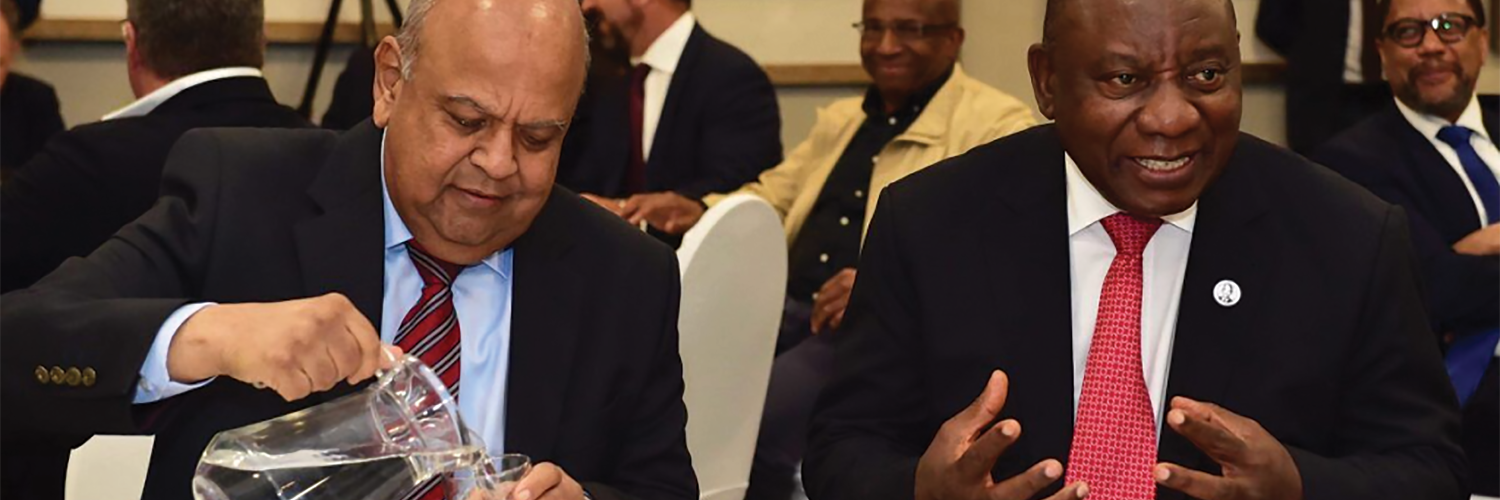
The late former Cabinet Minister, Pravin Gordhan was one of the architects of South Africa’s Constitution who dedicated his life to justice and integrity – a life that earned him the wrath of those who were involved in State capture.
Gordhan also endured racist and vicious personal attacks that were dishonest, condescending, patronising and directed at one of the country’s foremost champions of non-racialism.
This was said by an emotional President Cyril Ramaphosa when he delivered his eulogy for Gordhan at his official State funeral service which was held at the Inkosi Albert Luthuli International Convention Centre in Durban on Thursday which was packed to capacity by mourners who came to pay their last respects to the man described as a humble servant of the people.
Ramaphosa said Gordhan proved to be a person of true mettle who withstood an onslaught from those who were involved in looting State funds. Using all means at his disposal , he worked hard to thwart the capture of the State. ‘’ Drawing on the substantial moral stature, Pravin Gordhan refused to be silenced.’’
The attacks against him and his family did nothing to diminish Gordhan’s standing among South Africans. Instead, they exposed the moral bankruptcy of those who chose to target him and his family. It was shameful then and it remained shameful now.
‘’Let it never be that in the robust festival of ideas and vibrant public space that is a hallmark of our democratic order, we stoop to slander and invective. Let it never be that in trying to portray ourselves as the liberators, that we come to sound like the oppressor. ’’
Ramaphosa described Gordhan as a humble servant of the people whose achievements, despite his immense contribution to this country, at all times made him a humble human being and activist. It was his humility as a person and as a leader that made him great. It was his unwavering belief that a political activist must serve no other cause than the cause of freedom that made him exceptional.
‘’It is that which makes great all true servant leaders. Leaders who accept the responsibility to lead with humility, commitment and courage. They are leaders who also submit themselves to being led. These are leaders who speak up when they must, but who also listen to the voices of our people attentively. These are leaders who are magnanimous in victory and gracious in defeat. Such leaders are people who stand up for what is right even at great personal cost to themselves’’.
Gordhan joined the struggle at a young age. He became active in the Natal Indian Congress and the South African Communist Party. The origins of his activism, in student and civic politics, was to define his political perspective and attitude. Even as a Member of Parliament, even as a Minister, at his essence, he remained a grassroots activist. He was one of those rare people who knew the cost of struggle. His activism earned him arrests, beatings and detention. He knew the perils of underground work. As an operative of Operation Vula, he was interrogated, tortured and thrown into solitary confinement by the apartheid regime.
Ramaphosa remembered Gordhan as a key figure in the formation of the United Democratic Front, leader in the South African Communist Party and the African National Congress, his political home.
In every task that he was given, in every portfolio he occupied, Gordhan was methodical and industrious. He understood the value of the work he was given. He understood that efficient revenue collection was essential for the fundamental transformation of our society. He understood that careful management of public finances was vital for the education of our children and the health of our population.
He knew that if the lives of the poor were ever to be improved, municipalities needed to work – and to work well. He knew that if unemployed South Africans were to find work, the country’s trains needed to run and its ports needed to function. He knew that its power stations needed to produce enough electricity to drive a thriving economy. Always an activist, he did the work that needed to be done. And as an activist, he stood firm on principle.
‘’During one of the most painful chapters in our democratic history, as the State was being looted by the powerful and connected, he chose to resist. Using all means at his disposal, he worked to thwart the capture of the State. Drawing on his substantial moral stature, he refused to be silenced. He was prepared to confront those who had once been his comrades, whom he had once looked up to as his leaders, but who had abandoned the cause of the people.
‘’As many others looked away, his revolutionary consciousness demanded no less of him than that he speak out. For him, it was no different to when he joined the struggle against apartheid. It was a choice between what was right and what was wrong. It was a choice between standing with the people or standing against the people. There was never any doubt where Pravin Gordhan would stand’’.
What gave him strength and encouragement was that he was not alone. Among his comrades, among activists, among civic leaders, among public servants, among broader society, was a growing movement against state capture. In ways that history has yet to fully record, he played a pivotal role in giving form and effect to that movement.
Ramaphosa said he had the privilege of working alongside Gordhan for many years – during the struggle against apartheid, at Codesa and in the Constitutional Assembly, in the ANC and in government. He would remember Gordhan for his collaborative spirit, his tact, especially when they disagreed, standing firm on principle, his incisive contributions in Cabinet and other meetings. He also valued his frankness and forthrightness, respected his opinions and appreciated that he always afforded him the same courtesy.
The most fitting tribute they could pay to him was to reflect on their own actions, consider what they can and should each do to serve the country and to reflect on what it meant to be an activist. The Mass Democratic Movement must also consider if it was prepared to weather the great storms that so often confronted acts of courage and integrity.
‘’These are the issues upon which we must indeed all reflect as we bid farewell to this great son of the soil. It is in times of difficulty that moral courage is valued most. It is at times of renewal and rebuilding that activism is most needed.
‘’As we strive to rebuild our country, as the Government of National Unity, we will rely on men and women of integrity, honour and courage to support us, to hold us to account, and to help shepherd in a new era for South Africa and its people.
Pravin Gordhan’s spear has fallen. Let us together pick it up’’.