 WeeklySA_Admin
REVITALISE: A bird’s eye view of how grassroots activism acceleratechange
By Ido Lekota
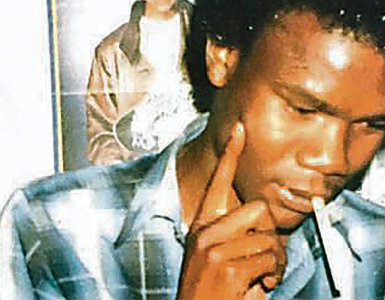
More than half a century ago, a 19-year-old multifaceted artist named Gil Scott-Heron wrote and released a spoken-word piece that critiqued the media, consumerism, and political apathy.
The poem/song critiqued the relationship between media and social change, suggesting that true revolution cannot be captured or controlled by mainstream media. It highlighted the disconnect between the media’s portrayal of events and the reality on the ground.
Written at the height of the American civil rights movement and the Vietnam War, this seminal work that held significant cultural, social and political importance, became a rallying cry for grassroots activism, emphasising the fact that real change happens through direct action rather than passive media consumption.
It encourages people to engage actively in social movements rather than to wait for televised coverage – placing emphasis on the fact that the real change happens in the streets and communities, not through corporate-controlled media.
The Revolution Will Not Be Televised is a powerful spoken-word piece. It critiques media, consumerism, and political apathy, referencing numerous cultural icons, products, and TV shows of the time, to illustrate how such distractions keep people from engaging in meaningful social action.
The poem/song has been used in various protests worldwide. This includes propagating anti-war movement, calling civil rights and anti-capitalist organisation to action.
In the final analysis, it symbolised the idea that true revolution was not something that could be packaged or controlled by the mainstream media.
Additionally, Scott-Heron’s work also critiqued the role the media ought to have played in shaping public perception about social movements. It also highlighted how the media tended to distort or control revolutionary narratives.
It also critiqued consumer culture, suggesting revolutions could not be bought or sold like a product. This message resonated with social or political movements seeking to challenge corporate influence and consumerism.
Using poetic licence, satire, figures of speech, and a turn of phrase, Scott-Heron highlighted the key role the media ought to have played to determine the success of activism, and strongly suggested the relevance of activism ought to be driven by agency and consciousness to promote a revolution.
Scott-Herron stated that “the revolution will not be televised” – was the central and recurring phrase, emphasising the non-spectacle nature of true revolution.
The 1976 Soweto student uprisings – led mainly by student proponents of the Black-Consciousness philosophy – which was the antithesis of white racist consciousness in South Africa – is an articulation of the world-wide impact Scott-Heron had when it comes to the quest for self-determination and liberation. The advent of the digital revolution has led to a global change in relation to the transmission of information about various issues.
The digital age, with social media and 24/7 news cycles, revolutions are televised, live-streamed, among others.
The channels to televise or broadcast the revolution are omnipresent – but with algorithm-driven nuanced implications – which in most cases lead to lack of agency and consciousness
What this meant was that revolutions are highly visible (the Arab Spring is a good example of this).
But to watch the revolutions on various broadcast platforms is not enough. To grasp the full picture of what is happening, the viewers must critically analyse the fragmented information captured on the platforms, recognise systemic patterns, and uncover hidden structures and agendas.
Unlike during the Scott-Heron’s lifetime – a century ago – today we need to connect the dots.
For example, in countries like South Africa, with massive socio-economic challenges, connecting the dots could mean linking events to root causes (for example, socio-economic inequality, corruption, high unemployment etc), or seeing through media spin or propaganda.
On the other hand, connecting the dots, could mean people critically navigating algorithmic chambers, verifying sources, and synthesising truths from other sources.
In other words, developing some form of digital literacy. This could also symbolise building coalitions with other interest groups and using digital tools for mobilisation.
It is important that a commitment to connecting the dots is driven by an understanding that technology does democratise visibility bust risks reducing revolutions to viral moments. The challenge, for those committed to any revolution, is to move beyond spectacle to sustained, informed action.
This means in the digital era, the revolution is now screen-deep – but its heartbeat still lies in the minds and hands of those who look deeper, think critically, and act.
• Lekota is an independent political journalist