 WeeklySA_Admin
FAST-TRACK: Investments held by members of newly launched South African Chamber of Business in Mozambique total more than R160 billion and employ around 43 000 people in Mozambique…
By Lusa and WSAM Reporter
South African President Cyril Ramaphosa has called for the synchronisation of border management systems between South Africa and Mozambique to fast-track the movement of goods, services and people between the two countries.
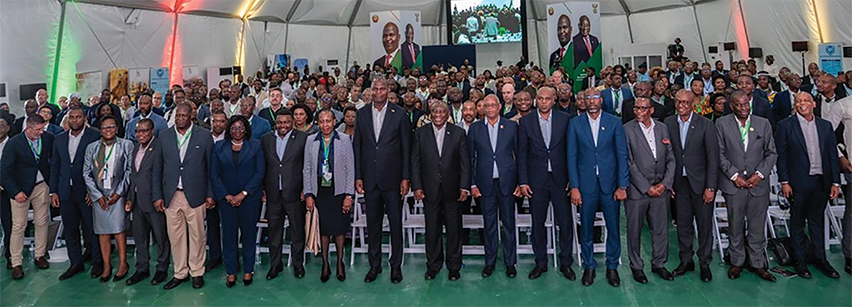
The president made the remarks at the Mozambique–South Africa Business Forum held in Inhambane province during his two-day working visit this week.
Ramaphosa said the current system — marred by delays, inconsistent procedures and logistical bottlenecks — restricts the potential of one of Southern Africa’s most important trading corridors.
“We in South Africa are taking back a very strong message from Mozambique that we should synchronise our border systems and improve border processing so that more and more services or products can be transported,” he said.
He warned that the ongoing “malfunctioning” at borders such as Lebombo/Ressano Garcia hampers trade and discourages investment. “This must come to an end. We must have a border post to do this, and we must use the same system that other regions of the world use. Europe is a good example.”
R119.4bn trade slowed by bottlenecks
Trade between South Africa and Mozambique remains strong and continues to grow, reaching about R119.4 billion in 2024. South Africa maintains a large surplus, exporting machinery, food products, beverages, vehicles, and manufactured goods to its neighbour.
Mozambique, in turn, supplies South Africa with coal, other mineral products, and natural gas, including the long-standing pipeline from Maputo to Secunda.
However, the relationship is hindered by:
• Customs delays and long processing queues;
• Corruption at border points;
• Ageing infrastructure and insufficient digital systems; and
• High transport and logistics costs.
Ramaphosa said streamlined, harmonised procedures could double bilateral trade, giving producers greater confidence and lowering operational costs. “When producers know that their products will move very quickly, without wasting time and money, they will accumulate more and more products,” he said.
Informal cross-border trade — especially food, textiles and small goods — continues to play a critical role in sustaining livelihoods on both sides of the border. Yet informal traders face: complex paperwork; unpredictable inspections; high unofficial costs, and unsafe transit conditions.
Synchronised systems, digital document sharing, and simplified authorisation processes could bring thousands of small traders into formal, safer channels.
R160bn investment footprint
Ramaphosa also praised the newly launched South African Chamber of Business in Mozambique, noting that its members have invested over R160 billion and employ around 43 000 people in Mozambique.
“Through their total investment… the member companies of the Chamber will be able to drive economic development and use their extensive influence for advocacy, networking and knowledge sharing,” he said.
He added that the Forum should mark “a new era of prosperity for South Africa and Mozambique.”Mozambican President Daniel Chapo welcomed the initiative, describing the two nations as economically complementary partners with shared potential.
“Mozambique has a privileged geostrategic location, which gives South Africa an efficient and competitive gateway to regional and international markets,” he said.
Chapo highlighted Mozambique’s macroeconomic stability, investor-friendly reforms, and preferential access to African and global markets — including SADC and the AfCFTA — as foundations for stronger trade and greater investment flows.
He committed his government to implementing all required facilitation measures “without ever stopping to improve the business ecosystem.”
Key Aspects of Trade Flows between the two Southern African countries are:
• Dominant South African Exports: Diverse products, including food, beverages, machinery, and manufactured goods, to Mozambique.
• Mozambican Exports: Mozambique primarily exports mineral products (like coal) and natural gas (via pipeline from Maputo to Secunda) to South Africa.
• Informal Trade Significance: Informal cross-border trade is substantial, making up a significant portion of total trade and vital for livelihoods, though facing challenges.
• Trade Balance: South Africa consistently runs a large trade surplus, with total trade between the two nations growing substantially, reaching around R119.4 billion in 2024.
In essence, the SA-Mozambique border is a busy economic artery, vital for regional trade, but requires ongoing investment and policy coordination to overcome bottlenecks and unlock further growth.