 WeeklySA_Admin
DIAGNOSIS: Wits University researchers are exploring whether bacteria found in saliva could help doctors identify one of South Africa’s deadliest cancers earlier — offering hope for faster treatment in high-risk communities…
By Own Correspondent
A simple saliva test could help detect one of South Africa’s deadliest cancers earlier, potentially saving lives in communities where the disease is often diagnosed too late.
This possible breakthrough is a subject of an ongoing investigation by scientists at the University of the Witwatersrand. The researchers at the Sydney Brenner Institute for Molecular Bioscience (SBIMB) are studying oesophageal squamous cell carcinoma — a cancer that affects the food pipe, which carries food from the mouth to the stomach. In many cases, patients only discover they have the disease when swallowing becomes difficult and treatment options are limited.
The cancer is common in parts of South Africa, especially in the Eastern Cape and KwaZulu-Natal, and also appears in regions stretching through East Africa, China and Iran. Scientists say they still do not fully understand why these areas are heavily affected.
Professor Christopher Mathew from SBIMB, said many patients diagnosed with the disease are surprisingly young, with some under the age of 40.
Researchers have already identified smoking, heavy alcohol use, rural living conditions and exposure to smoke from household fuels as important risk factors. However, these factors alone do not explain why so many people develop the disease.
Now scientists believe saliva may hold important clues.
In a new study conducted with researchers from Columbia University, scientists found clear differences between the bacteria found in the saliva of cancer patients and healthy people.
One bacterium, called Fusobacterium nucleatum, was found more often in people with the cancer. The same bacterium has also been linked to other forms of cancer.
Dr Wenlong Carl Chen, a researcher at SBIMB, cautioned that scientists do not yet know whether the bacteria help cause the disease or whether they simply appear because the cancer is already developing.
Even so, he said the findings could still become useful as an early warning system.
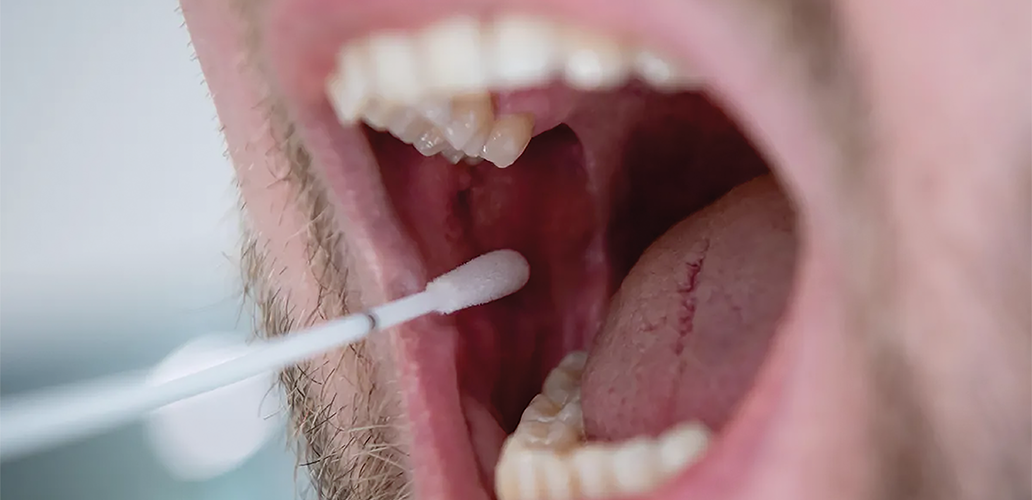
Researchers hope that, in future, a low-cost saliva or cheek-swab test could help clinics identify people who need urgent medical examinations before symptoms become severe.
Such a test would not replace hospital procedures like endoscopy — where doctors use a small camera to examine the oesophagus — but it could help healthcare workers decide who should be referred for testing sooner.
Globally, oesophageal cancer caused more than 540 000 deaths in 2020, with sub-Saharan Africa carrying a heavy burden of cases.
Researchers are now expanding their work to include more patients and healthy volunteers to determine whether the saliva changes can reliably distinguish cancer from other non-cancerous conditions affecting swallowing.
Professor Michèle Ramsay, Director of SBIMB, described the findings as an important first step toward better understanding a cancer that has remained poorly studied for decades.