 WeeklySA_Admin
DECAY: Memorials honouring the victims of the 1960 massacre are falling into ruin, but local activists are stepping up to improve the township
By Seth Thorne
Sharpeville, the historic township where at least 91 people were killed in the 1960 anti-pass protests, is showing troubling signs of neglect, with key memorial sites deteriorating amid broader municipal collapse.
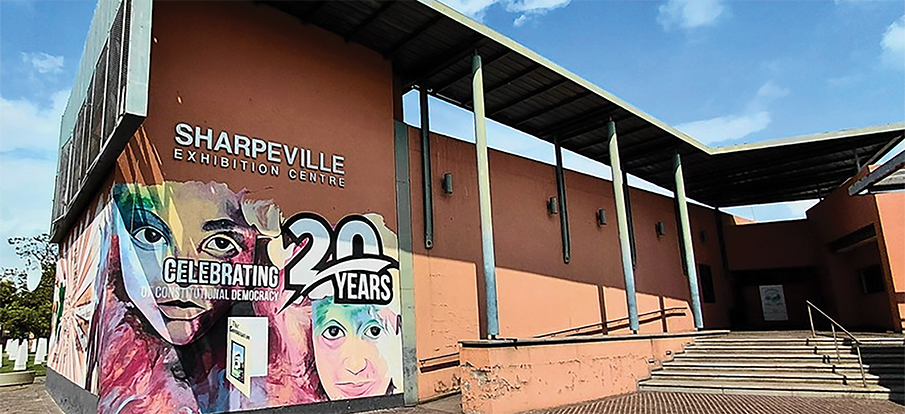
The Sharpeville Exhibition Centre and Garden of Remembrance — established to honour the victims of the massacre — are in visible decline. Cracked walls, peeling paint, faded signage, and a non-functioning fountain now define a site once intended as a place of reflection and education. Inside the museum, some displays are damaged or have fallen into disrepair, and visitors often find no guides available.
The decay stands in stark contrast to the significance of Sharpeville in South Africa’s liberation history.
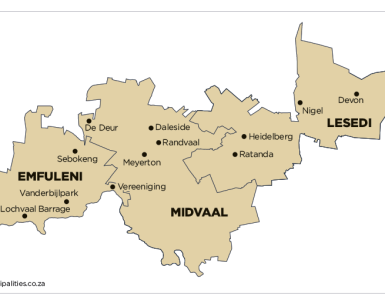
Located within the troubled Emfuleni Local Municipality, the township has suffered from years of administrative failure. The municipality was placed under provincial administration in 2018 due to financial mismanagement and mounting debt. According to the Auditor-General’s latest report, Emfuleni carries 91% bad debt and lost approximately R836 million worth of water — about 62% of total supply — through leaks and inefficiencies.
Basic services in Sharpeville have deteriorated alongside its heritage sites. Roads are riddled with potholes, and some residents have gone months without electricity. Earlier this week, frustrated community members blocked roads with burning tyres in protest. Yet amid the decline, local activists are stepping in to reclaim and revitalise parts of the township.
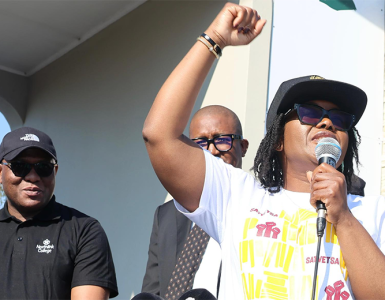
“Without Sharpeville, its people and its history, I am nothing,” says Modisane Mabele, a performing artist and community activist.
Through his initiative, Street Arts Government, Mabele is transforming abandoned and vandalised spaces into community hubs. One such project has converted two rooms in a derelict apartheid-era hostel into a performance venue, despite a lack of electricity in the area.
“We make do,” he says, emphasising his belief that communities should not wait for government intervention.
Mabele is not alone. Thabiso Moletsane, founder of the Innovative Social Movement, has also committed himself to community upliftment. After completing his social science degree, he chose to remain in Sharpeville to support young people who have dropped out of school.
Drawing on his own experience of being raised by his grandmother after being orphaned, Moletsane runs programmes offering skills training in baking, sewing, and other trades through SETA-accredited courses.
Nearby, the Kitso Information Development Centre provides daily meals to more than 300 people and offers free training in robotics, coding, and electrical work. The centre, housed in a former police station, is supported by the Gauteng Department of Social Development and supplements its feeding scheme with produce grown in its own vegetable garden. However, these grassroots efforts stand in sharp contrast to the neglect of official heritage infrastructure.
The Exhibition Centre, opened in 2002 and declared a heritage site in 2011, has not been adequately maintained despite a reported R9-million upgrade contract awarded in 2010. Today, it struggles to fulfil its educational purpose.
“I have a huge problem with that, as many people visit and do not truly understand what they are witnessing,” says Mabele. “It happens all the time.”
For residents like Dambile Ndaba, the condition of the memorial is deeply troubling.
“It does not do justice to the deceased heroes of 1960,” he says.
Interest in Sharpeville typically peaks during Human Rights Day commemorations, when government attention briefly returns to the township. But activists describe these interventions as superficial.
“Window dressing,” says Mabele, referring to temporary clean-ups focused mainly on routes used by visiting officials, while deeper issues remain unresolved.
Ndaba argues that preserving Sharpeville’s legacy requires meaningful community involvement.
“What the government should do is engage with the community of Sharpeville, heritage organisations, and the victims’ families, and appoint the right people to educate others and keep the spirit of the massacre alive,” he says. “We live with their spirits every day.”
Sedibeng District Municipality, responsible for maintaining the museum, did not respond to requests for comment. Emfuleni Local Municipality also failed to respond.
For now, Sharpeville stands as a place where history is both honoured and neglected — a powerful symbol of sacrifice, but also of the unfinished work of preserving South Africa’s past. – GroundUp
MIRROR Briefs
RURAL HOSPITAL MILESTONE
Prof. Nyaweleni Tshifularo, who led the team that separated conjoined twins at Mankweng Hospital in Limpopo, is grateful for the support his team received from the provincial administration and the local university.
The twins, who were born on January 28, 2026, at Mankweng Hospital, underwent a complex surgical procedure that marked a historic milestone for South Africa’s public healthcare system.
Tshifularo said the procedure was highly complex because the twins were joined at the trunk and shared certain organs.
He also shed light on how conjoined twins are formed, describing it as a rare complication during the early stages of twinning.
“It is a part of the twinning, so they were going to be born as twins. But something happened in the abdomen, in the uterus before they are born’’.
The identical twins are in a stable condition and are recovering at the hospital’s neonatal ICU unit.
Limpopo premier Phophi Ramathuba said she was elated by the successful separation and commended the multidisciplinary team led by Tshifularo for undertaking the delicate and complex procedure.
“This operation represents a historic moment for Limpopo. For the first time in South Africa, a rural hospital has accomplished such a high scale operation.
This achievement changes the landscape of healthcare in our province and reaffirm our belief in the potential of rural hospitals.” – Lehlohonolo Lehana.
SERVICE DELIVERY TURN-ABOUT
Discussions on improving the status of service delivery and sustainability, sharing best practices and developing joint strategies to enhance municipal performance, took centre stage during a Cooperative Governance and Traditional Affairs (CoGTA) engagement session with mayors of metropolitan municipalities.
CoGTA Minister Velenkosini Hlabisa convened a ministerial engagement with the executive mayors of metropolitan municipalities, as part of government’s ongoing efforts to strengthen cooperative governance, stabilise metropolitan municipalities and enhance service delivery outcomes.
With Local Government Elections expected between late 2026 and early 2027, Hlabisa urged municipalities to strengthen governance systems and maintain public trust.
“As municipalities prepare for these elections, as part of our democratic journey, they need to strengthen governance systems, ensure transparent processes and maintain public trust in local government institutions,” the Minister said on Friday.
Hlabisa reiterated the Ministry of CoGTA’s commitment to continue providing municipalities with the necessary support during this transitional period.
“Let us reaffirm our dedication to democratic principles by ensuring a peaceful, stable environment that guarantees free and fair elections.”
Hlabisa also reaffirmed government’s commitment to supporting municipalities through policy reforms, including the review of the 1998 White Paper on Local Government, which is nearing completion, and ongoing work on municipal funding models and staffing frameworks. – SAnews
TOP CITY OFFICIAL IN HOT WATER
City of Tshwane MMC Kholofelo Morodi has been placed on special leave after being implicated at the Madlanga Commission of Inquiry.
Morodi, who heads Corporate and Shared Services in the city, is accused of sharing sensitive internal procurement information.
Executive Mayor, Nasiphi Moya, confirmed that Morodi had been placed on special leave with immediate effect pending a preliminary investigation.
In the interim, MMC Hannes Coetzee will assume responsibility for the Corporate and Shared Services portfolio. Moya said the move was aimed at ensuring continuity in service delivery while preventing any perception of interference in the investigative process.
“This step is intended to ensure continuity in the functioning of the Corporate and Shared Services portfolio, and to allow the investigative process to proceed without any perception of interference,” she said.
Evidence led before the Commission revealed that the current witness Sgt. Fannie Nkosi was attempting to secure a waste management tender for a company linked to his brother, Bheki.
At the same time, he was also communicating with Morodi, who shared documents related to land lease tenders.
Nkosi told the commission he does not recall the reason the documents were shared with him. – Lehlohonolo Lehana
SA HAS STABLE FUEL SUPPLY
The Department of Mineral and Petroleum Resources and the Fuels Industry Association has moved to assure South Africans of a stable fuel supply, with no need for consumers to panic buy.
“The Department of Mineral and Petroleum Resources (DMPR) has noted with concern the circulation of statements and messages by certain organisations and individuals encouraging members of the public to rush to filling stations due to a perceived fuel shortage and anticipated fuel price increases.
The Department and Fuels Industry Association wish to firmly reiterate that South Africa’s fuel supply remains stable in the immediate term, and there is no basis for panic-buying,” the department and the Fuels Industry Association of South Africa said in a joint statement on Friday.
The department said that while there may be isolated localised logistical challenges affecting the movement or availability of fuel in certain areas, these are operational in nature and do not constitute a national supply shortage.
These issues are being actively managed through established industry and regulatory channels.
The department and association said that calls for the public to rush to the pumps are irresponsible and that such calls place undue pressure on supply systems, congestion at service stations and anxiety among consumers. – SAnews