 WeeklySA_Admin
INDIFFERENCE: In the unfolding tragedy at Stilfontein, saving lives is paramount, the Ubuntu spirit that has unfortunately eluded some “moronic” Ministers – yet galvanised Khuma township residents to rally behind the trapped miners…
By Sekola Sello
One British Prime Minister is credited with the observation that in politics there are no permanent friends or enemies but permanent interests.

The reworded statement, which has become a cliché in political speak, was made in the 19th century but it is as apposite today as it was when it was uttered in the British parliament back then.
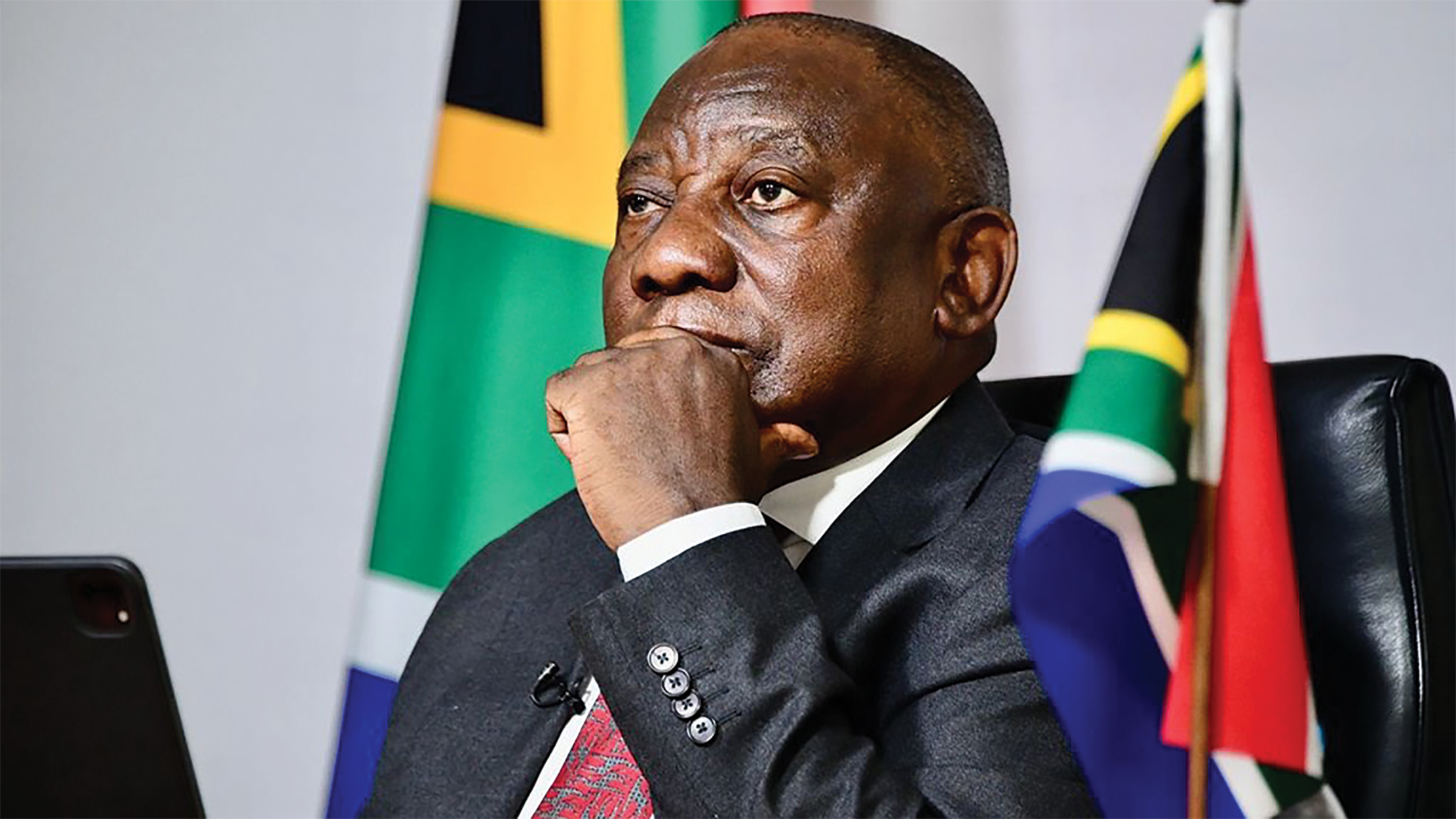
I thought about this when I observed the unfolding tragedy at the gold mine in in the North West province town of North Province and the near-deathly silence of President Cyril Ramaphosa.
I make bold the declaration that ironically Ramaphosa would not be the President of the Republic of South Africa, but for the sacrifices made by the mine workers from our neighbouring countries through their sweat and even deaths.
It was these mineworkers – from Lesotho, Eswatini, Botswana, Mozambique as well as the Bantustans of Transkei and Ciskei – who helped Ramaphosa to “establish” the National Union of Mineworkers, which became the country’s biggest and most powerful union and thus paved his path to the presidency of the country.
At the time the Num was founded in 1982, Ramaphosa was mostly an unknown quantity in political circles. The union plucked him out of political obscurity into national prominence.
There is another strong school of thought which avers that he was rescued from ignominy after it was alleged that he had betrayed fellow students to the notorious security police in 1974 while studying at the University of the North better known as Turfloop (now called University of Limpopo). Interestingly, the allegation that Ramaphosa betrayed fellow students was known among student activists in the ‘70s and became public knowledge a few years ago when it was made inside parliament by Congress of the People president Mosioua Lekota.
Lekota claimed that Ramaphosa betrayed him and other students by giving evidence which led to their imprisonment on Robben Island. According to Lekota, the security police “rewarded Ramaphosa” by releasing him from detention and not charging him with the other students. Lekota made these charges even outside the the protection of Parliament privilege. Ramaphosa has denied the accusations.
Fast forward to 1982 when Ramaphosa launches the Num. His past is forgotten. The union is the most militant. And, when the Num joins the United Democratic Front which is the internal front of the then banned African National Congress, the profile of Ramaphosa shoots up nationwide and internationally.
Notably, it was this progression from political obscurity, ignominy and a trade unionist which saw him being voted the secretary general of the ANC after the party was unbanned. His background as a trade unionist titan more than anything else made it possible to acquire this exalted position within the movement.
In 2017, he was voted president of the ANC a position he had coveted and hoped to acquire after the retirement of Nelson Mandela. Now that he is president of the country one would have thought he would be more sympathetic to the plight of the miners at Stilfontein.
One would have expected him to chide the Minister in the Presidency, Khumbudzo Ntshavheni, for her insensitive remarks that the miners are criminals who will be “smoked out” from the belly of the earth. Similar remarks of the purported criminality of the miners have been made by a number of ANC leaders as well.
Even Minerals Resources and Energy Minister Gwede Mantashe has made similar accusations that it is not the duty of government to help criminals. To put it mildly, this is rich coming from a minister who worked in the mines, and was once a top official of the Num himself and was propelled to political power along the same trajectory as Ramaphosa. This, too, from the same Minister who received benefits from the late Bosasa boss Gavin Watson, whose discredited company looted state coffers.
Ramaphosa pretended to be the champion of mineworkers when it suited his interests. Today his interests are not consonant with those of the self-same workers hence his indifference to their plight. How true Lord Palmerston’s observation is even today.
There is another cliche which has come to the fore in the unfolding tragedy at Stilfontein; the much vaunted spirit of Ubuntu – Botho among us Africans. I have often had doubts whether there’s really such a thing. The residents of nearby Khuma township have displayed this beyond any doubt.
Led by community leaders such as Thembile Botman, they rallied the residents to help bring to the surface those miners after police blocked food, medication and other needs being brought to them. With limited resources and expertise. they took it up themselves to help those who desperately needed assistance.
These residents do not condone illegal mining. But, unlike some insensitive and moronic Ministers, they realise this is not the time to let people die who might otherwise be saved. And, commendably, this community has shown it respects the sanctity of life.
Power to the residents of Khuma!
Save the lives of the miners and let the law take its course afterwards.
Comment
THE DANGERS OF CANNABIS
The drug, cannabis also known as marijuana has been established by scientific researchers as a potent genotoxin capable of also causing other serious health consequences including the risk of cardiovascular diseases including heart attacks.
The recent paper released by researchers from the University of Western Australia, has raised serious doubts about the legalization of the drug by several countries for recreational purposes. Cannabis exposure, they found, was associated with significant increases in cancers, particularly breast, pancreatic, liver, thyroid and testicular.
The researchers established that while cannabis-related cancers may be relatively rare, the effects on aging and birth defects appeared widespread and severe. Studies had also shown a 30 percent acceleration of cellular aging in users as young as 30 and clusters of major birth defects in areas with high cannabis cultivation. They challenged the prevailing narrative by more and more countries legalizing the use of the drug for medicinal purposes.
The findings by these researchers should be taken seriously because the consequences of cannabis use could be fatal for those addicted to the drug. Another study by the Society for the Study of Addiction, found that cannabis consumption could permanently disrupt the organ function with potentially far-reaching consequences on physical and mental health.
With the legalization of the drug, researchers have also found that one in every five pregnant women in the USA were now using cannabis to help with morning sickness, lower back pain and anxiety. Evidence has shown that the main psychoactive ingredient in cannabis posed risks to the developing fetus by impacting brain development.
Governments are urged to heed the warning from researchers to urgently conduct new epidemiological research to further investigate the modern health consequences of cannabis use, given the rise in potent products. They believed that policymakers and the public could no longer ignore the mounting evidence of cannabis-related genotoxicity.
The research challenged the prevailing narrative around the relative safety of cannabis use and warned that this mounting evidence was a resounding clarion call for action that could not be ignored by the authorities. Since the legalization of the drug – for recreational purposes – users in South Africa were now mostly youths especially students, who were smoking it freely just to be ‘’high’’.
The continued use of the drug has dire implications not just for individual users but for the health of future generations. The transgenerational transmission of cannabis-related abnormalities was especially alarming and demanded urgent attention from policymakers and public health officials.
Governments are called upon to review their decisions on the legalization of this drug which has been proven to have deadly consequences. Policymaker must shift from simplistic discussions focussing on personal liberties and focus on saving lives especially of our future generation. It has been established as a fact that cannabis could cause altered time perception and impaired thinking, memory and body movement. A review of the legislation legalizing the drug is therefore imperative.
Legalizing such a drug is like signing someone’s death warrant.