 WeeklySA_Admin
LEGACY: Biographer Stewart retells the remarkable story of architect extraordinaire of the British Empire, Boer Republics…
By Jacob Mawela
Elevated above the city of Pretoria, the Union Buildings, the symbol of government presence, dominates South Africa’s capital.
The view out offers distant views, inspiration and encouragement for its governors to “take the long view”, according to the architect and designer of the buildings, Sir Herbert Baker.
The buildings are a fine three-dimensional composition in which their horizontal emphasis is balanced by the verticals of chimneys – towers and columns with the continuous eaves line of the Roman-tiled roof uniting the whole.
Featuring ionic porticos, the two identical wings – with each having their own tower expressing the British and Dutch nations – brought peace to form a new South Africa on equal terms.
Linked by a huge curved colonnade enclosing an amphitheatre located at the very heart of the complex – the Union Buildings, unveiled in 1913, are British architect Baker’s greatest architectural achievement and crowning glory of his career in South Africa.
Pending their construction, Baker was hands-on regarding the delivery of the commission that at some juncture while on site, he is said to have “waged unending warfare with the contractors”.
A fellow architect, John Stewart, would later note that the consistent quality of the stately landmark’s detailing is remarkable, as it was also elegant.
Constructed upon a site selected by Baker himself, the complex is also proof of an admirable skill he developed in South Africa: that of conceptualising buildings located naturally upon rugged hillside sites.
The Boer generals, Jan Smuts and Louis Botha, who approved of the site and the design of the complex, reasoned, in the words of Christopher Wren, an English architect whose masterpieces include London’s St Paul’s Cathedral, said: “Architecture has its political use, public buildings being the ornament of a country, establishes a nation, draws people and commerce and make people love their native country.”
The country had already amalgamated the Boer Republics and the British colonies into the Union of South Africa.
The new country’s first prime minister General Louis Botha, despite criticism of a proposal to split the parliament and administration of the new country, had no wish of seeing the Union Buildings being erected in Cape Town.
Baker had the respect of these high-ranking Afrikaner politicians who, not long ago between the years 1899 to 1902, had been involved in battle against regiments of the British Empire he represented, in the Second Boer War – was testament of his own stature.
The station Stewart alluded to is Pretoria railway station, the first symbol of the Union of South Africa and Baker’s first significant civic building commission for his burgeoning career.
The seat of government in South Africa and the station were not the architect’s initial notable commissions in the early years of his stay in the country.
In 1894–1898 he converted and refurbished Groote Schuur for then Prime Minister of the Cape Colony, Cecil John Rhodes.
Groote Schuur would offer Baker his first experiment in Cape Dutch architecture to which he integrated his first true arts and craft design, a style of design and architecture developed in England as a protest against mid-Victorian manufactured products.
Rhodes accorded him laissez faire to deliver the ultimate masterpiece which from 1910 to 1984 became the official Cape residence of the Prime Ministers of South Africa, and on May 4, 1990, the site of the signing of the historic Groote Schuur Minute between President FW de Klerk and the ANC’s Nelson Mandela.
Baker had disembarked at the then Cape Colony in 1892 from his native England. Having arrived with his younger brother to investigate a farming opportunity the latter had proposed as a panacea for the depressed financial situation his large family comprising of twelve children found itself.
Quadruple factors, namely, his befriending of mining magnate and fellow Englishman Cecil John Rhodes; an invitation by the then British High Commissioner for South Africa, Alfred Milner, to assist with the reconstruction of the Transvaal in the aftermath of the war against the Boer republics; patronage of The Kindergarten Group; as well as the establishment of the Union of South Africa in 1910 – would prove to be catalysts which would transform Baker’s career and life immensely around the turn of the 20th century.
Baker developed an architectural approach that was responsive to the extremes of the climate and sensitive to local vernacular traditions.
After a Victorian architectural apprenticeship in London, Baker became the most prolific architect of his age in South Africa, delivering commissions of designs of myriad structures such as Saint George’s Cathedral in Cape Town, Rhodes University, South African Institute for Medical Research, Honoured Dead Memorial in Kimberley and Saint John’s College in Johannesburg.
After 21 unparalleled years in the country, he went on to design the imperial capital of New Delhi in India – together with fellow British architect, Sir Edwin Lutyens, the designer of the Johannesburg Art Gallery.
Working throughout the First World War, he also designed the South African War Memorial at Delville Wood in France – as well as the Bank of England, having relocated back to his homeland.
Baker’s name is included on the roll call of the greatest architects of the 19th, 20th and 21st century.
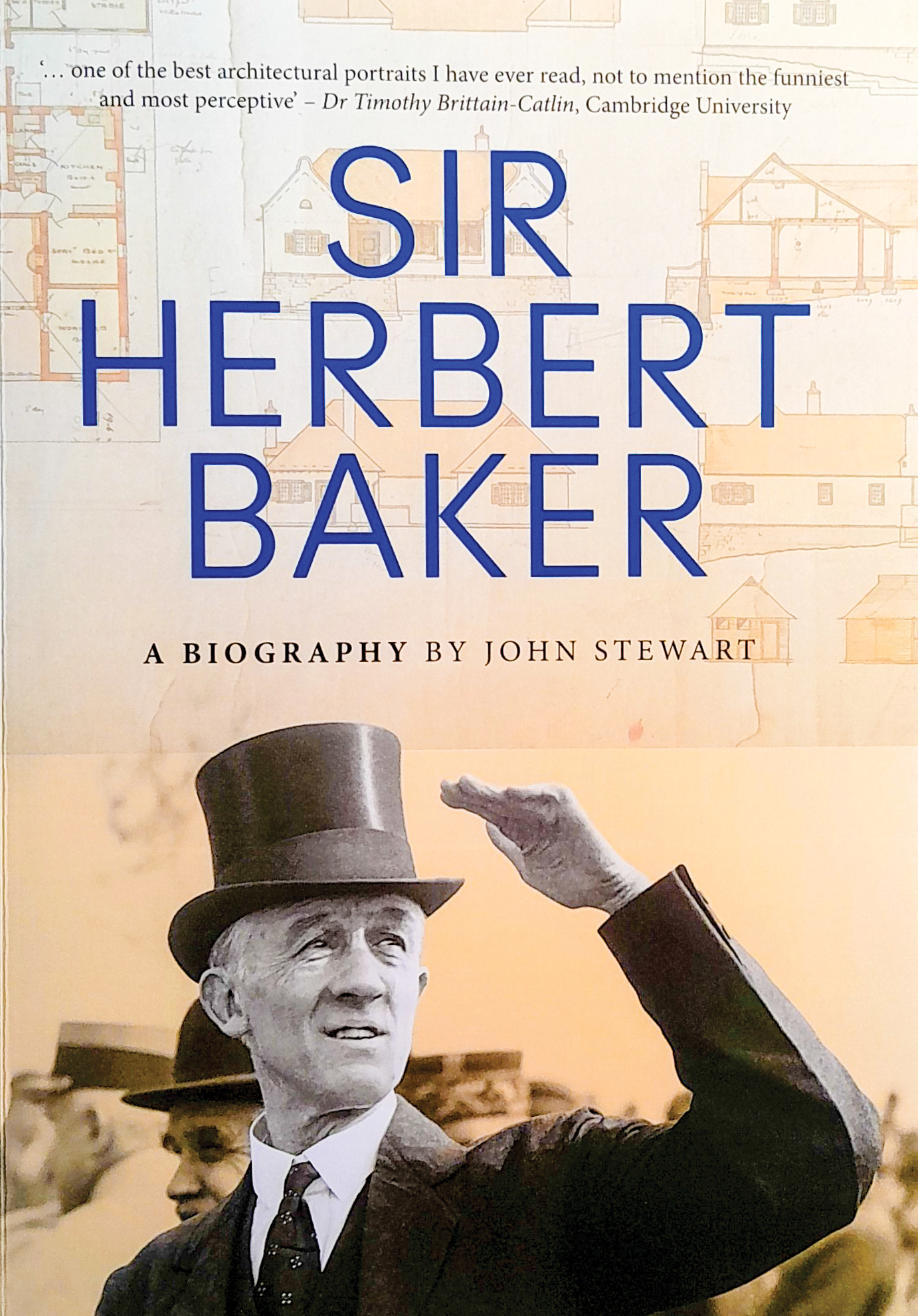
Comprising varying enthralling facets of Baker’s life, this is the first full biography from childhood of the eminent architect, which Stewart wrote with the full cooperation of his family and with access to his archive and private papers.
Baker was a cherished friend of many fascinating men of his age, including the Poet of the Empire, Rudyard Kipling, Lawrence of Arabia, and General Jan Smuts.
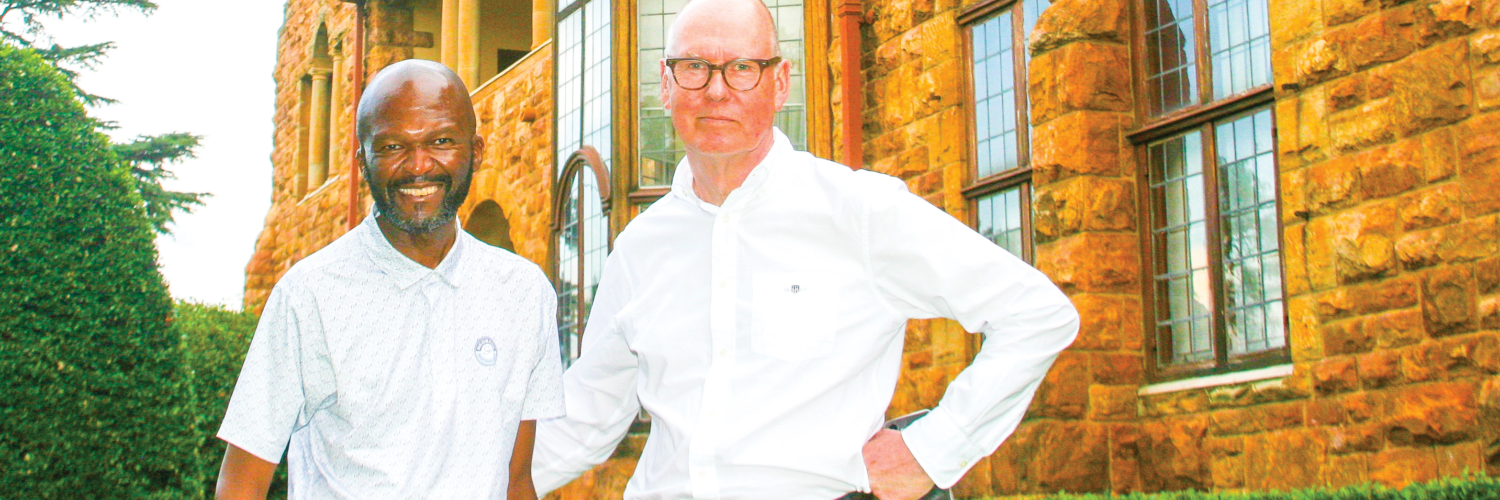
John Stewart is an award-winning architect, architectural historian, author and erstwhile leader of one of the UK’s largest multi-disciplinary architectural practices.
He is a Fellow of the Royal Institute of British Architects and the Royal Society of Arts.
* Sir Herbert Baker is published by Jonathan Ball Publishers. It is available at all leading bookstores countrywide. It retails for R400