 WeeklySA_Admin
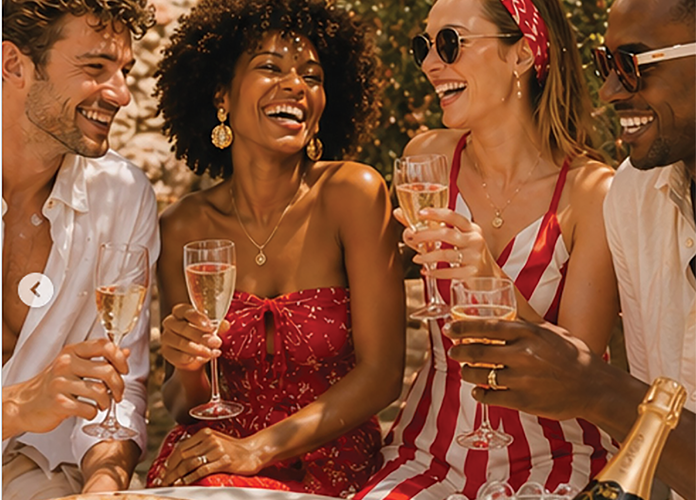
CRISIS-PROOF: As still wine consumption declines around the world, sparkling wines are bucking the trend. Industry experts say premium bubbles—including South Africa’s Cap Classique—attracting younger consumers and opening new opportunities for producers…
By Vincent Mebmer
The sparkling wine segment is proving significantly more resilient than the broader wine market, showing greater resistance to declining consumption while continuing to unlock new growth opportunities.
This is the key finding of the ProWein Sparkling Report, which was published on Tuesday.
The report quotes Luke Tegner, Head of Consulting at market researcher IWSR: “Younger consumers are taking a keen interest in the category and are enjoying sparkling wine even on casual, everyday occasions—beyond traditional celebrations. If this trend continues, sparkling wine can tap into new target groups and increase purchase frequency among existing consumers.”
While IWSR data shows sparkling wine volumes recorded modest declines across the United States, United Kingdom and France, the category continues to outperform still wine. Champagne has experienced some of the steepest global declines, while more accessible premium alternatives such as Crémant continue to gain market share.
Champagne loses ground
Prosecco managed to grow in volume once again in 2025 (+1.1% year-on-year), although at a slower pace than the previous year. France, in particular, experienced an accelerating Prosecco boom during the first nine months of 2025, while emerging markets such as Mexico and Greece also recorded double-digit growth.
The premium Prosecco DOCG segment expanded even faster, rising 8% globally to 98 million bottles. Eastern Europe proved especially dynamic, with consumers increasingly favouring drier styles such as Brut and Extra Brut.
Other premium Italian sparkling wines also held their own. Franciacorta increased exports during 2024, while Lambrusco volumes eased slightly.
Champagne, however, has struggled to maintain the momentum achieved during the post-pandemic boom. Global sales have fallen from 325 million bottles in 2022 to 266 million bottles in 2025, with revenues declining even faster. Producers are increasingly looking to single-vineyard and single-varietal bottlings to justify premium pricing, while Brut Nature styles continue gaining popularity. Crémant has emerged as one of Champagne’s biggest beneficiaries. France’s affordable traditional-method sparkling wine climbed 7.5% to almost 123 million bottles in 2025. According to Bouvet Ladubay export director Benoît Defranoux, consumers are increasingly drawn to Crémant’s freshness, elegance and value for money. Spanish Cava endured a difficult year, falling 13% to just over 190 million bottles, largely because of reduced production volumes and Freixenet’s decision to stop producing Cava for the German market.
Even so, the premium end of the category continued to grow strongly, with top-tier Cava Superior Paraje Calificado surging by 82% from a small base. German Sekt declined 4.7% to 234 million bottles during 2025, although smaller producers continued to outperform larger commercial wineries. Most German consumers still favour sweeter styles, with 56% of Sekt sold classified as dry and 31% as medium-dry.
English Sparkling maintained its impressive longer-term growth trajectory, holding steady at 6.2 million bottles during 2024—three times higher than in 2018. Exports jumped by 35%, reflecting growing international confidence in the category.
The report also highlights growing exports from Hungary, while sparkling wines produced in California and Tasmania remain largely domestically consumed. The same broad pattern is increasingly evident in South Africa, where Cap Classique—the country’s flagship traditional-method sparkling wine—has emerged as one of the wine industry’s brightest performers.
International demand is also strengthening. The United Kingdom, now Cap Classique’s largest export destination, has seen exports rise by 157% over the past five years.
Leading British wine buyers, convened in a panel by the International Wine & Spirit Competition recently, say South African traditional-method sparkling wine offers consumers a compelling premium alternative to both Prosecco and Champagne.Although South Africa’s overall wine market continues to face pressure from inflation, changing drinking habits and moderation trends, producers say premium sparkling wines have remained remarkably resilient, benefiting from consumers’ willingness to spend more on quality rather than quantity.
International recognition is also helping to fuel demand. Cap Classique has gained growing export momentum, particularly in the United Kingdom, where industry experts recently described it as one of the fastest-growing sparkling wine categories. South African producers exported more than 90 000 cases to the UK during 2025, while the category continues to attract attention for offering Champagne-quality wines at more accessible prices.
South Africa’s Cap Classique sector is following many of the same premiumisation trends seen elsewhere. Producers are increasingly experimenting with longer lees ageing, lower dosage styles and distinctive South African grape varieties such as Chenin Blanc and Pinotage alongside the traditional Chardonnay and Pinot Noir. Industry observers say these innovations are helping Cap Classique establish its own identity rather than simply competing with Champagne.
Alcohol-free bubbly
Another standout trend is the rapid growth of alcohol-free sparkling wines. Germany sold 22.3 million bottles of alcohol-free Sekt during 2025, representing a 12% increase and accounting for almost 9% of the country’s total sparkling wine market. IWSR expects dealcoholised sparkling wines to continue recording double-digit growth globally over the coming years.
South Africa is witnessing a similar shift. Driven by health-conscious consumers, younger drinkers and the moderation movement, wineries are steadily expanding their alcohol-free and low-alcohol sparkling offerings. Although still a relatively small segment locally, producers believe the category represents one of the industry’s strongest future growth opportunities alongside premium Cap Classique. “The shifting dynamics in global sparkling wine markets have created an unexpected but exciting opportunity for us to share the story of South African Cap Classique with a wider audience,” said Pieter Ferreira, chairman of the Cap Classique Producers Association in an interview with online entity wine.co.za last year. “More consumers are looking beyond the traditional options, and they’re discovering the exceptional quality, craftsmanship, and value that Cap Classique offers. It’s the perfect moment to showcase our world-class bubbles on the international stage.
“Cap Classique is consistently rated among the best in the world”. Cap Classique is bottle-fermented sparkling wine, made according to the traditional method. The name was conceived by South African winemakers when producers in the Champagne region in France objected to the use of the word Champenoise by other producers. – Meininger’s International/Additional reporting by Len Maseko
EVENTS
Cape’s Finest Reds Showcase
Wine lovers, collectors and industry professionals will once again have the opportunity to sample some of South Africa’s finest flagship red wines when Caroline’s 2026 Red Wine Review takes place at the DHL Stadium in Cape Town July 30.
Now in its 38th year, the prestigious tasting event, hosted by renowned wine retailer Caroline Rillema of Caroline’s Fine Wine Cellar, has become one of the highlights of the South African wine calendar.
The annual showcase will feature 90 of the country’s most acclaimed red wines, with each invited producer presenting just one flagship wine.
The tasting line-up spans South Africa’s leading Cabernet Sauvignon, Shiraz/Syrah, Merlot, Pinotage, Cinsault and Grenache wines, alongside a selection of niche varietals and acclaimed Bordeaux-style, Rhône-style and Cape blends.
The event will be staged in the Members’ Lounge on the fourth floor of the DHL Stadium.
Guests will receive a crystal tasting glass and a catalogue listing all wines available for sampling. Wines may be purchased on the evening at a 15% discount off the normal retail price.
The tasting runs from 17:00 to 21:00. Tickets cost R550 per person, while secure undercover parking is available for R70 per vehicle.
Winter wines at Erinvale
Wine lovers looking for a reason to embrace the winter chill can head to the Cape Winelands, where Erinvale Estate Hotel & Spa has unveiled its popular Wine Society series — a collection of intimate tasting evenings celebrating South Africa’s rich wine heritage.
Set against the backdrop of the Helderberg mountains, the monthly gatherings are hosted in the hotel’s Magnolia Social Dining Lounge, where guests can enjoy guided tastings, curated cuisine and conversations with some of the country’s most respected winemakers.
Hosted by wine presenter Nick Plummer alongside Erinvale’s culinary team, each event offers guests the opportunity to sample up to ten wines paired with a specially designed menu that highlights the character and flavour profile of each selection.
The evenings conclude with a dessert course and storytelling from the winemakers behind the labels.
The June 25 edition will feature Dornier Wine Estate, Mitre’s Edge Wine Estate and Sanniesrust Wines, while the July 30 event showcases Kleinhoekkloof, La Bri and Remhoogte. Additional Wine Society evenings are scheduled for August 27, September 17 and October 29.
Priced at R495 per person, the events are limited to just 35 guests, ensuring an intimate and engaging experience that combines fine wine, food and fellowship — the perfect antidote to winter’s cold evenings.
Durbanville Hills’ Thursdaze
Wine lovers looking for a relaxed and unconventional night out can look forward to Unfiltered Thursdaze, a new after-hours experience at Durbanville Hills.
Taking place on selected Thursdays and started last night, the weekly event will continue next Thursdays to July 9, offering guests an opportunity to explore wine in a setting that is more about stories and connections than formal tastings and wine jargon. The evening begins at 6pm with a welcome glass of wine and three paired bites served at the table, followed by an informal introduction from the winery team. Guests are then free to explore exclusive barrel samples, experimental blends and in-progress wines that are not usually available to the public.
A highlight of the experience is the interactive “Guess the Barrel” challenge, where participant sattempt to identify a wine’s varietal and stage of development for a chance to win tickets to a future event.
Tickets cost R150 per person and are available in advance. Limited seating is available. – Compiled by Len Maseko: lenmaseko@weeklysamirror.news