 WeeklySA_Admin
CLAMPDOWN: After investigation by an international journalists grouping revealed the role Eswatini may have played in southern Africa’s illicit cash flows and gold economy, members of the tiny kingdom’s parliament are seeking to prevent future leaks…
By Micah Reddy
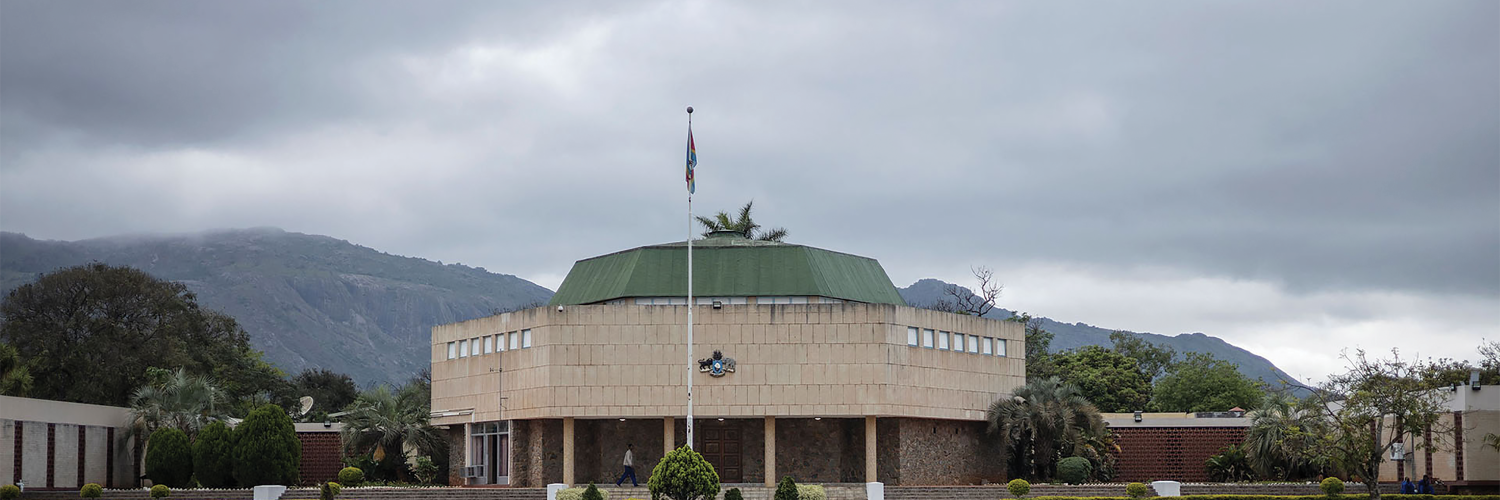
Lawmakers in the Kingdom of Eswatini are demanding that the country’s finance minister, Neal Rijkenberg, answer questions about a leak of confidential documents which exposed the kingdom’s unexplored role as a possible conduit in southern Africa’s gold smuggling economy.
The leaked documents, released publicly in April this year, also showed how the absolute monarchy’s weak anti-money laundering controls enable figures close to the royal family to benefit from proximity to the king. They formed the basis of the International Consortium of Investigative Journalists’ (ICIJ) recent “Swazi Secrets” investigation, which revealed Eswatini’s little-known role as a possible pipeline in southern Africa’s illicit gold economy.
Swazi Secrets was based on a leak of over 890,000 documents from the Eswatini Financial Intelligence Unit, which monitors financial transactions in the kingdom and reports on suspected money laundering and other illicit activities. These documents were obtained by Distributed Denial of Secrets, a nonprofit devoted to publishing and archiving leaks, which shared them with ICIJ. ICIJ coordinated a team of 38 journalists across 11 countries to examine the documents.
Swazi Secrets also revealed how figures close to Eswatini’s king benefitted from his influence and the country’s weak financial and anti-money laundering controls, including Rijkenberg. Rijkenberg was named in the documents in connection with one of his companies purchasing sensitive Israeli spyware — allegedly for the use of the government and police.
In a reaction to the ICIJ expose, members of Eswatini’s parliament have signalled a crackdown on press freedom. The lawmakers — insisting to know whether anyone has been held accountable for the leak and what measures have been put in place to prevent future leaks — introduced a motion last month to haul in Rijkenberg.
In an ominous sign for press freedom in Eswatini, discussion around the motion turned to conspiracy theories, with MPs suggesting the leak may have been a plot to destabilise the kingdom, Africa’s last absolute monarchy.
The MP who brought the motion, Welcome Dlamini, questioned the motive behind the leak. According to local media, he told parliament that the leak was an attempt to foment revolution, saying:
“What’s the intention of this leak while we are fresh from a civil unrest? We need to establish the motive for these leaks.”
Dlamini, a former journalist who was president of the Swaziland National Association of Journalists, has previously called for tighter state regulation of the media in Eswatini.
The MP who seconded his motion, Alec Lushaba, is also a former journalist. Lushaba claimed that the leak could have come from international financial institutions like the World Bank which, he said, monitor how states use their money. According to local media, he asked, “Why should we trust that the leak came from the country and not from the same organizations?”
At least one MP openly disagreed with Dlamini. Nomalungelo Simelane told fellow lawmakers that “Were it not for the whistleblowers, we wouldn’t be aware of the high-level corruption happening in the country. Why focus on the whistleblowers and not take action against those who were exposed by the leaks as having done corrupt practices?”
She homed in on the beleaguered Farmer’s Bank, which was improperly awarded a license to operate in the kingdom.
The Swazi Secrets investigation showed how political pressure helped ram through the bank’s license application. It also revealed the unusual role that Rijkenberg, the finance minister, played in the bank.
The state has clamped down on dissent and criticism since widespread anti-government unrest in 2021 in which dozens were killed. Media in the country is tightly controlled, and journalists are frequently threatened, arrested, subjected to violence and forced into exile.
Sadibou Marong, the sub-Saharan Africa director of Reporters Without Borders, noted that the motion is part of a long tradition of “preventing journalists from working freely and independently” in Eswatini.
“We believe that such a move [is evidence of a] worsening trend of press freedom,” he told ICIJ
Mirror Briefs
EX-SIU HEAD JAILED
The former head of the Special Investigation Unit (SIU) in Gauteng has been sentenced to six years imprisonment in the Durban Commercial Crimes Court. Sifiso Kunene (54) was dismissed from his SIU post after he was arrested and appeared before magistrate Garth Davis in October 2020. The charges stem from a claim against the Road Accident Fund that was handled by the law firm in which Kunene was a partner before he joined the SIU. Kunene pleaded not guilty to the charges.
The court found that between August 2014 and March 2015, Kunene unlawfully stole R226 790,00 of Precious Swartling’s money, which was entrusted to him as an attorney, when he was working as a director at Kunene Masango Incorporations. The money was paid out by the Road Accident Fund (RAF).
The State said Kunene kept on lying to Swartling about her funds not being deposited by the RAF, until she went to the RAF, and her compensation had been released to her attorney. When she confronted Kunene, he admitted using her money, and said he would reimburse her. Kunene paid school fees with the money and bought other goods, depleting the money in 33 days
ACES’S AIDE TO FACE THE MUSIC
The former personal assistant of Ace Magashule will finally appear in the Bloemfontein Magistrate’s court on Monday after she was successfully extradited from the USA.
Morodi Cholota (37), was apprehended in June in the USA and the court determined the charges against her were “extraditable offences.”
She faces multiple charges related to the failed R255 million asbestos project initiated in 2014. The charges include fraud and corruption, stemming from the scandal involving the Free State Department of Human Settlements.
The project, which was meant to address asbestos issues in public housing, has been marred by allegations of misconduct and financial mismanagement.
The Hawks spokesperson, Philani Nkwalase, confirmed Cholota’s extradition was authorised by USA authorities on 31 July. She arrived back in South Africa on Thursday and was processed by Hawks detectives before her court appearance.
Cholota had previously been implicated in the case following a warrant of arrest issued against her in 2021.
Despite a prior agreement to voluntarily surrender to authorities, she failed to honour this commitment, leading to her arrest abroad.
The role of Cholota was first brought to light by the State Capture Commission on December 6, 2019. She provided details about the R225-million asbestos scandal and the alleged money trail. – Lehlohonolo Lehana
A TOTAL 600 000 MEN ABUSE WOMEN
South Africa was deeply traumatised by violence against women and children despite the fact that the country celebrated the gains made during the 30 years of democracy, according to President Cyril Ramaphosa. He was speaking at the Denis Nel Stadium in Pofadder, Northern Cape on Friday to celebrate the Women’s Day commemoration whose theme this year is “Celebrating 30 Years of Freedom Towards Women’s Development”.
The national event marked 68 years to the day since 20,000 women of diverse backgrounds from across South Africa marched to the Union Buildings in Pretoria to protest against the extension of Pass Laws to women.During 30 years of democracy, South Africa had made significant strides in advancing gender equality. This was in all domains of society, including economic empowerment of women.Ramaphosa said seven percent of women, that were 18 and older, had experienced physical or sexual violence in a 12-month period.
“Seven percent may not sound like a lot but it is equivalent to 1.5 million women who are abused and violated.”
The president said this number comes from a survey done by the Human Sciences Research Council (HSRC) on the prevalence of gender-based violence in South Africa. A total 600 000 men had admitted to being violent against women. Men must change their behaviour.
“These are women who have endured trauma that no person should have to experience.” – Lehlohonolo Lehana.
ALARMING FIGURES OF DAILY HEPATITIS DEATHS
More than 3,500 people die from hepatitis viruses every day and the global toll is rising, the World Health Organization has warned while calling for swift action to fight the second-largest infectious killer.
New data from 187 countries showed that the number of deaths from viral hepatitis rose to 1.3 million in 2022 from 1.1 million in 2019, according to a WHO report released to coincide with the World Hepatitis Summit in Portugal this week.
These are “alarming trends,” Meg Doherty, head of the WHO’s global HIV, hepatitis and sexually-transmitted infection programmes, told a press conference. The report said that there were 3,500 deaths per day worldwide from hepatitis infections — 83 percent from hepatitis B, 17 percent from hepatitis C. There are effective and cheap generic drugs which can treat these viruses.
Yet only three percent of those with chronic hep B received antiviral treatment by the end of 2022, the report said. For hep C, just 20 percent — or 12.5 million people — had been treated.
“These results fall well below the global targets to treat 80 percent of all people living with chronic hep B and C by 2030,” Doherty said. The overall rate of hepatitis infections did fall slightly.
But WHO chief Tedros Adhanom Ghebreyesus emphasised that the report “paints a troubling picture”.“Despite progress globally in preventing hepatitis infections, deaths are rising because far too few people with hepatitis are being diagnosed and treated.” – Fullview.