 WeeklySA_Admin
HOW INTERNATIONAL GOLD DEALERS EXPLOITED ESWATINI’S ECONOMIC DREAM
WEB: Around 2012, the kingdom’s monarch King Mswati III professed to have a bold plan for a thriving economic zone. But, linked to this project, the International Consortium of Investigative Journalists (ICIJ) investigation has uncovered a scheme involving two non-existent gold refineries channelling millions of dollars to Dubai through it…
By Micah Reddy and Warren Thompson
Against a backdrop of rolling hills and sugar cane fields, a generous stretch of cleared land borders the small industrial town of Matsapa in central eSwatini, a tiny landlocked African country between South Africa and Mozambique.
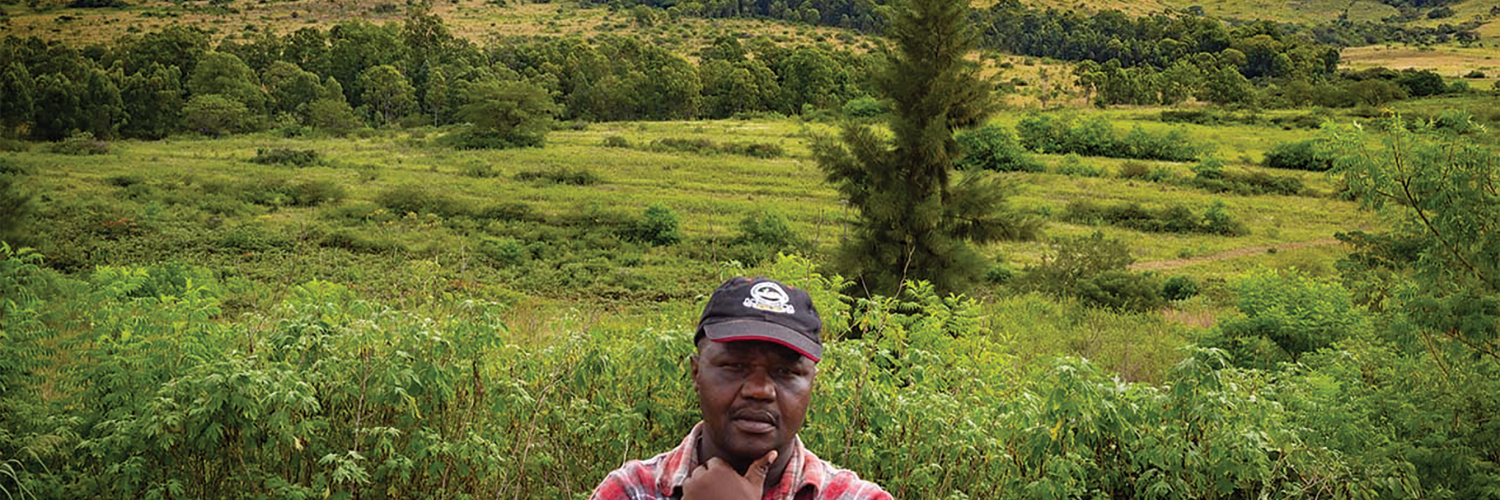
Musa Motsa, a 51-year-old farmworker and father of six, grew up on this land. He and his family used to grow cabbage and other crops here and collected water from a nearby spring. But in 2012, they were forcibly removed — along with around 180 other people — to make room for a government-sanctioned “special economic zone,” or SEZ, called the Royal Science and Technology Park.
The “brainchild” of eSwatini’s king, Mswati III, and his “insatiable desire to help stimulate economic growth,” as one press release put it, the SEZ was meant to be an oasis for new business. Instead, grass and weeds are slowly reclaiming vacant plots. Wide, empty boulevards go nowhere, lined with streetlights that aren’t in operation. One lone building — a multi-storey government office complex — stands in a surreal ghost land of nearly 400 acres. There are no remnants of the vibrant community where Motsa once lived. And there’s nothing pointing to the businesses that, on paper at least, are based here: mysterious gold refineries channelling millions of dollars to Dubai.
eSwatini — formerly Swaziland until its king unilaterally changed the country’s name in 2018 — is Africa’s last absolute monarchy. A tiny kingdom of 1.2 million people, with an economy heavily dependent on its larger neighbours, it’s plagued by high unemployment: Nearly 60% of Swazis under age 25 are out of work. The country’s life expectancy in 2021 was 53 years for men and 61 for women — among the lowest in the world — driven by the world’s highest prevalence of HIV among adults (around 26% of the adult population is living with the virus). While the majority of eSwatini’s population faces grinding poverty, King Mswati III and members of his expansive family — reportedly including 11 wives and over 30 children — have earned a reputation for conspicuous consumption. The king’s collection of bespoke watches alone is worth millions of dollars, and his fleet of luxury cars and jets belies the tattered state of an economy that is smaller than Fiji’s.
By offering favourable incentives like corporate tax exemptions, the SEZ would, in the words of the country’s officials, promote exports and growth, create jobs, and spur technological development. It was to be eSwatini’s fast track to “first-world status,” according to the press release.
To do this, the government enacted a series of forced evictions from mid-2012 until the end of 2014, according to Amnesty International. Only one of the evicted people was recognised by the government as having a right to live on the land and was compensated with an alternative home. All the others — like Motsa and his family — were, in the government’s view, “illegal squatters” on land that was held by the king “in trust” for the Swazi people. When the king allocated the land to the Ministry of Information and Communication Technology for what would become the SEZ, the residents were told they would have to leave.
Motsa now lives in a small home provided by his employer, about nine miles from where he grew up. Sitting in his living room, the king and queen mother watching from a calendar on the wall above, Motsa’s anger is discernible as he recounts the armed riot police’s eviction of his family a decade prior. “It was painful,” he told ICIJ. “We slept in the open — no roof over our heads.” He says people pleaded with those carrying out the demolitions to wait until they could remove their belongings, but some houses were destroyed along with their furnishings. He managed to salvage a few corrugated iron sheets that lie in a pile outside his new house. “It’s been a lifetime of pain,” he says.
Motsa was lucky enough to have somewhere else to go. Others were left homeless. Some took refuge at a nearby Lutheran church. “We were just treated like dogs and chased away,” says Ntfombiyenkosi Dlamini, who, she says, had lived within the boundaries of what is now the SEZ since the 1970s. When the evictions happened, her family had to move the graves of buried relatives. Then her family split up and are now scattered across the country. Ostensibly, the SEZ is home to two gold refineries: Mint of eSwatini (Pty) Ltd and RME Bullion (Pty) Ltd. Neither of these refineries existed, however. Mint of eSwatini was a shell through which millions of dollars in suspicious transactions flowed, and RME was suspected of being a link in an illicit gold trading operation. The companies eventually set off alarm bells at the Central Bank of eSwatini and the Swaziland Financial Intelligence Unit, now known as the eSwatini Financial Intelligence Unit (EFIU), an independent statutory entity within the kingdom that aims to “provide financial intelligence that safeguards the local and international financial system” from money laundering, terrorism financing and other illicit activity.
Leaked documents reveal that eSwatini’s authorities were concerned that the gold refining companies were exploiting the SEZ’s loopholes to evade taxes, illegally move money abroad, or potentially move illicit money through the kingdom. Rather than drawing in productive investment and spurring economic growth, the SEZ may have turned the country into a hub for money laundering, the central bank and EFIU feared.
The activities of two figures close to the king concerned the EFIU: Swazi jeweller Keenin Schofield, one of King Mswati III’s sons-in-law, who was once found guilty of and fined for diamond smuggling, and Alistair Mathias, a secretive and politically connected Canadian businessman involved in gold trading and construction.