 WeeklySA_Admin
DEVELOPMENT: Cell C partners with black-controlled company to shape future of South African youth through technologic advancement skills learnership…
By WSAM Reporter
Dunoworx, a 51% black-owned company, is running an intensive 12-month learnership programme that empowers youth to become fully qualified mobile phone repair technicians.
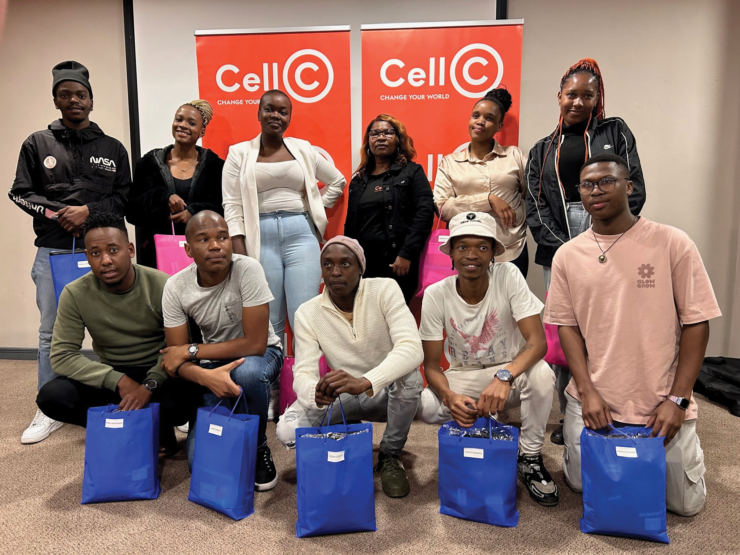
The company, Dunoworx, was formed in March 2022 to take over the entire Cell C repair centre, which today looks after the mobile handset repairs for Cell C customers. Cell C’s Enterprise Development Fund, which invests in the education and development of SA youth, is a proud investor in the Dunoworx Learnership Program which is part of the two company’s mission to drive technological advancements and revolutionise workforce development.
As leading specialists in mobile device repairs and replacements, Robtronics/Dunoworx recently recruited a second intake of youths to be trained under its intensive 12-month Robtronics/Dunoworx Learnership Programme as part of its commitment to upskill the country’s youth.
As in the case of the first intake of youth trainees, who have since graduated and some have acquired jobs while others will venture into their own business, the group will be immersed in training modules facilitated by experienced engineers and industry moderators. Once they have completed, the learners would be placed within various parts of the business to gain practical experience.
Course modules also cover skills such as entrepreneurial skills, customer service, front desk management, personal grooming, sales skills and customer communication skills to ensure that they leave the course fully equipped and employable.
Robtronics uses their expertise in reverse logistics to ensure maximum efficiencies are consistently achieved. Led by a management team that applies their collective 45 years of experience, coupled with the effective use of sophisticated systems, Robtronics manages all variables in the after sales aspect of handset / mobile device repairs, cell phone replacements and service. It is this collective expertise which is being imparted to the students who have been selected to take part in this Learnership Programme.
Mark Robbins, MD of Robtronics, says: “Education is the future of this country and Robtronics is heavily invested in upskilling the under privileged community. We offer learnerships on how to repair mobile phones and our candidates learn every aspect of the business by working in the business so that they are fit for industry once they have completed the course. What they can take away from it will give them the ability to start their own businesses and employ other people in the future.”
Candidates who successfully completed the first inaugural Robtronics/Dunoworx Learnership Programme have been successfully employed.
Sizwe Phungwayo, who was one of the inaugural learnership candidates, had this to say of the opportunity: “I am so appreciative for the opportunity granted to me to partake in the Robtronics / Dunoworx 12-month learnership programme which focuses on empowering youth like me, by facilitating skills development in telecoms. It has been a great honour to be a part of this learning experience as it has carved a path for my career that has begun to take shape. I have learned a great deal and made solid life-long connections along the way. Now that I have completed the programme, I have managed to secure employment as a Junior Technician in handset repair for Samsung, a leading brand manufacturer in tech worldwide.”
Requirements for the learnership expect candidates to meet the following criteria to apply for the Learnership Programme: to be aged between 18-28; to be South African citizens; have valid Matric certificate; must be able to read and write English; must a valid bank account and SARS tax number. They submit a recent CV and preferably be vaccinated. Potential candidates can apply through Blue Train Group as well as SA youth.
For more information, please visit the Robtronics website https://www.robtronics.co.za/send an email to help@robtronics.co.za or call 011 532 3437. Visit Robtronics / Dunoworx at 3 Sandown Valley Crescent, Sandown, Sandton.
Robtronics is a leading provider of mobile device repairs, replacements, and reverse logistics. Cell C Enterprise Development Fund’s aims is to empower local enterprises, promote economic growth and driver sustainable development in South Africa.
EVENT AND PROJECT MANAGERS MUST BE AGILE THINKERS
Skills: Good people skills is clearly critical to success in event and project management roles
By WSAM reporter
It is overwhelmingly agreed that all thumbs are fingers, but not all fingers are thumbs. In that same vein, it should be said that all event planners and managers are project managers, but not all project managers can coordinate a wedding or a corporate conference.
So, in what ways is event management and project management the same? What are the relative benefits of approaching the study of project management from an event management perspective? And, are you ready to take the next step in making project management and event coordination a choice for your career path?
The Aleit Academy, which describes itself as a tertiary education institution with a difference, describes project management and events coordination in three ways:
“Both project management and event management makes use of a project framework or event timeline to ensure things are progressing smoothly” . This means that both project managers and event coordinators measure a project’s progress in phases.
“Tasks need to happen in a specific order and time frame in both cases and both project managers (PMs) and event coordinators (ECs) use milestones to track progress. For example, in planning and managing a date must be set and then a wedding venue must be booked and paid for before individual suppliers can be booked.”
According to the Academy, in a corporate project management role, the milestones may look different, for example, project briefing, web domain purchase and registration and site design. However, all projects, including events can be simplified into the following basic phases: research, discovery and preparations.
“When planning and managing an event, this phase typically involves consulting the client, researching potential venues and other service providers, etc. and preparing or finalising the event budget. The same activities are typical of project management across fields” .Managing a building project, for example, would also require the budget to be fixed at this stage and research done on potential building materials suppliers, etc.
Project Initiation: Whether the project is an event or encompasses the development of a tangible deliverable, project initiation begins as soon as the research, discovery and preparation phase has been completed.
In the case of an event, project initiation involves taking active steps to retain book service providers, for example; whereas, in the event of the development of a website, project initiation may involve the gathering of tangible resources, such as web-copy and imagery.
Project Execution: This involves the execution of the aforementioned wedding or the development of the website. Project Monitoring and Control: This phase is perhaps the phase that differs the most between traditional project management and event management, simply by virtue of duration of the phase and the project itself.
“In the event of a more traditional project being managed, say, for example, a building project, the project execution phase is protracted, leading to a protracted project monitoring and control process and leaving room for mid-project adjustments and ongoing assessment and course-correction over time.
“In the case of an event being managed, the project execution phase is typically no longer than a weekend and the event itself often lasts mere hours, leaving little time for mid-project adjustment.”
According to the Academy, event managers must therefore be agile thinkers and problem solvers, while project managers can afford to be less agile and more methodical in their approach to project monitoring and control.
While project managers are also typically less involved in the day-to-day elements of project execution, event managers are crucial role-players in the execution of their projects or events on the day.
Project Review and Debriefing: No matter the nature of the project at hand, there is always work to be done once the real work is over. If you have been managing an event, there is the inevitable clean up, payment of vendors and feedback from the client.
If you have been managing a website development project on the other hand, there is rendering the site live and troubleshooting any bugs that have crept in between development and the live site. All project managers, including event coordinators have systems in place to ensure that projects wrap up successfully once the real work has been completed.
– They are both task-orientated at metaproject/ micro-level.
PMs track the progress of their projects against a predetermined set of milestones and each of these milestones, however, encompass extensive checklists of smaller tasks of their own.
And, this is the case whether you are managing a conference, wedding or other event as a project, or whether you are managing a project of another nature.
For example, the Academy says while both event and project managers will have checklists for the execution phase of their project, the contents of these lists will differ completely from one another, and be dictated by the nature of the project, the project budget, the clients’ goals and objectives.
This means that, while their individual checklists’ contents differ, both event planners and PMs need to be organised, level-headed and administratively minded people, dedicated to checking items off their lists methodically.
– They both require teamwork and collaboration.
You cannot successfully manage a project, whether it is an event or not, without working with and collaborating with other people. The Academy says from external service providers to internal team members, subordinates or superiors to whom you must report; project and event managers are both required to communicate and coordinate in order to get the job done.
“While event planners may work closely with external vendors, third-party suppliers and hired help and agency project managers may work more closely with different agency departments.
“Both positions require a certain modicum of management of human resources and so, good people skills and the ability to communicate clearly and concisely is critical to success in both event and project management roles.