 WeeklySA_Admin
CRIME: The extraordinary story of the adventurous life of one Michael Medjuck, caught in the largest drug bust in United States’ history – with 70 tons of hash in 199…
By Jacob Mawela
‘Pablo Escobar of hash’, was how American and Canadian print and broadcast news media described him upon getting wind of an affidavit submitted by his attorney, in a desperate and ultimately futile bid to secure him bail, after he had been nabbed on charges of conspiracy to import and possession of over 70 tons of hashish.
This followed the arrest of the suspect behind the massive drug haul during a sting operation by US Customs Service officers at Sea-Tac Airport in Washington State on September 18 1991.
Unsurprisingly, the media – which included the Wall Street Journal, The New York Times, Toronto Globe & Mail and the NBC – feasted on the scoop, immediately likening the suspect to the notorious Pablo Emilio Escobar Gaviria, the Colombian drug lord, narco-terrorist, and politician who was the founder and sole leader of the Medellín Cartel.
The drama had unfolded sometime in June 1991 when the US Coast Guard intercepted a 350-foot freighter, the Lucky Star, carrying cargo of 70 tons of Afghani hashish while transferring its load on to a fishing boat named the Barbara H, on international waters.
On April 16 1993, pending a pre-trial hearing, the suspect took a plea bargain (which meant accepting a 20-year sentence in a federal prison instead of a life sentence were he to go on trial, subject to surrendering all his assets to the US government – which included 371 Krugerrands worth $840 000 (nearly R15 billion); $1 588 056 (R29 million) in cash and gold coins; real estate to the tune of $900 000 (R16 billion); $87 000 (R1,5 million) worth of French wine; and three cars.
Medjuck’s portfolio of investments also included plots in Palmilla – where fellow South African tycoon Sol Kerzner would put up a One&Only resort – a wind farm in Tehachapi, California which sold power to a local power company; Tropicana Inn in San José del Cabo, a resort on Mexico’s Baja California peninsula; a UK-based business manufacturing toys included as freebies inside Kellogg’s breakfast cereal boxes.
Medjuck, though, didn’t disclose cash running into millions of dollars concealed in a safe in his own home and those of trusted friends and safety deposit boxes registered under false names amounting to some $12 million (R218m), which his family would live on while he was incarcerated; offshore bank accounts in Switzerland and the Cayman Islands.
Among Medjuck’s visitors during his pre-trial confinement at Pleasanton prison in 1992 was his mistress, Ariana Farkas, who came accompanied by a female lawyer under false pretext. Having not seen each other for more than eight months, they met in the facility’s visiting room where, hey presto, they copulated on a table right in the presence of the lawyer – and in view of a camera which filmed the frenzied incident!
“Who is that girl? She looks like a supermodel from New York!” enquired a prison guard, impressed by his choice of conquest – a medley of unusual beauty wearing a long dress without any knickers.
His magnetism over girls had been a part of Medjuck’s character, harking back to his formative years in 1960s Johannesburg, where he was part of South Africa’s late 1960s generation which regarded apartheid’s neo-Calvinism’s approach to sex, drugs and freedom of expression as a counter-reformation to their counterculture!
Back in South Africa, where he was the vice-head boy of the Jewish King David High School and was a popular student who excelled at various sport, he even got laid with an older girl from another school for his bar mitzvah in 1963 – a feat which became part of suburban Joburg lore!
During his visit back his native South Africa 1972, he first experienced his skirmish with the law, having left in 1969 aged 19 and ultimately settling in Canada in 1970 in search of ‘weed’, when he got briefly detained at John Vorster Square after a package he had mailed to Vancouver was discovered to contain dagga.
In July of 1993, he served his 20-year sentence at the Sheridan Federal Correctional Institution where Captain Abdul Rasheed, a Pakistani who had skippered the Lucky Star, was also held.
While there, he learnt from a newspaper report that his main hash distributor in Ontario, Derrick Smythe, had perished in a plane crash in Toronto.
As it happened, Smythe’s death would be of interest to Medjuck since his association with him would have a bearing on his appeal for a re-trial based on some technicalities. Owing his legal team’s assiduousness (who also included Alan Dershowitz – who defended OJ Simpson), he ended up winning the appeal on February 3 1995, resulting in the rejection of the plea deal and the state awarding him a US Treasury cheque for $2.5 million (R46m) as estimated value of what he had surrendered.
During Medjuck’s trial, the prosecutor had lined up also – among his co-conspirators – Captain Rasheed, who was later sentenced to 24 years and four months in prison on three counts relating to the seizure of 70 tons of hashish. Bitterly, some in his syndicate decided to snitch on him in exchange for leniency.
Between the legal processes, Medjuck would be shunted from miserable county jails serving inedible food to federal penitentiaries such as Santa Rita, at which three women were detained in the men’s remand centre pending. There, a malleable guard turned a blind eye to Medjuck’s consorting with a female in the same men’s ‘hole’ filed, followed by a civil suit by him against the Bureau of Prisons alleging sexual abuse and rape whilst there, resulting in a settlement for $500 000 (R9m) and the warden and several guards of the men’s prison losing their jobs.
One time in April 20 2001, on what would had been Adolf Hitler’s 133rd birthday, a bunch of swastika-tattooed White Aryans showed up in the Florence penitentiary yard with a cake and sang ‘happy birthday Adolf’ in Medjuck’s presence, resulting in him not allowing himself to be provoked by anti-Semitism.
Having been transferred from Florence to Pekin, a medium-security prison in Illinois, his attorney, John Markham, was visiting when he casually remarked: “I’ve made some friends and there’s a cop that smuggles in weed for me and sometimes booze …“
Astounded at the irony of a guard doing precisely what Medjuck – now past 50 and imprisoned for almost 11 years – had been incarcerated for doing, Markham hit upon a strategy which would lead to his client’s early release, were he to cooperate with the Feds against the guard and other corruption enablers!
Medjuck obliged by ratting on the culprits (during which he was moved from Pekin for fear of reprisal and shunted around various jails for almost two years), culminating in a trial which resulted in a judge reducing his sentence to time served – much to the prosecutor’s chagrin!
Alas, a mere 14 months after his 2005 release from the US penal system, Medjuck would be back in prison in 2006, this time in Spain where he’d serve nine and half years for an ill-judged cocaine smuggling venture.
Upon release in 2015, Medjuck retreated to San José del Cabo on Mexico’s Pacific coast – where he had invested $1.25 million (R22m in today’s exchange rate) in the Tropicana Hotel back in 1989. A place which, at the age of 73 and after 22 years of incarceration, he now calls home!
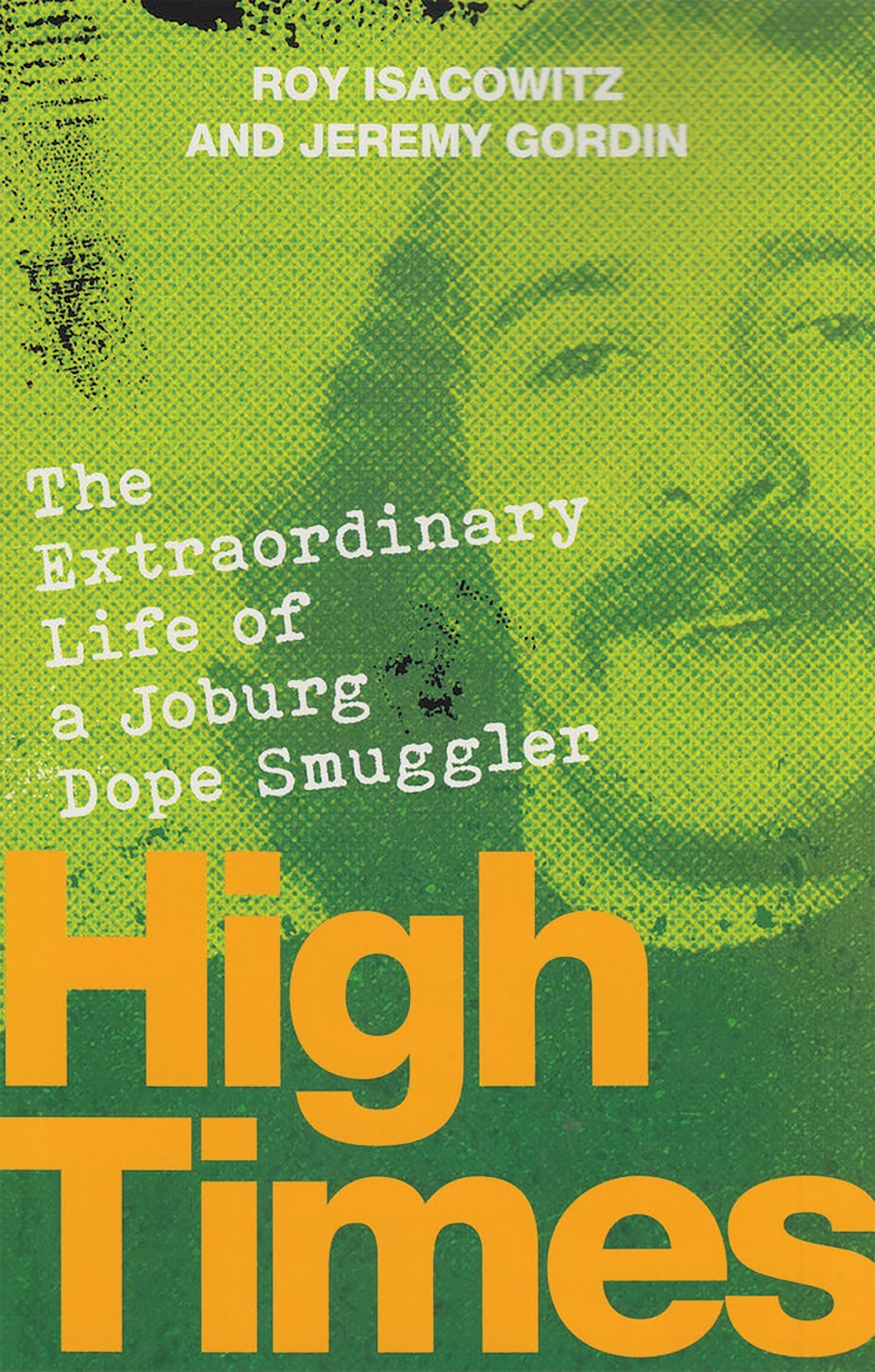
The book is the product of a collaboration between Jeremy Gordin, an award-winning journalist, editor and author who was brutally killed in his home during a burglary last year, and Roy Isacowitz, a journalist and author now retired and residing in Tel Aviv in Israel.* A trade paperback, High Times: The Extraordinary Life of a Joburg Dope Smuggler, is published by Jonathan Ball Publishers. Available at leading bookstores countrywide, it retails for R320