 WeeklySA_Admin
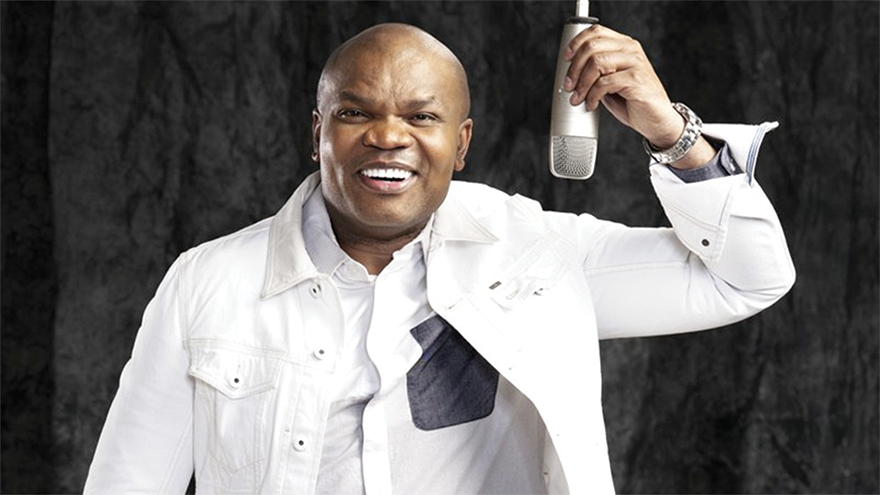
SAGE: For nearly four decades, Wilson B. Nkosi’s voice has defined the rhythm of South African radio. Now, a new documentary turns the spotlight on the quiet, disciplined man behind the microphone…
By Themba Khumalo
For nearly four decades, the voice of Wilson B. Nkosi has woven itself into the fabric of South Africa’s airwaves — steady, reassuring, and unmistakably familiar. It is a voice that has accompanied millions through quiet Sunday mornings, long drives, and the everyday rhythms of life.
Yet while the voice became a constant presence in households across the country, the story of the man behind it has remained largely untold — until now.
On 10 May 2026 at 9:30pm, viewers of SABC2 will be invited into that story with the premiere of a documentary, Wilson B. Nkosi, offering a rare glimpse into the life behind one of South Africa’s most recognisable voices.
Nearly 40 years ago, a 19-year-old Nkosi walked into an audition for Radio Metro — a station still in search of its identity. He had no professional studio experience, only a growing fascination with music and broadcasting that had taken root during his formative years in Swaziland.
That fascination, paired with quiet determination, would set him on a path that would define not only his life but also the soundscape of South African radio.
I’m a simple and ordinary person… at best, an average
person with above-average dreams…
Reflecting on those early days, Nkosi often returns to gratitude. “I thank those who took a chance on me,” he says. “Those who gave a childhood dream a fighting chance… and above all, I thank the listeners for trusting me with their time.”
His entry into broadcasting coincided with a pivotal moment in South Africa’s media landscape. Launched in 1986, Radio Metro was designed to reach urban Black audiences nationwide and quickly became one of the most influential platforms of its era.
When the station went on air in September that year, Nkosi was among its early presenters — part of a generation that would go on to shape the identity of urban radio in South Africa. Alongside names such as Treasure Tshabalala, Lawrence Dube, Timothy Modise, Shado Twala, Sheila D, Grant Shakoane, Boogie Harry and Lucky Ntuli, he formed part of what would later be regarded as the station’s informal “Dream Team”.
What followed was not a career of fleeting appearances, but one of remarkable consistency. Nkosi became a steady presence — a broadcaster who did not chase the spotlight, yet inevitably earned it.
Long before podcasts, streaming platforms and digital radio transformed the industry, Nkosi had already mastered one of radio’s most difficult skills: the ability to speak to millions as if speaking to one.
Radio, at its core, is an intimate medium. Nkosi’s calm, conversational delivery made listeners feel as though he was speaking with them, not at them. Over time, his voice became embedded in the everyday — drifting through kitchens, living rooms, and cars inching through traffic.
For many, it became a quiet anchor.
Away from the microphone, however, Nkosi presents a striking contrast to his public persona. Those who know him describe a man who is reserved, even shy, yet grounded by a strong moral compass.
He carries a calm authority that reveals itself gradually. Colleagues often liken his presence to the quiet majesty of a mountain — steady, grounded, and reassuring. He does not dominate a room; he settles it.
Nkosi himself offers a far simpler description. “I’m a simple and ordinary person from a simple and ordinary place,” he says. “At most and at best, I’m an average person with above-average aspirations, wishes, goals, plans, hopes and dreams.”
Remaining relevant in broadcasting for nearly four decades requires more than talent. It demands resilience, discipline, and the ability to adapt in an industry constantly reshaped by changing tastes and technologies.
Nkosi has done exactly that — and always from the same home base: Metro FM. When asked about his longevity, he resists easy answers.
“There are two answers,” he says. “A philosophical one and a layman’s take. The philosophical response is that I don’t know.”
The more practical answer, he admits, lies in effort — showing up, doing the work, and delivering consistently. But he is quick to add that this alone cannot explain a journey of this magnitude.
“Hard work is essential, but it is not nearly enough to survive the winds of change in this industry.”
Instead, he points to something deeper — the unseen forces that shape a life. “My career is closely linked to the complexity of my life… many moving parts functioning in harmony.” Central to that, he says, is a spiritual dimension.
“All my life, I have had people praying for me. I believe those prayers have been heard.” Even so, he remains grounded in the values instilled in him from an early age. “I was taught to be respectful. On a good day, I remember those teachings. I believe they count for something when executed with honesty and sincerity.”
With that comes a sense of responsibility — not just to the craft, but to the opportunity he was given.
“I never forget the days when I wished for this career. As fate would have it, the wish was granted. That means I must execute my responsibility with honesty, while making room for my imperfections.”
As his voice became a national fixture, Nkosi’s work expanded beyond radio. In 1987, he appeared on television in the youth programme Sidlalela Intsha. By 1992, he was among the original presenters of Jam Alley, a show that would become a cultural touchstone for a generation navigating a rapidly changing South Africa.
In 1995, he added another dimension to his career, establishing Wilson B. Nkosi Communications — a company specialising in advertising copywriting, commercial production and voice work. Behind the scenes, his voice began to shape advertising campaigns, further cementing his place as one of the country’s most recognisable voice artists.
Yet radio has remained the constant thread. Over time, Nkosi became almost synonymous with Sunday broadcasting through his show Sounds and Stuff Like That. Its relaxed, carefully curated format turned Sunday mornings into a ritual for many listeners — earning him the affectionate title: The Voice of Sunday.
Despite industry recognition, Nkosi has rarely centred himself in the narrative. For years, interviews focused almost exclusively on his work, leaving his personal story largely unexplored.
That, he insists, was never by design. “My professional life has played out in the open,” he says. “But people often say not much is known about me.” Listeners have long wondered about the man behind the voice — where he comes from, what his life looks like beyond the studio.
Part of the mystery, he admits, stems from his reluctance to grant interviews. “When I do, it feels like someone is holding a gun to my head,” he jokes. More seriously, he says it never occurred to him that his life would interest anyone.
“I never thought my life could generate interest… and so the interest flatters and humbles me.”
The documentary, then, is both an introduction and a response — arriving nearly 40 years into a career defined by quiet consistency. “Having heard those frustrations, I thought it wise to introduce myself… 40 years later.” Rather than telling the story himself, Nkosi chose to let others do it — those who have witnessed his journey up close.
The film brings together voices of colleagues, peers, and collaborators, painting a portrait that is both professional and deeply personal. One contributor describes him simply: “Wilson B. Nkosi is one of a kind.” Another captures the unique intimacy of radio: “If I don’t know what day it is, I listen to him — then I know it’s Sunday.”
At Metro FM, colleagues speak of a broadcaster whose professionalism sets the standard. “He never missed his show. He respects the brand. He is the presenter others listen to and aspire to be.”
Others speak not of the broadcaster, but of the man. “He has a good heart. A very, very good man.”
Perhaps that is what listeners recognised all along — something beyond the voice itself. Through the reflections of those closest to him, the documentary pieces together the journey of a man whose presence has quietly shaped the soundtrack of a nation. After nearly four decades, audiences will finally meet the person behind the voice. Or, as Nkosi puts it with characteristic humility:
“Please meet my mother and father’s son.”