 WeeklySA_Admin
REMEMBRANCE: Resounding tributes to Soweto’s showbiz giant who nurtured hordes of starry-eyed wannabe actors and actresses to prime TV and stage careers…
By Jacob Mawela
Scores of theatregoers converged on the Soweto Theatre last Sunday for a day of inspiration whipped up by the annual Gibson Kente Lecture, hosted in honour of the legendary playwright dubbed “father of township theatre”.
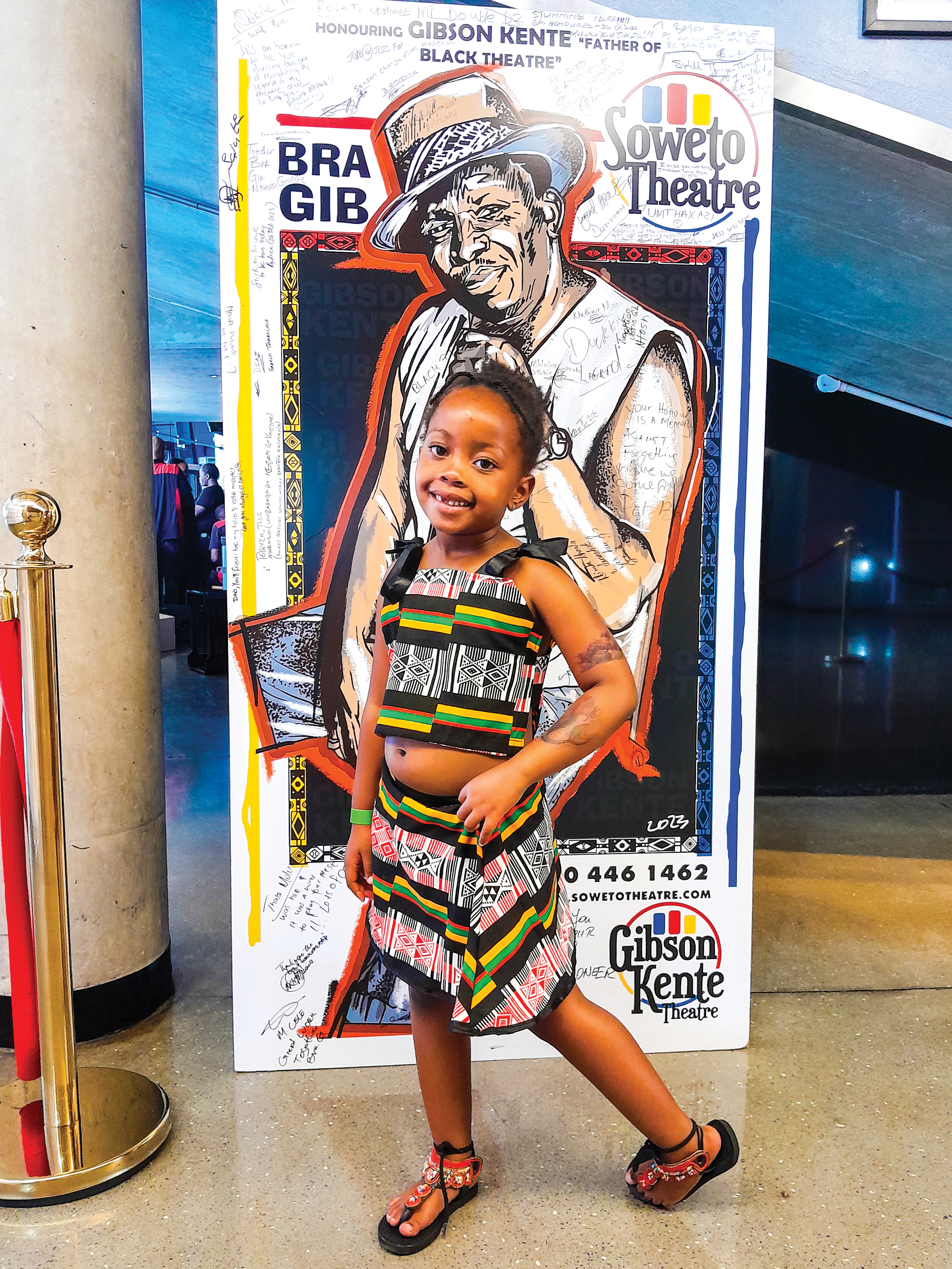
Occurring 20 years after the renowned playwright’s passing back in November 2004, the lecture follows the inaugural one held last year at the same venue, whose Red Theatre renamed the Gibson Kente Theatre in celebration of Soweto’s foremost theatre personality.
A year before his passing, Kente announced that he was HIV-positive in an apparent move to help de-stigmatised a disease that was a taboo subject that time. His public admission received praise from South African politicians, including Nelson Mandela. He was admitted into the care of a hospice in Soweto, where he was cared for until he died – aged 72 – in his sleep on November 7 2004.
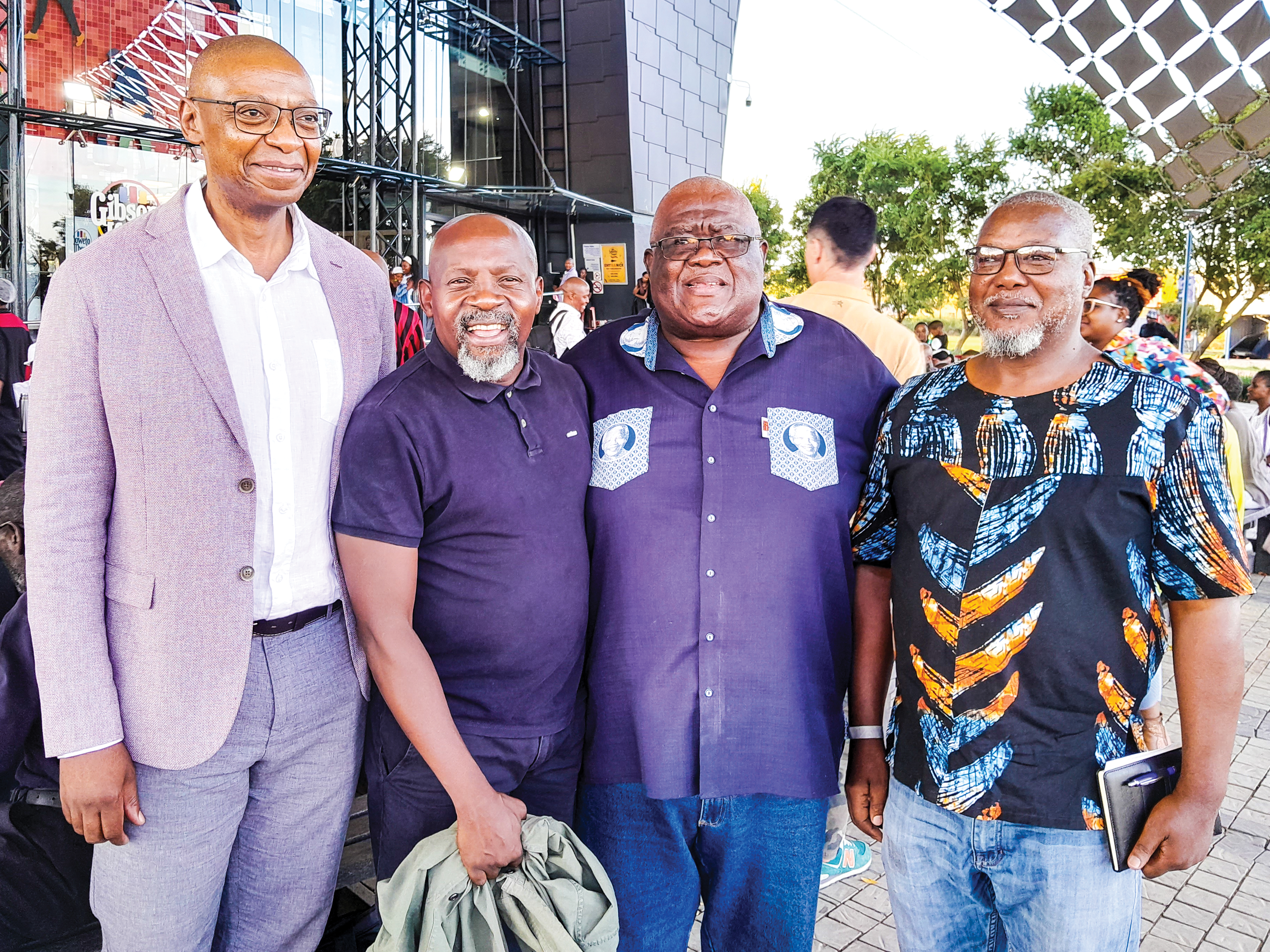
This year’s lecture was delivered by Unisa senior lecturer in the Department of Afrikaans and Theory of Literature, Dr Andile Xaba, before a host of dignitaries from the Joburg City Council, including community development MMC Lubabalo Magwentshu, City Theatres artistic director James Ngcobo and Soweto Theatre general manager Vincent Motau as well as some of Kente’s protégés such as Nomathemba Matu and Mabutho “Kid” Sithole.
A four-member a cappella group named iComplete accompanied by a three-piece band kept the audience entertained throughout the programme with renditions of a combination of Negro spirituals and varying sing-along melodies evoking the halcyon era of Kente’s oeuvre!
With MMC Magwentshu having kicked off proceedings with a keynote address, it was vivacious Matu’s dose of nostalgic anecdotes about the impresario’s colourful life that kept the audience in a trance.
“If something doesn’t scare you,” Matu recalled Kente’s wise counsel that stayed with her, “then it isn’t the real deal!”
Then came Ngcobo to offer his tuppence’s worth, describing Kente as a man who shone a light on the Black narrative and whose commitment to society offered so many young hopefuls – who thronged his Dube home, starry-eyed – a gateway to other realities.
“We are looking for a continuum of his memory!” Ngcobo opined, describing the legendary playwright as having been a ticket to escapism amid “a time of anarchy!”
Eventually taking charge of the dais, Xaba duly commenced upon his lecture spruced up with multi-layered segments from his observations of the Soweto of the 1980s through the experiences of Black South Africans’ ordeal under the states of emergency; the affected communities’ unshakeable resolve to have its fill of fun through the outlet of theatre during the 80s and the 90s.
This was despite the mayhem encompassing their environs; the utilisation of community halls scattered across the hardscrabble townships as performance spaces; his personal memories – along with those of leading creatives – of growing up in Soweto, which collectively served as the bridge between the past and future.
Having touched upon places such as Eyethu Cinema, Donaldson Orlando Community Centre, Funda Centre – so too personalities such as Darlington “Papa G” Michaels, songstress Sibongile Khumalo, journalist-cum-poet Victor Mecoamere.
Then Xaba delved into Kente the man, a larger-than-life soul; his career genesis as well as challenges he faced and, ultimately, the cementation of his legacy! Interestingly, grapevine has it that the academic is coincidentally writing a book on Kente, along with fellow playwrights Matsemela Manaka and Maishe Maponya, looking into theatre-making in the 1980s and 1990s.
Former journalist Xaba recalled: “He (Kente) used the words ‘kid’ and ‘together’ in his interactions with people. His personality was part of what sparked my interest in theatre. He was always well-dressed. He wore a hat of some sort; at times a cravat too. He always drove a big car”.
He added that some scholars divided Kente’s contribution to theatre into three phases: the first being the period from 1969 – 1970, during which he penned family dramas emphasising the importance of the family in Black society; the second encompassing 1974 – 1975 regarded as his political epoch exemplified by the play How Long and the third phase occurring from 1977 – 2003, in which his emphasis was maximum entertainment, as evidenced in plays such as Sekunjalo.
In conclusion, Xaba’s lecture offered a hint on ensuring the endurance of Kente’s legacy through basic acts of empathy such as building networks of contacts in townships and communities’ open-door attitudes towards performers travelling to different venues.
Kente’s career as a playwright had its genesis upon the establishment of a theatre company which produced memorable plays such as Sikalo, Manana The Jazz Prophet, Sekunjalo and How Long (which alluded to the 1976 Soweto Student Uprising).
These offerings were amongst a plethora of works which were to earn him the title of ‘Father of Township Theatre’, alternatively ‘Father of Black Theatre’. His protégés, who numbered some 400, among whom were a decorated cast of household names, included recently departed Mbongeni Ngema, Sello Maake ka Ncube, Brenda Fassie, Peter Sepuma – all groomed during a talent-nurturing stint spanning from the early 1960s to the 2000s while producing some 23 plays.