 WeeklySA_Admin
CLIMATE CHANGE: Study shows that floods, droughts, hurricanes, and heatwaves, increase the risk of GBV in different parts of the world…
By Faith Mutizira
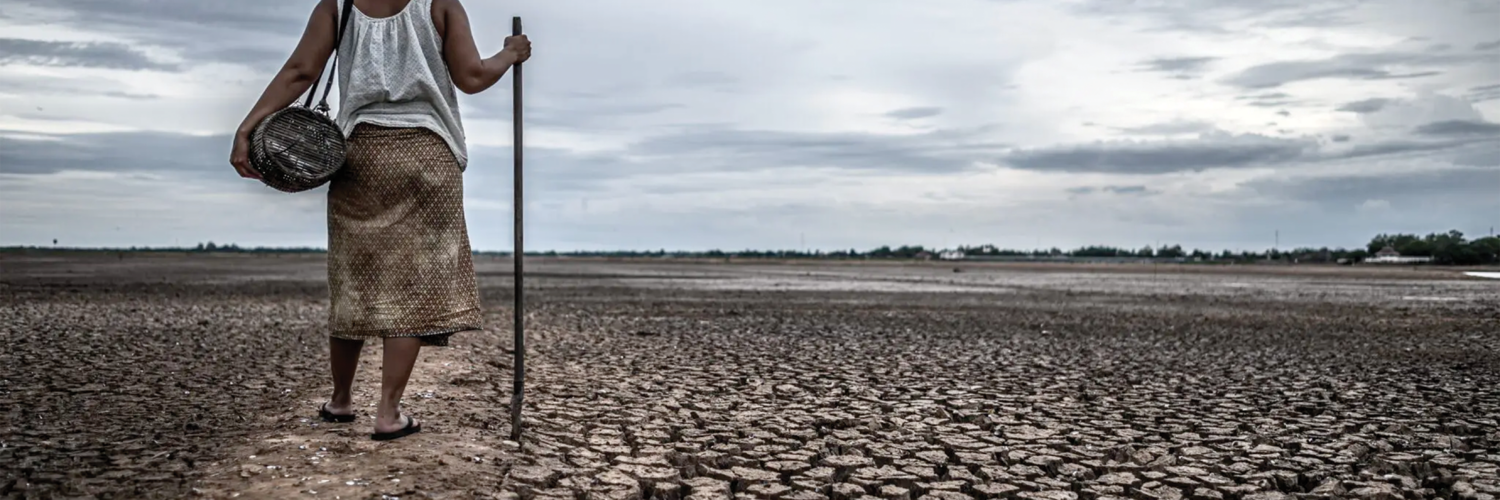
South Africa and its neighbouring countries have been grappling with the effects of climate change, with droughts becoming more frequent and severe in recent years.
Earlier this year, over 61 million people were impacted by drought and extreme weather events from El Niño. Crop production, livestock and water supplies were affected in several southern African. This was the most severe drought that to occur during the January-March agricultural season in more than 100 years.
While we often hear about the impact on crops and water supply, there’s a less visible but equally troubling consequence: an increase in violence against young people.
Drought doesn’t just mean less water; it brings economic struggles and food shortages, which create stress in families. Climate shocks like severe droughts worsen poverty, food insecurity and water scarcity, which in turn fuel violence. Economic stress and lack of resources create environments that amplify underlying violence, including sexual, emotional, and physical abuse.
Recent research shows that adolescents and young people aged 13 to 24 years face alarming rates of violence during times of drought. The Violence Against Children Surveys (VAC) are national surveys for people aged 13 to 24 that measure the burden of violence experienced in childhood and early adulthood in sub-Saharan Africa, the Americas, Southeast Asia and Europe.
Dr Bothaina Eltigani, a medical doctor and researcher at the Department of Social Policy and Intervention at the University of Oxford, presented the findings from their research in five southern African countries: Lesotho, Zimbabwe, Namibia, Mozambique, and Zambia, at the recent Sexual Violence Research Initiative (SVRI) forum in Cape Town.
The study, based on data from the VAC surveys, highlights several key points:
Increased Risk for Girls: Girls in drought-stricken areas are significantly more likely to face sexual violence compared to their male peers. “When we compare to boys, girls living in drought settings are 30.56% more at risk for sexual violence,” says Eltigani.
· Age Matters: Older adolescents (ages 18-24) are particularly more vulnerable to sexual and emotional violence during these times of drought. This age group may experience more complex social dynamics that can lead to increased violence.
· Rural vs Urban Living: The study involved over 27 000 participants and included both rural and urban areas. Young people living in rural areas face heightened risks. “Rural residence exacerbates adolescents’ vulnerability to violence exposure during conditions of drought as it increases the risk of all violence forms except sexual violence,” says Eltigani.
Can the same be said of South Africa?
While this particular study doesn’t include data from South Africa, a 2019 paper on the link between hot weather and rates of violence in the country suggests that raised temperatures alone cannot explain elevated levels of gender-based violence, but may rather act as a trigger for individual violent episodes.
The article highlights that heat can have a significant impact on both our bodies and behaviour. High temperatures can cause discomfort, irritability, and emotional instability.
In hot weather, people tend to become more aggressive. Men seem to be especially sensitive to heat-induced aggression.
Hot weather can also change people’s behaviour, such as spending more time outdoors, which increases opportunities for violence.
Moreover, alcohol consumption, which can trigger violence, tends to rise during hot weather, and dehydration – which is more common on hot days – can lead to mood swings, confusion, and anger. These factors combined make it more likely for violence to occur, particularly when the intent is to harm others rather than commit theft, like in robberies.
This is especially concerning in countries with already high rates of violence against women, like South Africa, where femicide rates are among the highest in the world.
A systematic review published in the Lancet journal shows that floods, droughts, hurricanes, and heatwaves, increase the risk of GBV in different parts of the world.
The research revealed that, in times of economic hardship caused by disasters, families might marry off daughters early as a way to reduce financial burden.
There was also an increase in intimate partner violence, sexual violence, and emotional abuse during and after these events, as people cope with stress, loss of control, and food insecurity.
In shelters or camps for the displaced, women and girls are at higher risk of harassment and violence from strangers, relief workers, and even family members. Eltigani says understanding the connection between climate stress and violence is crucial for families and communities.
“Our findings show that it is essential to adopt interdisciplinary programming by integrating climate adaptation measures, social protection measures and violence prevention interventions.” – Health-e News
CLIMATE CHANGE ‘GREATLY OVERESTIMATED’

IMPACT: Oceans cooling Earth far more than thought, say scientists
By Jocelyn Solis-Moreira
NORWICH, UK – When it comes to climate change, a new study finds that the fear over the planet’s health may be “greatly overestimated”.
For the first time, researchers have found oceans help cool global temperatures more than anyone previously thought.
Specifically, sulphur gas produced by marine life emits a second compound that significantly cools the planet. The discovery will help create more accurate climate models and provide another tool to slow global warming. With almost three-fourths of Earth covered by oceans, the waters capture and redistribute the Sun’s heat. The latest study in “Science Advances” shows the process goes much deeper than that. The oceans also create sulphur gases that create particles to cool the Earth, such as brightening clouds that reflect heat.
The new compound released from sulphur gas is known as methanethiol. It has not been detected before because it is extremely hard to measure.
Additionally, much research has been done on warmer oceans, while polar oceans are the emission hotspots. Microscopic plankton living on the seas’ surfaces emit a type of sulphur gas known as dimethyl sulphide. This gas is the one responsible for the stinky smell in shellfish.
Once sulphur gas reaches the atmosphere, it oxidises and produces small particles called aerosols. These aerosols reflect solar radiation back into space, lowering the heat on Earth.
Plankton also releases methanethiol. The authors quantified the amount of methanethiol released into clouds over the Southern Ocean and observed an even greater cooling effect. The cooling impact on the climate is bigger than expected and works the opposite of greenhouse gases such as carbon dioxide and methane, which absorb heat.
This is the climatic element with the greatest cooling capacity, but also the least understood. We knew methanethiol was coming out of the ocean, but we had no idea about how much and where. We also did not know it had such an impact on climate,” says Dr Charel Wohl, a researcher at the University of East Anglia’s Centre for Ocean and Atmospheric Sciences, in a media release.
“Climate models have greatly overestimated the solar radiation actually reaching the Southern Ocean, largely because they are not capable of correctly simulating clouds. The work done here partially closes the longstanding knowledge gap between models and observations.”
The researchers note that the new research helps create more accurate climate models, refining their understanding of the ocean’s role in cooling the planet. These models include those that predict what would happen to the Earth when the global temperature rises by 1.5 or 2 centigrade, with results influencing current climate change policies.
The researchers grouped up all measurements of methanethiol in seawater and added them to measurements made in the Southern Ocean and the Mediterranean coast. Using seawater temperature collected from satellite data, they then used statistics to calculate their results. Yearly, methanethiol increases marine sulphur emissions by 25%.
“It may not seem like much, but methanethiol is more efficient at oxidising and forming aerosols than dimethyl sulfide and, therefore, its climate impact is magnified,” says Dr Julián Villamayor, a researcher at the Blas Cabrera Institute of Physical Chemistry in Spain.
The team also added marine methanethiol emissions to a climate model to measure their effects on the planet’s radiation. The impact is more visible in the Southern Hemisphere, where there are more oceans and fewer humans burning fossil fuels. While sulphur aerosols are important in cooling the planet, the authors note that human behaviour will determine whether the planet continues to warm.
KIDJO SHARES NEW RENDITION OF BLOCKBUSTER HIT ‘JERUSALEMA’

SYMBOL: She performed the new symphonic arrangement of Master KG’s international chart-buster at her sold-out Carnegie Hall show in the United States last month…
By Lehlohonolo Lehana
The multi-Grammy-Award winner Angélique Kidjo shares a newly re-imagined rendition of international hit “Jerusalema.”
The record is available for streaming on major digital platforms. Originally released in 2019 by Master KG featuring Nomcebo Zikode and eventually adding former Kidjo collaborator Burna Boy, the song transcended continental boundaries to become a global symbol of hope for a better world during the COVID-19 pandemic.
The new symphonic arrangement was created with conductor Derrick Hodge and his Colour of Noize Orchestra, with whom Kidjo notably collaborated on her African Symphony project and recently performed at her sold-out Carnegie Hall show in November.
Her rendition closely follows her performance at the grand reopening of the Notre-Dame Cathedral in Paris this past weekend.
This is not the first time a remix of the song has been done. In 2020, Master KG collaborated with Nigerian Afrobeats singer Burna Boy on a remix of the track. Since its release, ‘Jerusalema’ has been making waves internationally, including on Billboard’s charts.
It also went viral after it sparked a global dance craze called #JerusalemaChallenge, spawning videos from France, Spain, Italy, Jamaica and Canada. ‘Jerusalema’ has also performed well on streaming platforms.
The pair’s hit single sales started slowly and then went viral across the world, becoming a mammoth global hit during the first few months of the Covid-19 pandemic.
Among other accolades was its peaking to No 1 on the Billboard World Digital Song Sales and Euro Digital Songs; Gold in the USA (500 000 sales), 2x Platinum in Poland (100 000), 2x Platinum in Spain (80 000), 3x Platinum in Switzerland (60 000), Gold in Denmark (45,000), Platinum in Germany (400K), Diamond in France (333 333), 4x Platinum in Italy (280 000), in Belgium (80 000) and double Platinum in Portugal (20 000), while peaking at #1 in Belgium, Romania, Hungary, the Netherlands, Switzerland and France.
It also made history by becoming the first song by an African artist to garner half a billion views on YouTube.
Kidjo recently received her 15th Grammy nomination; this time in the Best Global Music Performance category for “Sunlight To My Soul,” the Diane Warren collaboration with the Soweto Gospel Choir.
Prior to her most recent nomination, she joined forces with Afrobeats superstar Davido on their smash single “JOY.” Later it was announced that Kidjo would be included in the soundtrack of the forthcoming hip-hop musical adaptation of the 1995 Cannes-winning (Best Director and Palme d’Or) film La Haine.
Then, on November 2, Kidjo celebrated her 40-year career with a historic performance at New York’s Carnegie Hall. Backed by the Color of Noize Orchestra conducted by Derrick Hodge, the evening featured hits from Kidjo’s extensive catalog as well as songs from legends like Miriam Makeba, and Fela Kuti, and was joined on stage by special guests Davido, Nile Rodgers and Baaba Maal.
Noted by TIME Magazine as one of the most influential people in the world, Kidjo’s striking voice, stage presence and fluency in multiple cultures and languages have earned respect from her peers and expanded her following across national borders. Kidjo has cross-pollinated the West African traditions of her childhood in Benin with elements of American R&B, funk and jazz, as well as influences from Europe and Latin America. Her 2021 album, Mother Nature, features collaborations with young creators of West African music, Afrobeats, Afro-pop, dancehall, hip-hop, and alt-R&B, such as Burna Boy, Davido, Sampa The Great, Yemi Alade, and Earthgang. – Fullview