 WeeklySA_Admin
NEGLECT: At two Eastern Cape schools, learners face a daily choice between unsafe pit toilets and open fields, while overcrowded classrooms and long-promised upgrades remain out of reach…
By Nombulelo Damba-Hendrik
Two decades after government pledged to eradicate unsafe sanitation in schools, hundreds still rely on dangerous pit toilets—despite repeated deadlines, funding commitments, and national outrage following learner deaths.
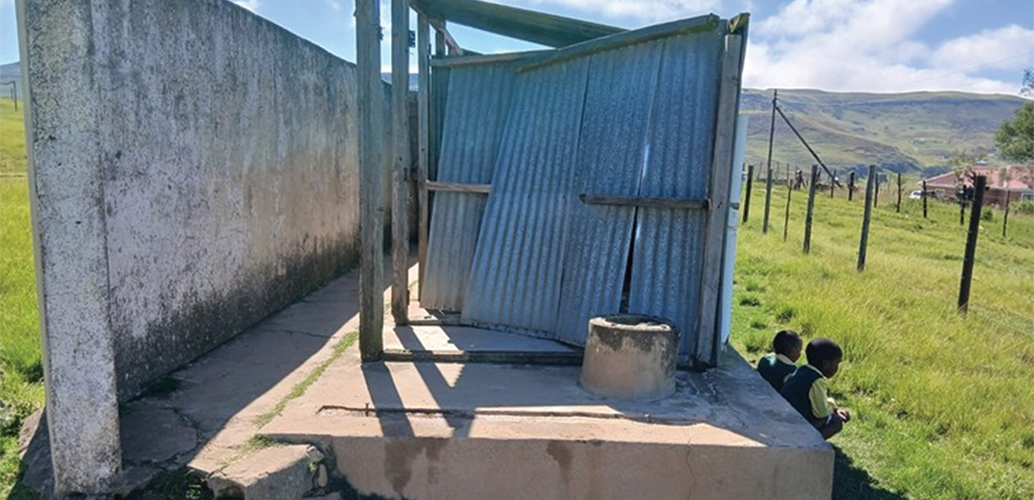
Pupils at Elunyaweni Primary School in Ugie in the Eastern Cape relieve themselves in an open field because the pit toilets are old, unsafe, and filled to the brim. The school has only five usable pit latrines, built 50 years ago, serving 160 learners.
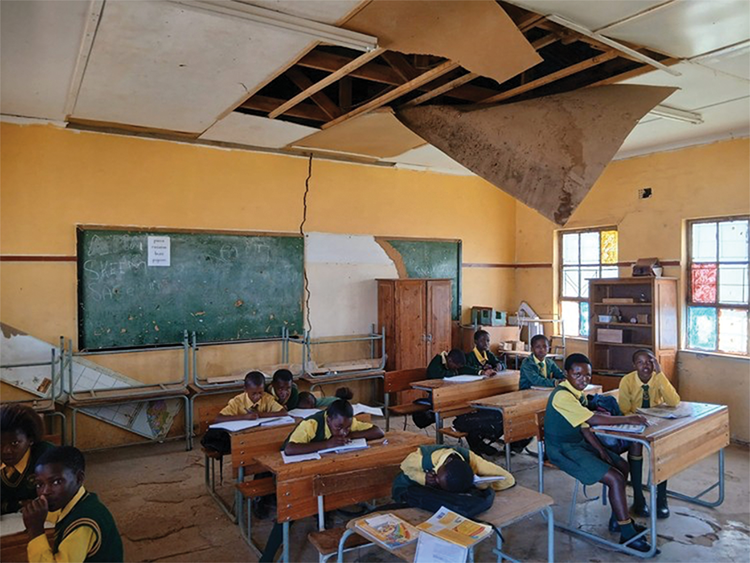
At nearby ET Thabane Primary School in Entokozweni, 60 to 70 learners are packed into each class, taught in prefabricated classrooms dating back to the 1980s. The structures are patched with zinc sheets, and their roofs leak when it rains. Provincial education authorities say the school is scheduled to be rebuilt in May.
In contrast, Elunyaweni Primary is not included in sanitation plans for the 2026/27 financial year. According to the provincial education department, the school does not qualify for a sanitation upgrade following a recent assessment—despite the age and condition of its facilities.
Maybe they want us to wait until a learner
falls in and dies…
Learners and teachers at both schools say dilapidated infrastructure is putting children at risk.
School governing body (SGB) chairperson Kholosa Faca said learners today are using the same pit toilets she used when she attended the school years ago.
The school has 160 learners and only five toilets—two for boys, two for girls, and one for teachers. The toilets have cement seats and are enclosed with zinc sheets, but the doors are broken. Parents have contributed money to build a wall for privacy, but this has done little to address the underlying danger: the pits are full and effectively unusable.
During a visit last month, GroundUp found parents cleaning classrooms while learners relieved themselves in the open field.
Faca said parents now encourage this as a safer alternative.
“In 2024, department officials visited the school and told us we were first on the list to receive new toilets. They conducted a survey, chose a site, and promised to return—but they never did,” said Faca.
“Every time we follow up, we are told to wait. Maybe they want us to wait until a learner falls in and dies. This school starts from Grade R, and those small children are also using these toilets. It’s dangerous.”
Provincial education spokesperson Malibongwe Mtima confirmed that Elunyaweni is currently excluded from sanitation upgrade plans for the 2026/27 financial year.
He said that although the school had initially been included in the Sanitation Appropriate for Education (SAFE) initiative, subsequent assessments found that it did not meet the programme’s criteria.
Mtima added that the school had a low enrolment in 2024, with only 62 learners recorded at the time.
Meanwhile, ET Thabane Primary serves 11 communities around Ugie and has 1,653 learners. Most classrooms are overcrowded, with 60 to 70 learners per class.
The prefabricated structures are patched with zinc sheets. Walls shake in strong winds, and roofs leak during rainfall.
In 2018, toilets were built through a donation and some windows were repaired. But the broader infrastructure crisis remains unresolved.
In February 2021, the Parliamentary Portfolio Committee on Basic Education, along with national and provincial officials, conducted an oversight visit after the Joe Gqabi District Municipality closed the school for failing to meet COVID-19 safety regulations.
Their report indicated that the cost of rebuilding the school had escalated from R147 million to R300 million. Two funding sources were identified: the Budget Facility for Infrastructure (BFI) and the Accelerated School Infrastructure Delivery Initiative (ASIDI). Six years later, the school has still not been rebuilt.
SGB chairperson Gcobisa Dastile said parents temporarily closed the school earlier this year in protest, refusing to allow their children to continue learning in unsafe conditions.
“It was only then that department officials came back and promised again that the school would be rebuilt,” Dastile said.
Mtima said the project had now been allocated to the Independent Development Trust (IDT), though a contractor has yet to be appointed. Assessments and scoping work are ongoing.
He added that the department and IDT hold monthly update meetings with the school and community, and that site work is expected to begin in May. “So far, there are no indications of delays,” he said.
A Crisis Decades in the Making
The persistence of pit toilets in South African schools is not due to a lack of awareness or policy commitments—at least not on paper.
In 2004, then-President Thabo Mbeki pledged that no learner would study in unsafe conditions and that all schools would have access to clean water and sanitation. In 2006, he set a deadline to eradicate bucket toilets by the end of 2007. Those deadlines came and went.
Progress—But Not Completion
In 2018, the Department of Basic Education launched the Sanitation Appropriate for Education (SAFE) initiative to eliminate pit toilets nationwide.
There has been measurable progress. By early 2025, more than 93% of identified unsafe pit toilets in public schools had been replaced.
But the job is not finished.
Hundreds of schools still rely entirely on pit toilets, while many others continue to use them alongside newer facilities. In some cases, projects have stalled due to funding constraints, contractor delays, or shifting priorities.
The crisis remains most severe in provinces such as the Eastern Cape, Limpopo, and KwaZulu-Natal—highlighting deep and persistent inequalities in infrastructure delivery.