 WeeklySA_Admin
Fresh investigation launched to uncover the fate of iconic 1976 figure Mbuyisa Makhubu, whose only crime was to carry 13-year-old pupil Hector Petersen shot dead by apartheid police…
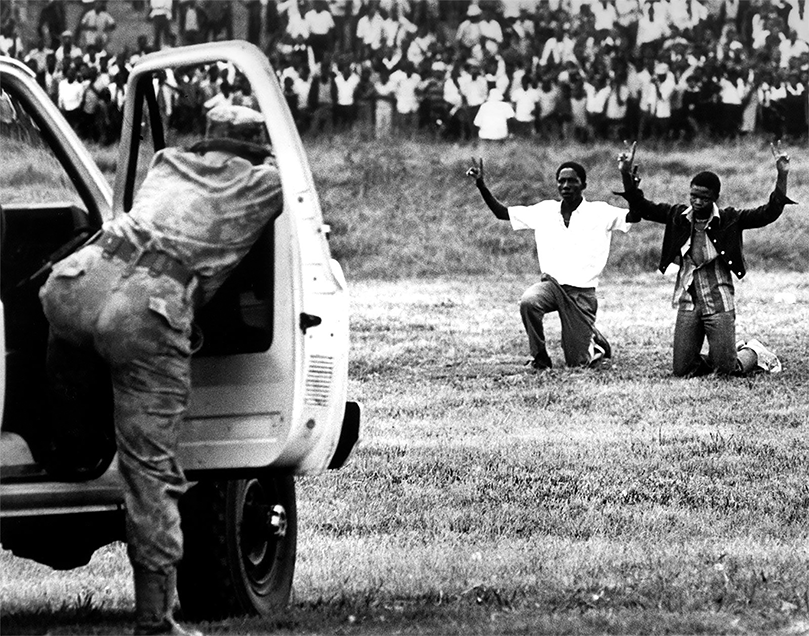
FRESH BID FOR CLOSURE TO MBUYISA MAKHUBU’S MYSTERY SAGA
MEMORY: Move to solve 48-year-old mystery surrounding fate of June 16 iconic figure…
By Amanda Ngudle
The City of Joburg has launched a research project to comb traces of Mbuyisa Makhubu’s last footsteps – in a bid to gather whatever scraps of evidence they can unearth to make sense of what became of his story’s final song.
Otherwise, like many other political tragedies, his legacy might have to remain one of the eternal bleeding wounds, serving as a constant reminder of the callous history of South Africa of the past.
The project to unravel the lingering mystery about Makhubu’s fate was proposed by Soweto’s landmark Hector Pieterson Museum – named after one of the first victims to be killed by police during the historic students’ march in Orlando West – as a necessary research project to piece together a story that does not have an end.
To this end, an art exhibition in honour of Makhubu, which will feature new and already public information gathered so far about him as well as his personal accessories for the first time, is to be launched at the Hector Pieterson Museum on June 16 this year. The exhibition has been timed to coincide with the commemoration of the 48th anniversary of the Soweto student uprisings.
It is now history how Makhubu got caught up in the events around the Soweto students’ march against the imposition forcing black schools to replace English as a medium of instruction with Afrikaans mid-year. He was to become the most wanted man by apartheid’s notorious apartheid security police target at the time for carrying a fatally wounded 13-year-old pupil Hector Petersen to look for help.
Consequently, he escaped one of the biggest police dragnets thrown around the country that time to escape to neighbouring Botswana after his Orlando West home was raided numerous times – the beginnings for him of a journey to the unknown in hinterlands.
The last time the family heard from Makhubu was in 1978 when he wrote to say that he and his three other comrades would be leaving Nigeria, where the four had been stationed in a college for over two years and would be “moving along”.
Many believe the foursome headed to Russia or rather had designs to, until something that no one has yet deciphered, happened. In a documentary shot years later, a source interviewed by a crew had revealed that there had been at the time a mysterious white figure hovering in the neighbourhood, who had shown a particular interest in Makhubu’s movements.
This could perhaps explain the apparent necessity and haste by Makhubu and his cohorts to “move along” from a neighbourhood in Nigeria that had become their home.
The family is in possession of the letter and the public will be able to access it together with other personal effects of his former existence when the art exhibition is launched on June 16 next month at the Hector Pieterson Museum.
The Makhubus swear the lingering pain over the fate of their son has been so unbearable and enduring that they wish they had been afforded the opportunity to “cry in the remains” as the African idiom states of a family of elephants that draw their solace even from the dead elephant’s last bowel excretions. It is a need for grieving families all around the world, and this ceremonial spiritual famishment which COJ attempts to address.
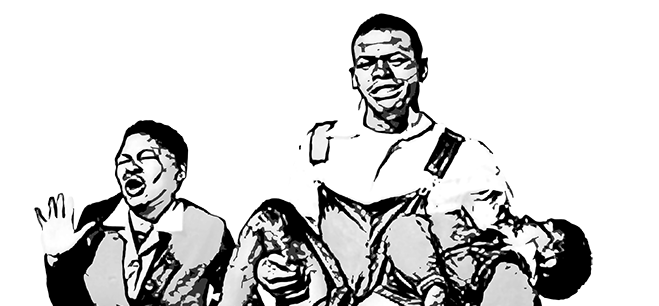
Even his brother Ruan, whom many initially thought was the one in Makhubu’s arms in the iconic Sam Nzima’s photograph, is said to have suffered profusely as a result of his brother’s heroics and disappearance. This, because the image has served as a daily reminder of the day his brother made a getaway.
Makhubu is said to have vanished from the country a mere shell of his former self after the photograph showing him carrying the wounded Hector, alongside the boy’s sister Antoinette, made international headlines, earning him as many enemies as the grains of rice.
According to his sister Ntsiki Makhubu, she had to devise a plan to hide him in a coal box and had prayed fervently for his one last night at the family home. He miraculously made it. Sadly, not only had his brother lost weight, but had also lost his sense of humour merely in two weeks.
So do not be surprised if research results bring scraps of his comic nature or his last toothbrush.
“The major anticipation is that the research will uncover new perspectives, objects and map out the route he took going into exile. The project has already found exciting objects that will be add-ins to the Museum exhibition to improve his life story,” adds Maumela.
“There is still more that can be found in primary and secondary sources although little was preserved about the anti-apartheid activities. Research discoveries will be presented on 16 June 2024 at the Hector Pieterson Museum by the project research team, and his exhibit will be unveiled.”
Hector Pieterson Museum
The Hector Pieterson Museum is located in Orlando West, Soweto, about two blocks away from where student protester Hector Pieterson was shot and killed by a security policeman on June 16 1976. The museum is named in his honour and covers the events of the 1976 student upheavals.
The museum features films, newspapers, personal accounts and photographs, the most famous being the iconic photo by Sam Nzima. It opened on June 16 2002.
DEMOCRATIC ALLIANCE FACES LEGAL ACTION OVER THE BURNING FLAG ADVERT
Treason: Controversial depiction dismissed as representing unconscious rage against country and its symbols…
By Monk Nkomo
The outrage displayed by a number of South Africans over the controversial Democratic Alliance’s campaign advertisement which shows the country’s flag engulfed in flames to highight challenges faced by local citizens, took another turn when a former ANC regional leader laid charges of treason and crimen injuria against the political party at the weekend.
Kgosi Maepa, former ANC leader in Tshwane, laid the charges at the Brooklyn police station. He accused the DA of causing divisions in the country and also called on the Independent Electoral Commission to sanction the political party for what he described as its controversial and divisive advert. Maepa said he would also be writing to the Human Rights Commission, the Independent Communications Authority of South Africa and the Broadcasting Complaints Commission of SA.
The advert, which has stoked tensions a few weeks before the general elections , has been widely condemned by angry South Africans who accused the DA of desecrating the symbol of national unity. President Cyril Ramaphosa described the advert as ‘’ despicable and treasonous.’’ It undermined the unity of the country which was achieved after the ANC led the struggle against white minority rule and the legalized form of racial discrimination.
‘’ It is the most despicable political advert that anyone can embark upon.’’
The public broadcaster, the SABC, also joined the fray by refusing to air the advert on their channels. The SABC believed the advert encouraged damage to treasured national symbols adding that the national flag should be accorded the dignity and respect it deserved.
‘’The flag is not a representation of a political party but the nation at large.’’
The Human Rights Commission ( HRC) condemned the burning of the national flag and said this was a grave violation that went against the democratic ideals and also seriously risked social peace and security. ‘’ We are alarmed by the desecration of our national symbol,’’ spokesperson, Wisani Baloyi, said.
Minister of Sports, Arts and Culture, Zizi Kodwa was also left fuming over the advert and said the flag should not be used as an instrument to sow division and hysteria amongst South Africans. ‘’ This action by the DA offends the gains South Africa made as a free and non-racial democracy and the blood, tears and sacrifices it took for the country to gain this freedom.’’
Former Public Protector, Thuli Madonsela, echoed the serious concerns and anger by many South Africans. The burning of the flag, she said, was ill -advised. ‘’ In some countries, it is even a crime to burn the flag. I just cant help a nagging feeling that the designer of the campaign may be harbouring unconscious rage against our flag and what it symbolises’’, Madonsela was quoted as saying.
Many South Africans felt that the burning of the flag perpetuated a swart gevaar narrative by a white-dominated white political party which is desperate to govern this country at all costs.
The DA leadership has brushed aside the anger voiced by South Africans over the advert with the leader, John Steenhuisen reportedly saying they were not moved by the reaction. The party, instead, has threatened to take legal action against the SABC for refusing to air their controversial advert.
DA Federal Council Chairperson, Helen Zille, has also defended the campaign advert saying this was the only way to convey a warning to all South Africans about what would happened should there be a coalition between the ANC, EFF and the Jacob Zuma-led MK Party.