 WeeklySA_Admin
SCHEDULE: Repair work on mountain kingdom’s scheme – which supplies water to approximately one-fifth of this country’s population – progressing after it stopped supplies nearly two months ago…
By Thando Nondywana
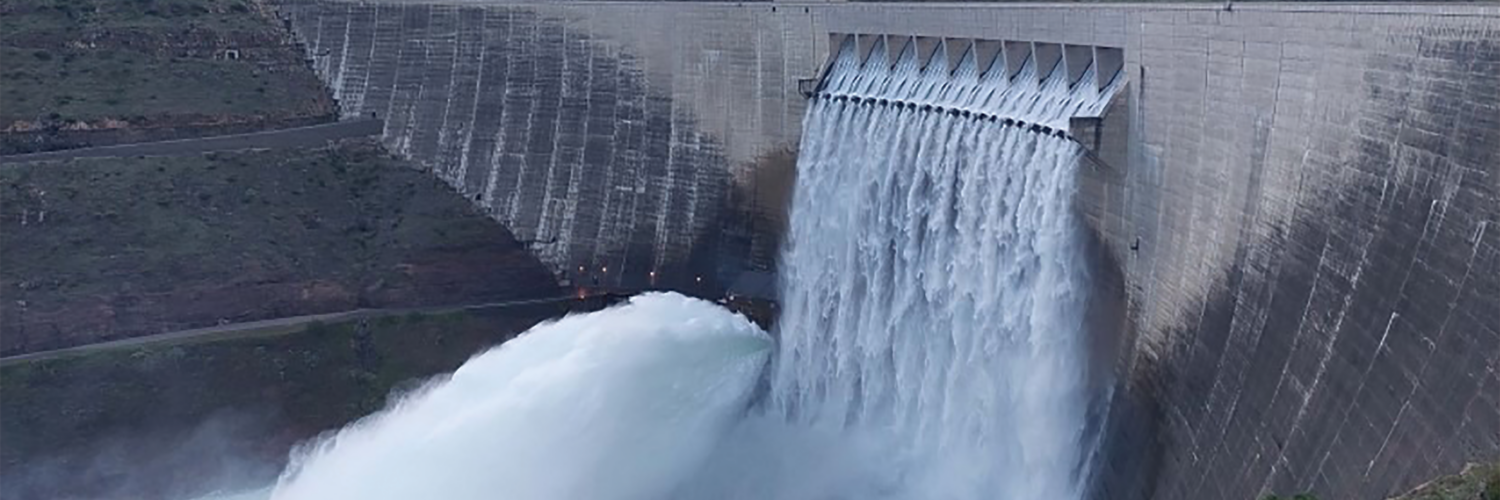
Maintenance of the Lesotho Highlands Water Project (LHWP) tunnel is on the right track and is expected to be completed by March 2025.
The LHWP, which supplies water to approximately one-fifth of South Africa’s population, has now marked one and a half months since it stopped delivering water to South Africa.
Deputy Minister of Water and Sanitation David Mahlobo said that while the flow of water has not resumed, work in Lesotho is progressing on schedule. “We’ve received reports from the Trans-Caledon Tunnel Authority (TCTA) and assurances from the Minister of Lesotho and the Lesotho Highlands Development Authority (LHDA),” he said.
Mahlobo added that there are regular oversight meetings between the LHDA and TCTA to ensure “continuous engagement and monitoring”.
He said progress is being tracked using a live system. While certain portions of the project are ahead of schedule, others are slightly delayed, but this is not a cause for concern. “If the work isn’t completed within six months, a contingency plan will ensure an additional three months’ water supply. Rainfall could extend this even further, “he added.
At the Ash River outfall site, a huge replica of the tunnel’s size stands as a monument to the engineering achievement of the project. The site is significant as the tunnel is vital in connecting the water flow between Lesotho and South Africa.
The last inspection was in 2019. The current work underway is estimated to cost South Africa about R300 million.
Inside the tunnel, it becomes instantly pitch black as body temperatures drop the further you go inside. The tour halts at about 200 metres from the entrance, where markers indicate the 368km distance from Muela, where the project begins in Lesotho. These are placed at every 100 metres along the tunnel. This section of the tunnel has a diameter of 4.7 metres and comprises four types of construction.
According to André Olivier of Raubex Construction, there is no structural damage, while only minimal repairs are required in the concrete sections.
“The primary work will focus on the steel-lined sections, which will be sandblasted. In 2019, patches were applied during an inspection, and it was determined that during the next round, the entire steel liner would be refurbished,” said Olivier.
Critical areas include sections beneath the Cullingham River, featuring a 3.4-metre steel-lined segment. The steel-lined portions are slightly larger in diameter than other parts of the tunnel. Once sandblasting is complete, inspections will determine the extent of damage. So far, trials indicate that the damage is not extensive,” he added.
South Africa’s portion of the project officially starts at 15 kilometres, just across the Caledon River in Lesotho.
Mahlobo emphasised that the system remains stable but urged citizens to use water sparingly. This is particularly important when considering the ongoing water challenges in South Africa, particularly in Gauteng.
Mahlobo said thorough planning was done to assess provincial readiness for the water shutdown, particularly in Gauteng and the Free State. Earlier in the year, director general of the department Sean Phillips warned that Johannesburg is using water unsustainably and could face a “day zero” scenario.
He noted that due to Gauteng’s high consumption and the hot weather, the province had reduced water levels. “This has been caused by evaporation and other losses, however the Integrated Vaal River System has 14 dams and remains stable at 33%. While this is not critical, contingency measures are ready to release water if levels drop to 18%. The system supplies over 5.1 billion litres daily but loses approximately 2.5 billion litres due to various factors,” Mahlobo said.
Since it started operating in 2004, the LHWP has been the most consistent source of Johannesburg’s water. In the Free State, which is also currently experiencing water challenges, Mahlobo said challenges include water leaks, insufficient reservoirs, and pump issues.
Second Deputy Minister of Water and Sanitation Sello Seitlholo painted a bleak picture of the water crisis in the country.
“Municipalities are under immense strain, as highlighted in the Auditor General’s report. If we don’t fix local government, critical issues like water management will persist,” he warned.
He said municipalities have to take steps to improve water management.
“Many mayors inherited municipalities already under severe financial strain. Billions of litres of water are lost due to illegal connections. Municipalities must act decisively against illegal water connections and water tanker mafias sabotaging infrastructure,” he said.
Seitlholo emphasised the need for continued dialogue involving stakeholders such as the National Treasury and the Department of Cooperative Governance and Traditional Affairs (Cogta).
The LHWP is now in its second phase, which includes constructing the Polihali Dam and additional tunneling infrastructure is expected to be completed by 2028.
Instead of creating new entry points, the existing tunnel will be reused to save costs for water users.
Mirror Briefs
DEADLINES FOR SPAZA SHOPS
President Cyril Ramaphosa has announced decisive measures to address the recurring food-borne illnesses that have claimed the lives of at least 22 children across the country.
These include the immediate closure of spaza shops implicated in the deaths and stricter regulations to protect communities.
Addressing the nation from the Union Buildings in Pretoria on Friday, Ramaphosa outlined three critical interventions to be implemented with immediate effect.
“Following the special meeting of Cabinet, we have decided to make the following interventions: The first intervention is to get hazardous pesticides off the street, the second critical intervention is to protect children from exposure to these substances, the third critical intervention is to prevent future outbreaks. The following measures will be implemented with immediate effect.
“The spaza shops which have been implicated in the deaths of children will be closed with immediate effect. Non-compliant businesses and shops linked to any poisoning incidents or found to unlawfully stock hazardous chemicals will be shut down,” the President said.
To ensure compliance, all spaza shops and food-handling facilities must register with their respective municipalities within 21 days.
“Any shop that is not registered within 21 days and does not meet all health standards and requirements will be closed.”
The President’s address comes in response to 890 reported cases of food-borne illnesses across the country, with Gauteng, KwaZulu-Natal, Limpopo, Free State, and Mpumalanga the hardest hit. – SA News
CRACKS WITHIN SACP AND ANC
The South African Communist Party (SACP) will use its December conference to review its decades-long relationship with the ANC over concerns that the partnership has undermined its political independence and diluted its influence.
The party will gather for its fifth Special National Congress at a hotel in Ekurhuleni from 11 to 14 December in part to discuss how the ANC has blurred its identity and limited its ability to engage effectively with the working class.
This comes as the Tripartite Alliance, which includes the ANC, SACP and Cosatu, faces unprecedented challenges, including the ANC’s decision to go into the government of unity with the Democratic Alliance (DA), the party’s declining electoral performance and growing voter disillusionment.
“The influence of its coalition partners will more than likely be towards an even stronger adherence to key neoliberal policy prescripts, including stricter austerity — justified as a more determined push to meet in particular debt-reduction targets — and notions of ‘working with’ profit-seeking capital in the hope of leveraging funds to fill an infrastructure ‘funding gap’ now said to be north of a trillion rand,” it said in a pre-conference discussion document.
The party said its identity as an independent political entity had diminished and that it is increasingly seen as an extension of the ANC, a perception which has undermined its ability to mobilise support and maintain relevance. – Fullview
JOURNALIST’S HORROR ORDEAL
Two South African journalists from News Central TV who were arrested and allegedly tortured by security police while on duty in Mozambique this week, were released from detention following intervention by the South African government.
News correspondent, Bongani Siziba and camera operator, Sbonelo Mkhasibe, were released from detention late on Friday afternoon after being held in detention. The two were in the country to cover the political unrest following the Mozambican elections.
A spokesperson for the Department of International Relations and Cooperation , Chrispin Phiri, confirmed the release of the two journalists and said they were released after their credentials were verified.
“Following the verification of their credentials and diplomatic engagements from our High Commission in Mozambique, the Mozambican authorities have subsequently released the journalists,” Phiri said 0n X.
Siziba confirmed that she and Mkhasibe were arrested while working in Maputo.
“We were taken by the police when we were going to get accreditation on Thursday morning. The camera guy just wanted to shoot some pictures of people who were in the street. Before we knew it, the police just stormed at us and arrested us.” She claimed that they were blindfolded and were taken to a police station where they were ordered to face the wall and were surrounded by police carrying guns. – SA News
EXPIRED FISH PROBED.
Retailer Woolworths has launched its own probe into a counterfeit operation involving canned pilchards, it said in a statement at the weekend.
This comes after police arrested seven undocumented immigrants and seized printing equipment used to change expiry dates at a facility in Johannesburg during the week.
In a raid that was widely reported earlier in the week, authorities also found a large quantity of unlabelled pilchards that were being branded “Lucky Star” and packed in Woolworths-labelled cartons.
A case of contravention of the Foodstuffs, Cosmetics and Disinfectants Act; contravention of the Immigration Act and possession of suspected stolen property was opened.
The statement from Woolworths comes a day after President Cyril Ramaphosa announced urgent interventions to deal with the country’s food poisoning crisis, which claimed the lives of 22 children.
Woolworths said it had “strong reason to believe” that it had previously rejected the seized pilchards.
“Woolworths is aware of the recent SAPS investigation into the discovery of a counterfeit operation involving canned pilchards in Woolworths-branded cartons, found in a facility in Gauteng,” a spokesperson said.
“While this investigation is ongoing, we have strong reason to believe that the product in question may have formed part of an imported shipment from an international supplier that was rejected by Woolworths, as a result of it failing to meet our stringent quality control standards.” – Fullview