 WeeklySA_Admin
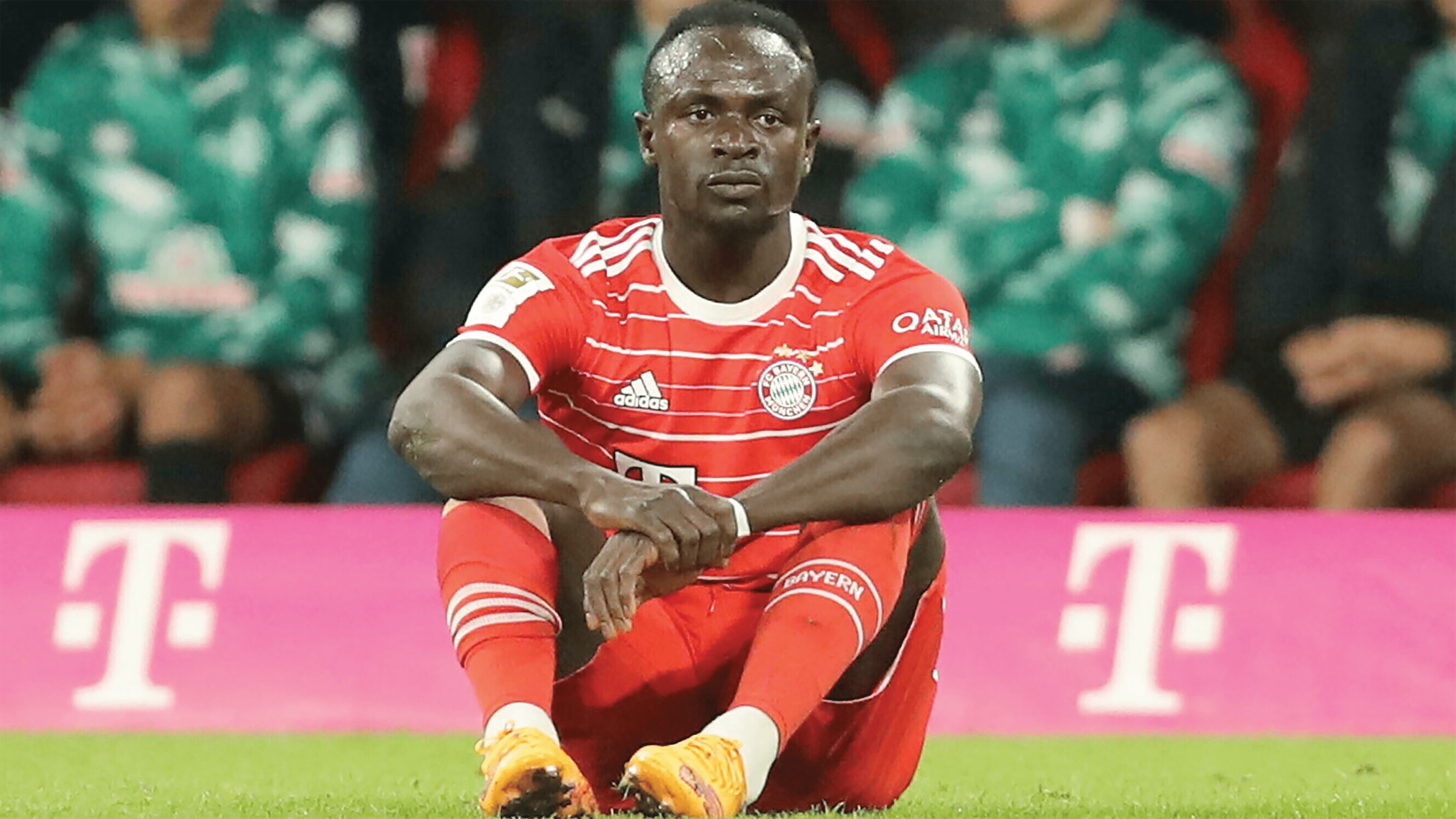
FIRING BLANKS: Something is certainly off with the Senegalese star forward who seems to have lost self-confidence of old
By Sports Reporter
It seems Sadio Mane’s move from Liverpool to Bayern Munich has not paid off for any party involved. The Reds lost one of the cornerstones of their attack, while Bayern did not acquire a player who could at least partly fill the void left by Robert Lewandowski’s departure to Barcelona.
Mane has not performed to the level we saw during his days at Anfield by any means. So far, the 31-year-old has scored 11 goals in 32 games. What might be shocking is that Mane has come off the bench in eight of these appearances this season. He serves as a bit-part player instead of a key man.
To make matters worse, Mane and Leroy Sane got into a physical altercation in the dressing room at the Etihad Stadium following Bayern’s 3-0 loss to Manchester City in the first leg of the Champions League quarter-finals.
The two already started arguing on the field when, during one of Bayern’s few attacks, Sane intended to play a short pass to Mane who instead made a deep run.
Moments later, Sane confronted Mane over what he considered to have been a mistake by the substitute, who had been on the pitch for only 14 minutes.
Once the pair returned to the dressing room after the game, Mane complained to Sane about the way he was spoken to on the pitch, which led to the altercation and left Sane with a swollen lip.
As a result, Bayern’s executives decided to suspend Mane from the Bundesliga game against Hoffenheim and fine him. While Bayern do not intend to terminate the forward’s contract, they were convinced serious punishment was needed.
Bayern manager Thomas Tuchel stated that, in his eyes, Mane has received enough punishment, yet the clash has disturbed the team.
“It was important to me that we resolve that matter before the next training session.. We are not the first team where something like that happens, and we won’t be the last.
Since his arrival at Bayern in late March, Tuchel has maintained a ‘Mr Positivity’ persona. He even found many words of encouragement after the decisive loss at City, saying he is “shocked in love” with his new team.But Tuchel is aware he has to worry about Mane.
“You need time to acclimatise after changing clubs even at that age,” he recently said. “Strikers like Sadio are sensitive, that is the key. It is about trust and patience so he can come back into a flow.”
In the early stages of the season, former boss Julian Nagelsmann, who left Bayern on March 24, used Mane up front in an attempt to find a replacement for Lewandowski.
But Nagelsmann realised Mane was not the kind of target player the Poland international had been for years. Mane moved back to the wing but also struggled to discover his sweet spot in Nagelsmann’s oft-used 3-4-2-1 system.
If that wasn’t enough, an inflamed head of the fibula prevented Mane from playing for Senegal at the World Cup in Qatar and sidelined him for six weeks after the restart of the Bundesliga season.
Tuchel seemingly prefers to use the former Liverpool star on the left side in a 4-3-3, or as one of a group of four floating attackers who try to crowd around the centre and break man-to-man coverage by switching positions.
Regardless of any discussions about tactical roles, Mane’s issues seem to go deeper than that. He appears to have lost the confidence that once made him go into one-on-ones with any defender in the world. His creativity and unpredictability are, besides his goalscoring skills, what made Mane a special player.
However, since his arrival in Munich and particularly since he missed the World Cup, Mane often looks dejected. Even some of his team-mates are puzzled by the lack of intensity the frontman shows in training and games.
What exactly caused Mane to become a shadow of his former self is subject to speculation. But something is certainly off and which, reading between the lines, Tuchel has acknowledged.
The new manager has also mentioned trust and patience – two attributes that might not come to mind immediately when thinking about Bayern, who fired their head coach Nagelsmann despite a winning ratio of 73%.
Bayern are a club in uproar and Mane is a supposed star name on the downslide. It could be a toxic marriage.
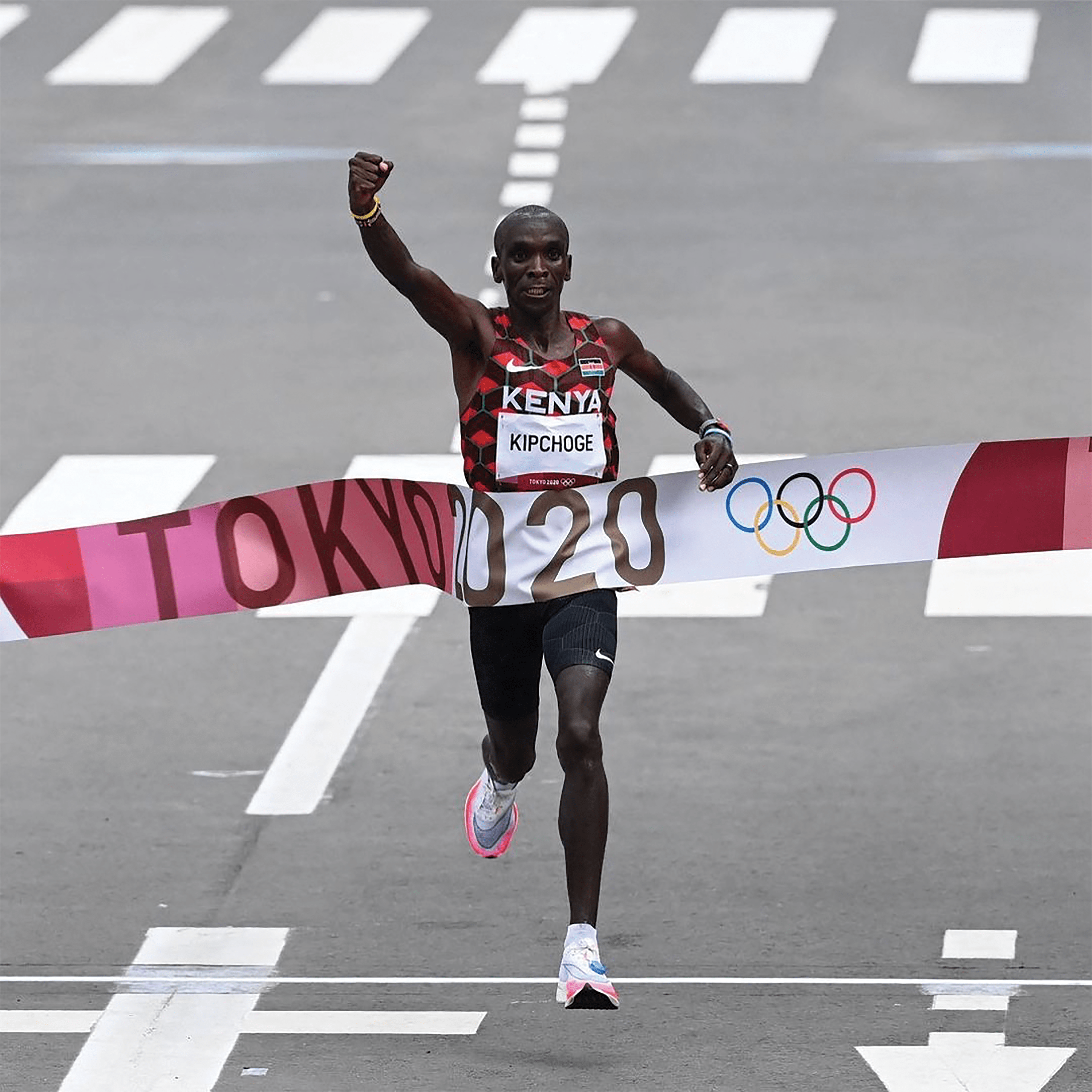
WHAT MARATHON LEGEND ELIUD KIPCHOGE EATS
A champion’s diet: The double Olympic gold medallist feeds on protein and carbohydrates
By Sports Reporter
A typical day for Kenyan long-distance runner Eliud Kipchoge,39, regarded as the greatest marathon runner of all time, involves a lot of running. He clocks up close to 220km weekly and, because of the long distances he does, a lot of his diet is protein and carbohydrates.
There is no binge eating for the double Olympic marathon gold medallist – he only eats at specific times during the day. His favourite food is the Kenyan staple food ugali which is a solid maize meal porridge.
Like his training, the marathoner’s diet is incredibly simple, consisting of beans and locally sourced fruits and vegetables. As a treat, Kipchoge likes plenty of sugar in his tea adding three teaspoons to his substantial breakfast mug.
After his long runs or intense speed sessions on track, his breakfast consists of white tea and bread, a common Kenyan breakfast. The bread he and his training mates at their training base in Kaptagat eat is homemade.
“But during the hard days, like three days a week, I’m taking tea, some fruits, also a banana and eggs to replace the energy lost and above all, to repair the torn tissues,” he told the BBC.On race days, his start is even lighter – cereals and milk – or just oats as he had before his sub two-hour run in Vienna in 2019. For lunch and dinner, he usually has ugali with lean beef and some managu – an indigenous spinach-like vegetable. The vegetable is a common nightshade rich in vitamins and fibre. He alternates the managu with cabbage or kale (sukuma).
How One Kenyan Village Fuels The World’s Fastest Runners The marathon hero also likes to have his ugali served with beans and potatoes, loading up on his carbs.
On days, he is not eating his favourite ugali, he has rice and red beans, another high source of protein. The other popular carbohydrate on the four-time Olympic medallist’s menu is a local favourite, chapati. a flatbread originating from India and a staple in Eastern Africa, which he can also have with beans.
But when he is travelling and cannot lay his hands on his ugali, his favourite go to meal is pasta.The meal fit for a champion is often concluded with a fruit. He is the 2016 and 2020 Olympic marathon champion and the world record holder in the marathon with a time of 2:01:09 set at the 2022 Berlin Marathon. He has run four of the six fastest marathons in history.
Published on the 95th Edition