 WeeklySA_Admin
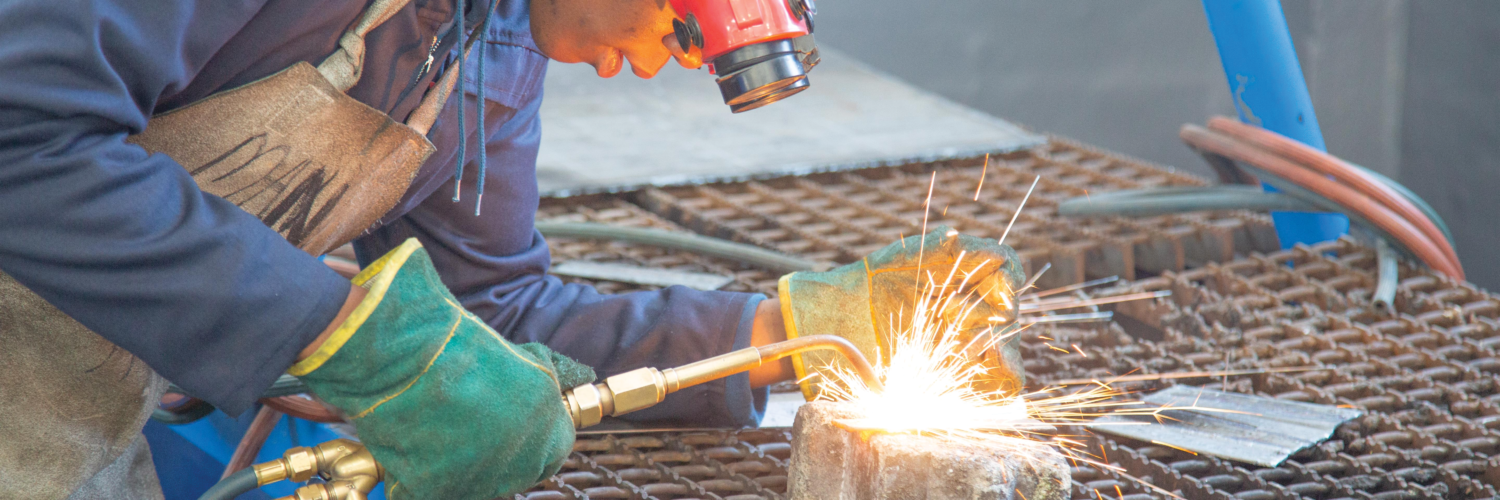
ARTISANSHIP: Learning a trade can open many doors for young people in terms of employability and self-employment opportunities…
By WSAM Reporter
Innovative, self-driven, self-starters who are technically minded and enjoy solving problems make good candidates for artisan training.
This is the view of Zizile Lushaba, Human Capital & Skills Development Executive at Steel Engineering Industries’ Federation of SA (SEIFSA), who adds that candidates who fit the description could explore options such as becoming a welder, fitter and turner, boilermaker or pipe fitter.
SEIFSA is a national federation representing 18 independent employer associations in the metal and engineering industries, with a combined membership of over 1 200 companies employing over 170 000 employees.
At a time when the unemployment rate is close to 40 percent (39.2 percent in the first quarter of 2023), with the jobless rate among young South Africans as high as 61 percent, the focus on post-school education and training is imperative. Choosing a trade increases young people’s chances of being employed as there is huge demand for more artisans in all sectors of the economy and this is not only true of South Africa, says Lushaba.
Degree-based careers may attract better-pay opportunities, but one had to be employed before getting paid, she said. South Africa had many unemployed graduates, showing that a degree did not always guarantee a job. Contrarily, there were far fewer trained artisans languishing among the unemployed.
The emphasis on practical training made newly qualified trades people infinitely more employable than university graduates, Lushaba points out.
“Trades require the following three elements — theory, simulation (practical training) and experiential learning (on-the-job training). Experiential learning allows the learner to be exposed to the workplace sooner than university graduates, which provides the opportunity to learn from professionals who guide and mentor them,” says Lushaba.
The trades also offer learners who may battle to achieve the marks needed to study at university an alternative and sometimes far better option than simply slotting into whatever degree I will be accepted into.
“University is theory intensive while a trade provides an opportunity for individuals who might not excel as much on theory but would be far better with hands-on, practical exposure and learning. Being employed as an apprentice and/or qualifying as an artisan also provide earlier earnings prospects, which is a big benefit for many South African families,” she says.

There are many colleges around the country where young people can learn a trade. The SEIFSA Training Centre in Benoni, Gauteng, for example, offered a full range of artisan training — from welders to electricians. Keeping up to date with the needs of the Fourth Industrial Revolution (4IR), the Centre also offers skills such as robotics and 3D printing to meet industry demands and these skills are taught using e-learning, virtual reality and e-assessments. The Centre can train 250 people a day and offers apprenticeships in 10 trades.
As part of its commitment to empowering young South Africans, SEIFSA took part in Cell C’s recent Youth Day event. The See Youth focused on ways to empower the country’s youth, including helping them to develop the skills of entrepreneurship among other things.
Many artisans find their practical skills and experience perfectly suited to running their own small businesses, says Lushaba, adding that these skills were useful in “day-to-day life for those who are looking to explore the entrepreneurial route”.
Emphasising the need for young people to train as artisans, President Cyril Ramaphosa said – in his State of Nation Address earlier this year – the number of students taking part in artisan training in TVET colleges would be increased from 17 000 to 30 000 during the 2023 academic year.
“One of the key ingredients for economic growth and competitiveness is the ability to attract skills which the economy needs,” he said. Artisans were always in demand — from the most to the least developed economies — and this was unlikely to change in the near future.
The SEIFSA Training Centre is run in partnership with Thuthukisa, a specialist advisory, consulting, projects management skills programmes delivery company. It is registered with the Department of Higher Education and NAMB and has trade-tested more than 400 candidates a year since 2014.
PROGRAM TO EXPOSE PUPILS TO ADVANCED ENTREPRENEURSHIP
IMPACT: Bank teams up with business training entity to prepare and nurture future entrepreneurs at school level…
By Priscilla Malinga

“We want to make SJ Van der Merwe a school of employers, and not employees”. These were the words of Tebatso Matshepo, Absa’s head of business transformation and citizenship, while addressing staff and pupils at SJ Van Der Merwe Technical High School in Lebowakgomo, Limpopo, recently. The occasion was to launch the Built 4 Biz programme to prepare local pupils for post-matric entrepreneurship careers.
The bank initiated the project in partnership with YOUinc, which specialises in delivering high-impact personal development training to youth, and which will assist in designing and adapting the entrepreneurship programme into the technical high’s current curriculum.
As part of the initiative, YOUinc will conduct two-hour-long personal development training sessions once a month to a group of 60 pupils, who will split into two groups to be exposed to separate learning themes.
Relating her own experience from her young days, Matshepo felt the programme came too late for her now that she is an adult, whereas this was what her class needed growing up in the province as young pupils to prepare them for world of business. During her time, she said, the focus and teaching was only to assist pupils to finish matric and go to university in order to get a better job.
Currently the school currently provides three learning streams – technical, mathematical, and sciences skill sets, which are underpinned by the compulsory subjects which include English, Business Admin and Engineering.
However, Built 4 Biz program will empower learners of all streams with critical entrepreneurial knowledge to become “tomorrow’s leaders”. In addition, the school intends to complement the project with an innovation showcase/expo” around October and November.
Tebatso said that, unbeknown to her during her younger days, she herself was exposed to entrepreneurship much earlier when her mother got her to sell sweets and snacks to raise money to buy bread for their family. Hence, it was important that pupils learn business skills at a younger age to learn there are other channels to follow other than going to tertiary and getting a job.
“This does not mean that students should now do the entrepreneurship course and then not proceed to tertiary,” said Tebatso. This program was designed to show pupils at a high school level what entrepreneurship is all about, so they could make a career call whether it was something they would like to fully pursue or not.
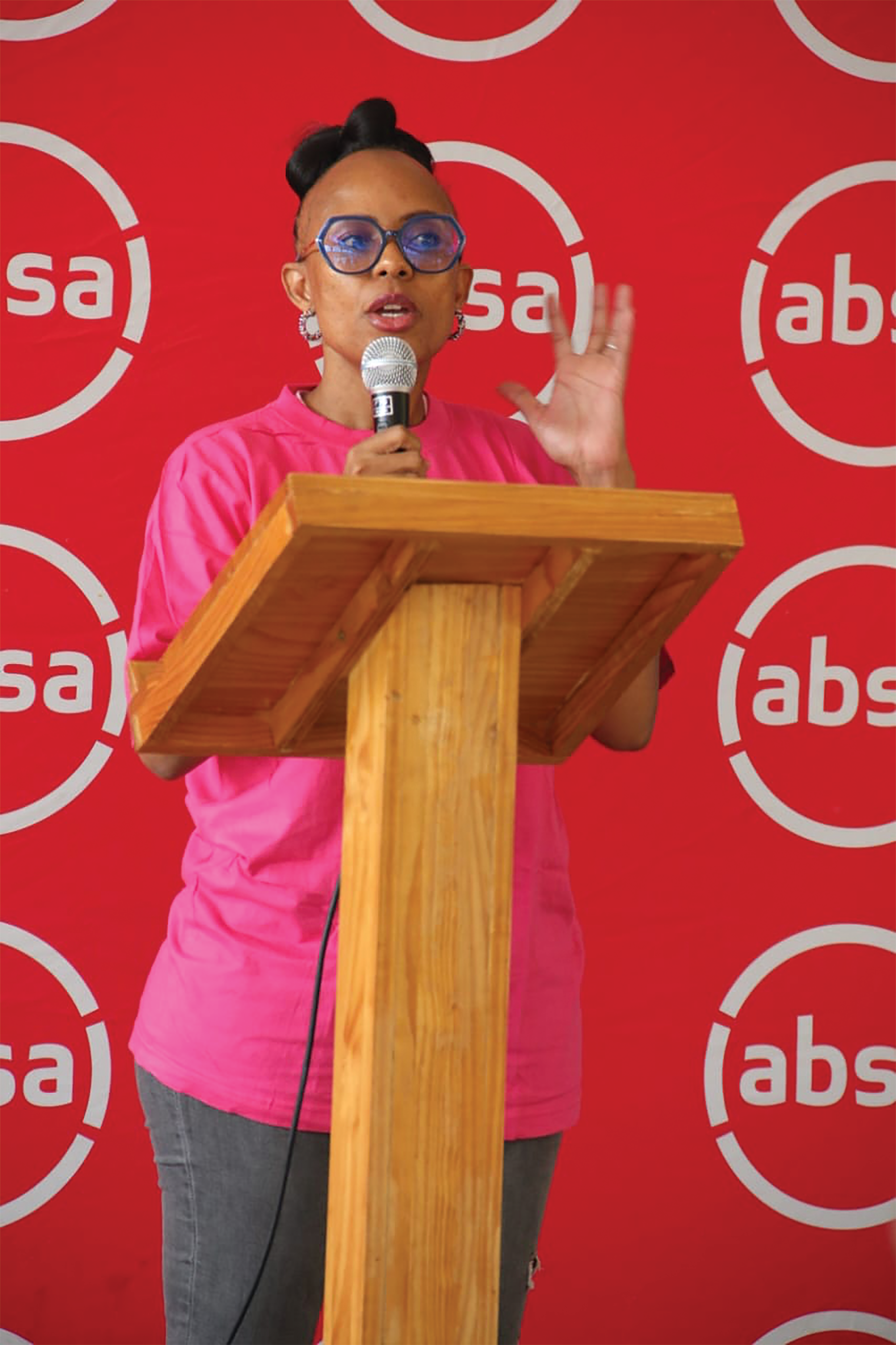
“As a subject, entrepreneurship will help teach you survival skills, challenge them think outside the box, and empower them with the ability to juggle things in life. Even if you decide to become a doctor, if you don’t have a business mind, you will not be successful. A lot of careers actually require that we become business savvy”.