 WeeklySA_Admin
CONTRIBUTION: Fifty years after the Soweto uprising, a new graphic novel brings the experiences of 17 women to young readers, placing their courage, sacrifice and activism at the centre of the story…
By Jacob Mawela
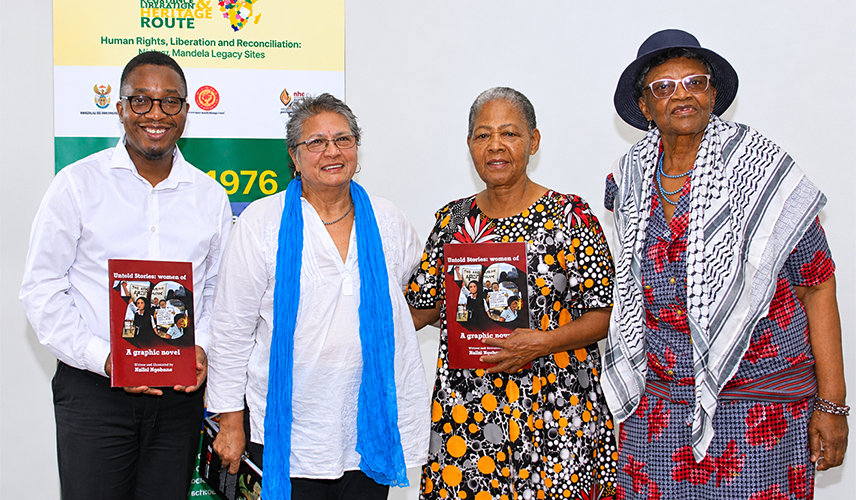
Eyewitnesses to the June 16 1976 Soweto uprising joined younger generations at the Hector Pieterson Memorial and Museum in Orlando West for the launch of a graphic novel documenting women’s experiences of the struggle.
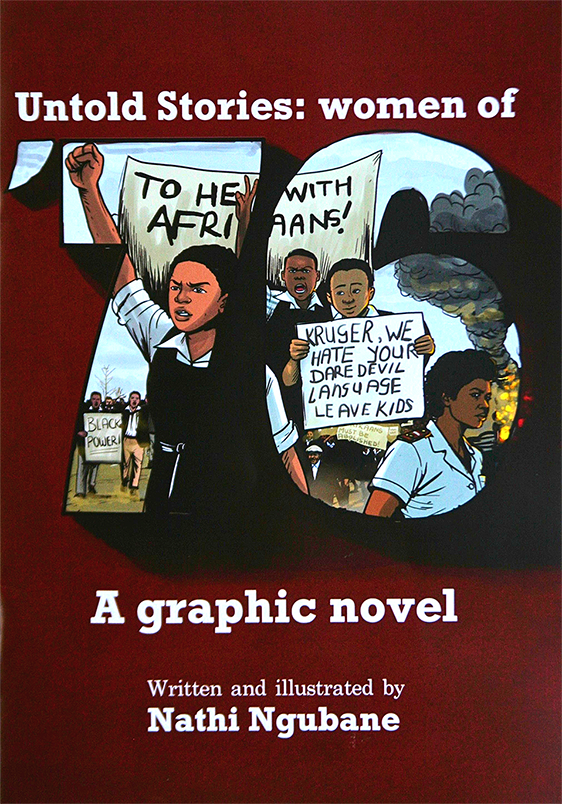
Launched on November 14 as part of commemorations marking the uprising’s 50th anniversary, Untold Stories: Women of ’76 recounts the lives of 17 women whose contributions have often received limited recognition.
Among them is Antoinette Sithole, Hector Pieterson’s sister, whose anguish was captured in the then World photographer Sam Nzima’s internationally recognised photograph of Mbuyisa Makhubu carrying the mortally wounded schoolboy.
South Africa mustn’t be known for the uprising,
but for the results of the uprising.” — Antoinette Sithole
Written and illustrated by Nathi Ngubane and edited by Professor Noor Nieftagodien and Ali Hlongwane, the book is published by the History Workshop at the University of the Witwatersrand.
The launch featured a panel discussion facilitated by Dr Tshepiso Maleswena, who holds a doctorate in history from Wits. Joining Ngubane were Khanya College coordinator Maria van Driel, Sithole and former Phefeni Junior Secondary School teacher Fikile Ngcobo.
The discussion’s most moving moments came as Sithole and Ngcobo recalled the events that transformed their lives half a century ago.
Sithole was 17 and hoped to become a pharmacist — an ambition she said she never realised.
Asked what she would tell today’s learners about education and the sacrifices made by her generation, she said: “We went out in the streets of Soweto for them to have a better education. South Africa mustn’t be known for the uprising, but for the results of the uprising.”
Ngcobo had recently moved from Naledi High School to teach at Phefeni Junior Secondary School. Both schools became central to the student resistance.
She recalled how she and a colleague ran after Makhubu, the son of her neighbour and friend, as he carried Pieterson.
Ngcobo, who jokingly described herself as a “dinosaur”, said she subsequently joined more than 200 teachers who resigned in solidarity with the students and in protest against the imposition of Afrikaans as a medium of instruction.
Van Driel, who grew up in District Six, recalled being a Standard Eight pupil at Bridgetown High School when news of the Soweto uprising reached Cape Town.
She and fellow learners joined a large solidarity march across the Cape Flats towards the city, where police confronted demonstrators with tear gas.
History through women’s eyes
The graphic novel unfolds across Soweto, Alexandra and Cape Town, with chapters devoted to each of the 17 women.
It opens with a fictional historian, Mami Vilakazi, sharing stories with two young people gathered around her fruit stall. Through their conversation, readers encounter women whose sacrifices have too often remained outside the best-known accounts of 1976.
The narrative then turns to Sithole’s recollection of the day her brother was killed. One illustrated panel captures her distress as she recalls being afraid to tell her family what had happened.
Other women featured include former Naledi High School pupil and student leader Sibongile Mkhabela, Noordgesig community activist Ma Vesta Smith and Miss Mainstay 1979 titleholder Masabata Loate.
In his introduction, Ngubane emphasises that female students were central to the 1976 movement and to resistance before and after June 16. He identifies activists Deborah Matshoba and Mmagauta Molefe among the women who inspired that generation.
The book also broadens the account beyond students, recognising the involvement of teachers, nurses, social workers, journalists and factory workers.
Nieftagodien, who commissioned the publication and heads the Wits History Workshop, said it was aimed primarily at young learners.
Copies are being distributed free to learners through the City of Johannesburg’s heritage museums: the Hector Pieterson Memorial and Museum, the June 16, 1976 Interpretation Centre in Jabavu and the Alexandra Heritage Centre. A PDF edition is also planned to widen access.
Combining colourful illustrations with accessible English, the publication seeks to encourage reading while helping younger generations engage with the country’s history.
Some illustrations draw on press photographs documenting the period.
The editors’ choice of Ngubane followed their collaboration with him on a 2025 book exploring Palestine’s history through the perspective of Malcolm X.
Raised in Chesterville, Ngubane holds a diploma in graphic design from the Durban University of Technology and has worked as a political cartoonist for The Citizen. His first children’s book, Duma Says: Wash Your Hands, Wear a Mask!, was published during the Covid-19 pandemic in 2020.