 WeeklySA_Admin
CANVAS: Celebrated visual activist Zanele Muholi presents images that unapologetically declare wilful disregard and vehement refusal of social strictures…
By Jacob Mawela
A richly dark ebony-hued woman lies lazily on a bed of white linen whilst holding a copy of the South African broadsheet newspaper, Cape Times whose front page is emblazoned with a headline in bold black uphill letters written “FAREWELL” and accompanied by an aligned grid of images of young men and women, in Room 2006 of the Hotel Riu located on Time Square in New York City sometime during the year 2022.
The images are those of 21 young people who had perished in a tavern in East London, South Africa on June 26, 2022.
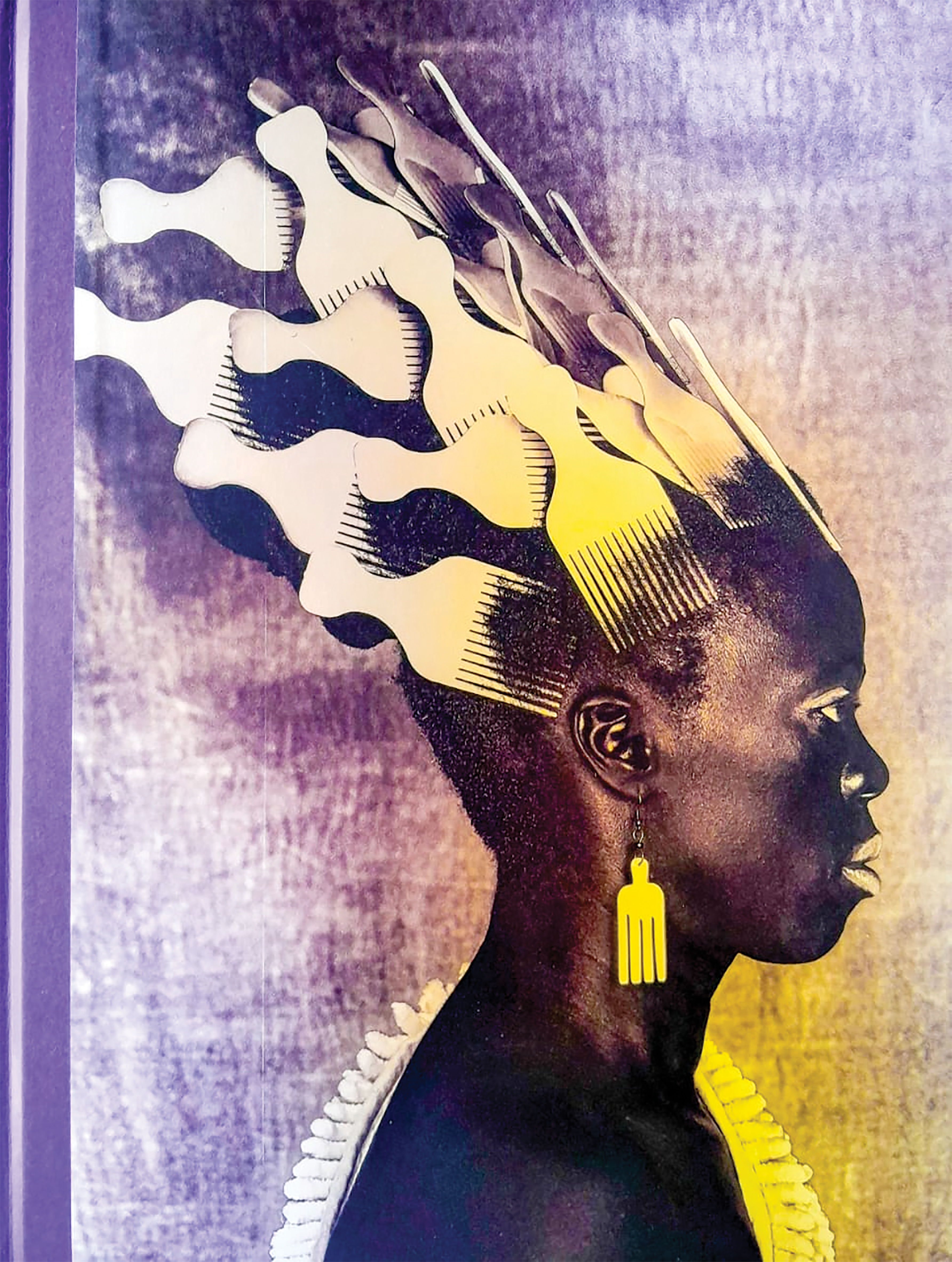
A photographic image limning the hotel scene, in which the woman gazes directly at the beholder instead of the paper, appears on a centre-spread of the hot off the press photography tome named Somnyama Ngonyama Volume II, captioned Khumbulani II Room 2006 Hotel Riu Time Square New York 2022 – recorded by acclaimed Umlazi-born visual activist, photographer, educator, Zanele Muholi.
“I cried that day, in my hotel bed. How can it just be “Farewell”? Muholi vented while being interviewed by writer and scholar Renee Mussai, over coffee in Paris.
The progeny of Bester, a domestic worker they describe as their guardian angel, they pointed out that they arrived in the arts raw, sans any background and without a family who prepared them to navigate the art world.
Muholi describes themselves as a Black activist, female-identifying and non-binary queer being existing in an epoch when anti-homosexuality laws are tightening across the African continent. Expounding on the societal intolerance of the queer, they recalled how a student who had enrolled in their class at the Market Photo Workshop, promptly withdrew rather than have to share the same space as them.
The intolerance even manifested itself in violent expressions as they felt it was them who had been raped after participating in sessions where survivors of rape recounted their brutal ordeals – in addition to many people in their community getting killed for loving someone of the same sex!
A sequel to 2018’s Somnyama Ngonyama Volume I and an edition to an evolving series which they intend to ultimately extend to five volumes, they reveal that Bester is the series’ DNA inasmuch as it’s for her – with an image featured in Volume II captioned Bester III, Philadelphia, in which Muholi is limned wearing pleated garments, evoking the matriarch!
The richly printed plate is but their investment in the circulation of Bester’s images which initially featured in the first volume and in an evocation of Ralph Ellison’s assertion – in his 1952 novel Invisible Man – that racism has rendered Black people invisible, Muholi declares that, in addition to their mother, the exposure is also intended as a tribute to the many other domestic workers and invisible Black labourers who are never seen nor recognised.
In a take which fortuitously resonates with Toni Morrison’s take on the importance of assuming responsibility for others she linguistically considered as “response-ability as well as W.E.B. Du Bois’ enquiry at the 1900 Paris exposition regarding “who shall be artists and who shall be servants in the world to come, or shall we all be artists and all serve?” – Muholi reflected on the responsibility of activists such as themselves expressed in their obligation and duty to bring others who may not have access to resources as themselves, along with them. A state of being which if they become negligent and idle, renders them to feel guilty for not doing justice unto themselves and others!
Additionally, to Nina Simone’s response that freedom to her meant “to have no fear” and Angela Davis’ take that freedom is a constant struggle – Muholi declared that to them, freedom is the present moment!
In conversation with the tome’s editor, Mussai, who is also an independent curator with a special interest in African and Afro-diasporic lens-based Black feminist and queer visual arts practices, the interviewer put it to Muholi that the darkening of their skin through ‘heightened tonal contrast’ magnifies connotations, and accusations, of performing blackface, or performing Blackness – to which the artist retorted that they’ve never been interested in photographic performance and added that they are tired of adapting to Western modes of beauty and notions of being seen!
A contributor, Natasha Becker – a founding member of Art for Action South Africa – postulates that Muholi’s Somnyama Ngonyama series functions as their artistic diary where their world is made clearer upon transmuting thoughts and experiences onto photographic paper as a form of journaling through image-making.
To that extent, some of Muholi’s oeuvre translate to their responses to occurrences such as the flooding which deluged their province of KwaZulu-Natal, which they interpreted through a portrait captioned Manzi I limning them submerged in an ocean whilst staring back at the viewer with one eye closed as though they were some mythological marine creature!
Such a pattern of referencing is extended to other images like Somiso, Umbumbulu in which they are limned with large bottles of water stacked on their head, where water is conjured as both a source and cargo – a part of what Muholi refers to as “COVID moments”!
Cryptically, Muholi compares Somnyama Ngonyama as a prayer which “you must perform as yourself” – further hinting that to them, photography in relation to Somnyama is like period pains which “you get to experience, feel and face this pain alone.”
Somnyama Ngonyama, Hail the Dark Lioness, Volume II comprises of 90 plus richly-printed, mostly self-portrait, monochromatic plates contributor Tina M Campt , describes as portraits which unapologetically declare a willful disregard and vehement refusal of social strictures.
With the book also translated into French and Italian, this reality prompted Muholi to lament the dearth of photography books written in their Zulu language which would speak directly to them instead of always having to explain their language to suit others.
* Zanele Muholi: Somnyama Ngonyama, Hail the Dark Lioness, Volume II retails for about R1 500