 WeeklySA_Admin
MIGRATION: One country is Anglophone, and the other is Francophone. Still, there are between 1 to 4 million people of Nigerian descent living in Côte d’Ivoire today…
By Aude Konan
There’s a saying—if there’s a place in this world where you don’t find Nigerians, it’s not a place suitable to live. Côte d’Ivoire is no exception. There are between 1 and 4 million people of Nigerian descent living in Côte d’Ivoire today, including Yorubas, many of them from Ejigbo in Osun State, as well as Igbo and Hausa ethnic groups.
The first wave of Nigerian resettlements began more than a century ago—in 1902, before either country became an independent, autonomous state. A couple of decades later, many Igbos continued to settle in the francophone nation after the Biafran War—at the time, former Ivorian president Félix Houphouët-Boigny had an agreement with Chukwuemeka Odumegwu Ojukwu, the first president of Biafra, to let him and his people settle in Côte d’Ivoire.
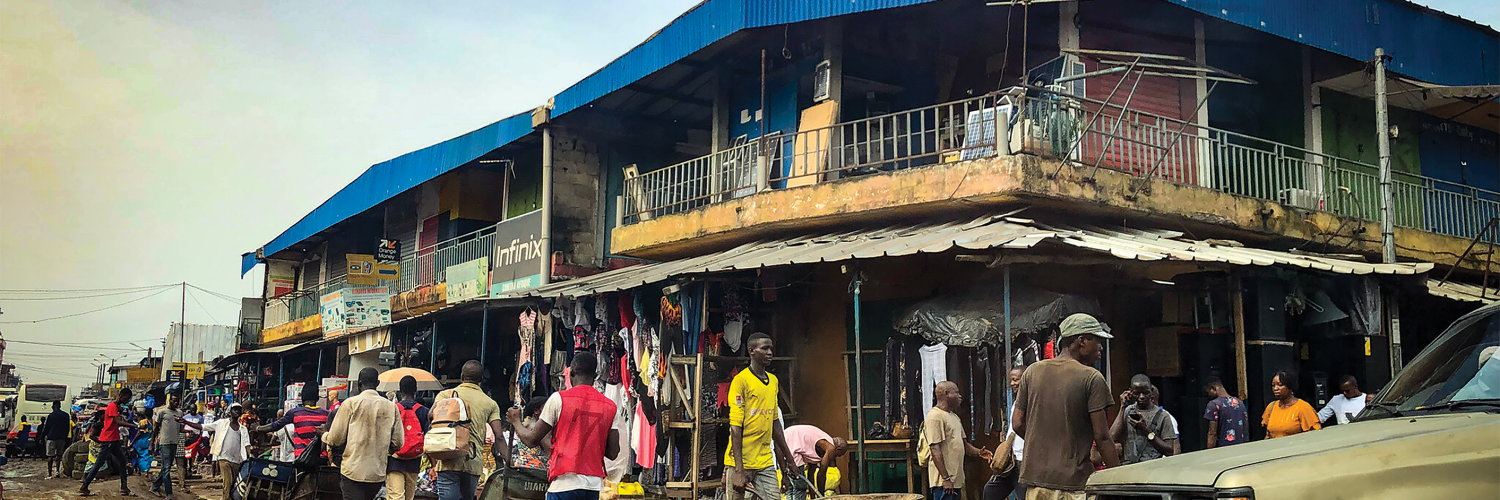
The Igbo community still lives there to this day, among other Nigerians. Some of them were born in Côte d’Ivoire, and others migrated there, either alone or with their families. In Treichville, Abidjan, there’s even a neighbourhood formerly known as Biafra. In Abidjan, Nigerians have their own hot spots, such as Bomakouté Ayass, a market in Adjamé, or the Yassonde maquis (a type of Ivorian bar) in Adjamé.
However, despite having a reputation for being very welcoming, Côte d’Ivoire, like all countries, is not immune to xenophobia. This tension goes both ways: the 2023 AFCON revealed both solidarity as well as divisions between countries, and before, during, and after the finale, some Nigerians expressed dismay and ignorance toward Côte d’Ivoire, a fact made even more baffling as millions of Nigerians live in the country.
Ignorance on social media is nothing new, but it was still sad to see, as relations between Nigeria and Côte d’Ivoire precede colonialism, and there have been many cultural exchanges between the countries.
Nigerians in Côte d’Ivoire mainly live in Abidjan, in neighbourhoods like Adjamé or Yopougon. Olawalé Ibrahim, a businessman, is one of them.
“I came to visit Côte d’Ivoire and then stayed. One day I’ll go back to Nigeria to settle down. I still have my house in Nigeria,” he explained.
Ibrahim arrived in Abidjan in 1994.
“Many other Nigerians in the country have a different opinion from mine. They have spent more time in Côte d’Ivoire than Nigeria and would rather stay there. They can’t go back to Nigeria; they’d prefer to die here. Côte d’Ivoire is our second country.”
Ibrahim recalls that when former Ivorian president Laurent Gbagbo came to power in 2000, many foreigners felt targeted by his policies. It reached a heightened point during the 2002 civil war. At that time, the Ivorian national radio would often broadcast xenophobic messages. His supporters went as far as looting shops owned by Burkinabé people.
“Most Ivorians are pretty open-minded people, but politicians have impacted the way people think,” Ibrahim added.
Economic duress is one of the reasons why so many Nigerians are moving to Côte d’Ivoire. Ayanjimi-Jai, a used-clothes fashion seller, has lived in Côte d’Ivoire since 1993.
“In Lagos, it was hard to plan my life, as there were many struggles to get fuel, electricity, and water. There were more facilities in Côte d’Ivoire,” he explained. “I used to be in the navy, and then I came to Côte d’Ivoire and never left.”
Like many migrants, he faced difficulties, among them learning the language.
“French is a very difficult language for me as an English-speaking person,” he says.
Despite the language barrier, Jai chose Côte d’Ivoire as a country to live in over the neighbouring Anglophone country of Ghana. In his view, Ghana’s issues with public services such as electricity and water were too similar to those of his homeland of Nigeria.
Professor Bell Ihua, a Nigerian pollster, pan-Africanist, and the executive director of Africa Polling Institute (API), has written about Nigerian communities in Côte D’Ivoire. He explains another surprising reason behind the increase in Nigerians in Côte d’Ivoire: “Church expansion is another reason behind these migration waves,” Ihua says. “There are branches of those big churches from Nigeria that are now being exported in Côte d’Ivoire, such as the Redeem Church and the Christ Embassy.”
These waves of migration in Côte D’Ivoire have also brought an Ivorian influence to Nigeria. Professor Ihua mentions Ejigbo, a Nigerian town in Osun state with strong cultural ties with Côte d’Ivoire, where French is the second most-spoken language.
Most of the people there have travelled to Côte d’Ivoire at some point or have family members there, naturally integrating French into their social fabric over the years. There are also some Ivorians living in Ejigbo.
“You’ll find elders born in Côte d’Ivoire who are French speakers because of that long connection, even naming their children French names, eating Ivorian food such as attiéké and sauce gombo,” Professor Ihua explains, adding that the local architecture is influenced by Côte D’Ivoire.
“They even have their own version of the allocodrome [open-air Ivorian takeaway shops], where people come to buy their attieké and plantain.”
According to Professor Ihua, there are up to five buses linking Ejigbo to Abidjan every week, further indicating that the community feels connected to both Ivorian and Nigerian culture.
Ihua believes that the Nigerian migration to Côte D’Ivoire has increased over the years. “Igbos have continued to travel as well as Yorubas from Ejigbo,” he says.
“Migration in Nigeria has been compounded by economic and social issues. Young Nigerians who might not be able to settle in Western countries might consider traveling to other West African countries instead.”
The relationship between both countries seems to be growing. “Diplomatically speaking, Nigerians do not forget the support given to Biafra during the civil war, and [the relationship] will continue to grow as a positive one,” Ilhua says.
Cultural exchange goes both ways: Ayanjimi is proud to have taught Ivorians more about Nigerian culture. At present, Ilhua has no intention of returning to Nigeria and believes he will probably stay in Côte d’Ivoire. “Côte D’Ivoire is my home, and I am Ivorian in spirit,” he says.
African nations were created based on arbitrary borders and divisions depending on which European countries colonised them—and the borders created by the Berlin Conference of 1885 started the process of European leaders safeguarding their interests, dividing Africa’s land into “artificial nations,” as Tanzanian President Julius Nyerere once said.
One of the unfortunate consequences of these arbitrary borders is that so many cultural and human exchanges between countries are prevented due to language and cultural barriers—it is substantially easier for francophone Africans to exchange with each other than it might be for an anglophone African and a francophone one.
Despite this, Africans on the continent move between different countries and increase their understanding of the other. Nigerian communities have fostered connections in Côte d’Ivoire, where some of them have lived for decades, and set up lives abroad for, one might hope, the better. These multigenerational bonds might help set a template for future cultural exchange throughout the continent, unencumbered by the limitations of colonial structures.
* Aude Konan is a writer and filmmaker, author of the books Ma Petite Soeur and Solitudes and whose articles have been published in Okay Africa, The Guardian, Amina, among others. The article is sourced from Africa is a Country
Comment
CORRUPT LAWYERS MUST BE EXPOSED
Lawyers are expected to exercise their functions with dignity, conscience and humanity in terms of the oath they take as this constituted the basis of their ethics before they start practicing their profession.
It is therefore shocking that there are some unscrupulous lawyers including advocates who were allegedly involved in criminal activities of submitting fraudulent claims totalling billions of rands against health institutions in South Africa’s nine provinces. They also allegedly embezzled monies from their ill clients through fraudulenT claims. They filed claims on behalf of patients without their knowledge.
The damning claims were recently revealed by Health Minister Dr Aaron Motsoaledi who announced that lawyers who had been found to have been submitting fraudulent claims had been referred to the National Prosecuting Authority for criminal prosecution and to the Legal Practice Council for violation of the Code of Conduct for Legal Practitioners and the Legal Practitioners Fidelity Fund (LPFF) to consider reimbursing claimants whose funds were embezzled by their legal representatives.
In the cases already completed so far by the Special Investigating Unit (SIU) a total R3 billion had been saved for various Departments of Health. The SIU has been, through a proclamation, investigating medico-legal claims against the State since 2017, in which allegations of fraudulent claims had been uncovered.
Corruption is an incurable disease that has plagued this country for too long a time and has resulted in the looting of State funds which were meant for the improvement of poor people’s lives and almost brought the country to its knees. It is a shame that some of those who are expected to help the government in fighting this scourge and ensure that the culprits are jailed for their actions, are the ones who were perpetrating these dastardly acts.
It is unacceptable for these legal practitioners to enrich themselves at the expense of sick people and even targeted babies with cerebral palsy – a condition in which children developed some form of brain damage due to depravation of oxygen during the process of birth.
Grandparents taking care of children in the absence of their parents, were also not spared. They were duped into signing the Power of Attorney to sue after being told they were signing SASSA forms for child support grants.
Corruption is a serious crime that endangers the morals of the entire society. We commend the SIU for their continuing probe and their sterling job of blocking the multi-billion rand fraudulent claims that were submitted by these greedy lawyers. The SIU must leave no stone unturned in exposing these thieves.
Lawyers are supposed to endorse the laws of this country. Those who are driven by greed and defrauding the State of billions of rands, must be identified and removed from the roll of legal practitioners.
Shame on them for abusing the laws that they are expected to uphold.