 WeeklySA_Admin
STRANDED: More than 80 learners from Eastern Cape farming communities around Enon and Bersheba have no school transport to take them to school as parents warn the crisis is pushing children out of classrooms and into danger…
By Thamsanqa Mbovane
On a dusty rural road outside the farming settlement of Enon in the Eastern Cape, dozens of schoolchildren gather every morning before sunrise with one goal: to find a lift to school.
For more than 80 learners from Enon and nearby Bersheba, hitchhiking has become the only way to reach Moses Mabida Secondary School, about 15 kilometres away.
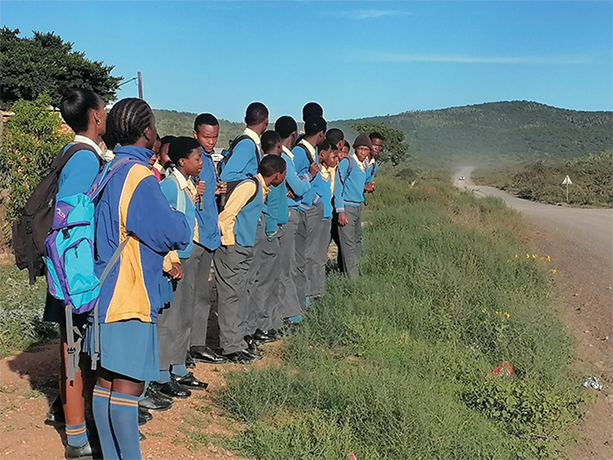
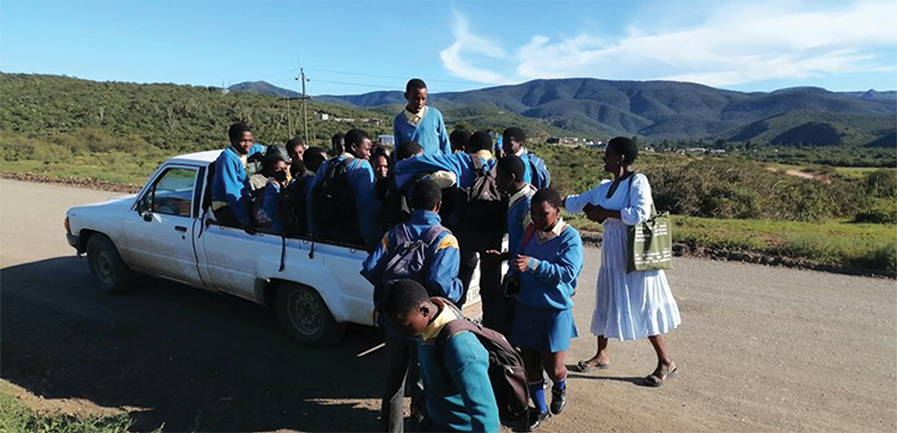
Standing at an informal roadside stop, learners in worn uniforms wait anxiously for passing vehicles. When a white bakkie finally pulls over shortly after 8am, excitement briefly ripples through the group.
But the relief is short-lived. There is space for only five learners. The rest remain behind, hoping another vehicle will stop before the school gates close.
For Grade 10 learner Aqhama Mila, the daily journey is exhausting and uncertain. “I wake up at 5am so I can be at the hiking spot by 6am,” she says.
“Even then, I often miss the first period. Sometimes when we arrive late the gates are closed at 7:45am and we have to hitchhike back home.” The daily struggle has taken a toll on learners’ morale and dignity. Mila says the stigma of coming from an isolated rural community follows them into the classroom.
“They laugh at us. They say we come from a dusty area with dirty shoes and dirty uniforms,” she says quietly. For families in these farming communities, paying for private transport is simply not an option.
Parents say a private vehicle hired to transport learners would cost around R650 per child per month, an amount far beyond their means.
Mzuvukile Mooi, a father of two learners, says most households survive on seasonal farm work and social grants.
“We don’t have permanent jobs,” he explains.
“Sometimes there is work on the farms, sometimes there isn’t. The children cry because they want to go to school, but they must hike on the road. It is dangerous.”
Local ANC ward councillor Nelisa Ncambele says the scholar transport crisis has been simmering for years in farming areas where schools are far apart and public transport is scarce.
“When it rains, I sometimes pick up learners myself from the hiking spots,” she says. “But I can only take five at a time. The rest must wait on the road.”
Parents fear the situation is pushing children out of the education system entirely. Vuyiswa Fiyani, chairperson of the School Governing Body at Mhlophekazi Primary School in Bersheba, says the problem worsened last year when the only scholar transport bus serving the area stopped operating.
“In April last year the Department of Transport provided one bus for learners from the Enon and Bersheba farming areas,” she explains.
“But after a fight between learners damaged the bus, the driver refused to continue transporting them.” Since then, the service has not been restored.
“The result is that many learners have dropped out of school because they cannot get there,” Fiyani says.
The Eastern Cape Department of Transport acknowledges the problem but says demand for scholar transport far exceeds available resources.
Provincial transport spokesperson Unathi Binqose says more than 40,000 learners across the province qualify for scholar transport, yet the department does not have the capacity to serve them all.
“We are aware of the challenges affecting learners in the Sundays River Valley Municipality,” Binqose said. According to the department, the service provider responsible for the Enon route resigned after his vehicle was damaged.
Officials say they are now struggling to find a replacement contractor willing to take over the route.
Education activists warn that transport gaps like these are a major contributor to school absenteeism and dropout rates in rural South Africa.
Research by several education advocacy groups has shown that thousands of learners across rural provinces walk or travel unsafe distances to school daily. In some communities, children walk 10km or more each way, often along busy roads or through isolated farmland.
For learners in Enon and Bersheba, however, even walking the full distance is not realistic. The route to Moses Mabida Secondary School stretches over rough gravel roads and farmland, making hitchhiking the only viable option.
But it is a dangerous one. Parents say the risks include reckless drivers, overcrowded vehicles, and the possibility of children being stranded on remote roads.
Community leaders fear the situation undermines the constitutional promise of equal access to education. “Children in rural areas are being left behind,” says Fiyani. “If they cannot reach school safely, how can they build a future?”
Back at the dusty roadside stop, the remaining learners wait patiently for another lift. Some will eventually reach school. Others will not.
And tomorrow morning, they will be back on the same road again — hoping for a ride to an education that should have been guaranteed. – GroundUp/Additional reporting by Weekly SA Mirror
Scholar Transport Crisis Across South Africa
While the plight of learners in the Enon and Bersheba farming communities has shocked local residents, their experience reflects a wider national problem. Across South Africa, thousands of rural children face dangerous journeys to school because scholar transport systems remain underfunded, poorly coordinated, or disrupted by service provider disputes.
Limpopo – Learners walking up to 20km
In several villages in Limpopo’s Vhembe and Capricorn districts, learners have been forced to walk distances of up to 20 kilometres to school after scholar transport contracts lapsed. Community protests erupted in 2024 and 2025 when buses failed to arrive for weeks at a time, leaving learners stranded and missing classes.
KwaZulu-Natal – Deadly road risks
In rural parts of KwaZulu-Natal, particularly in uMkhanyakude and Zululand districts, scholar transport shortages have pushed learners to walk along busy highways or accept lifts from passing vehicles. Safety advocates warn that children frequently travel in overloaded bakkies and taxis, raising concerns about road accidents and exploitation.
North West – Contracts cancelled
Several routes in North West were suspended after transport operators withdrew services over payment disputes with government departments. In communities around Mahikeng and Taung, learners were reported walking long distances or relying on irregular lifts from farm workers and local residents.
Free State – Protest over transport failures
In the Free State, parents in rural towns such as Botshabelo and QwaQwa have staged demonstrations after scholar transport routes were reduced due to budget constraints. Community leaders warned that school attendance dropped sharply when buses stopped operating.
Eastern Cape – Chronic infrastructure gaps
The Eastern Cape remains one of the provinces hardest hit by scholar transport shortages. Vast rural distances, poor road infrastructure and funding shortages mean thousands of learners depend on irregular services.
Education advocacy organisations have repeatedly warned that transport barriers are a hidden driver of school dropouts in rural South Africa. – Weekly SA Mirror