 WeeklySA_Admin
EXPLOITATION: As sponsors reshape African football, the continent’s most beloved sport is becoming deeply entangled with . forces of global capitalism. The transformation iscreating new opportunities, but also raising difficultquestions about exploitation, identity and its future…
By Adam Rodgers Johns
There is a noticeable shortage of academic literature examining football, despite the enormous economic, political and cultural significance of the global game.
The commercialisation of football is no longer confined to the powerful leagues of Western Europe. It increasingly affects every region of the world, including Africa. Over the past two decades, elite professional football has become deeply embedded in global capitalism, reshaping the sport through new ownership models, corporate sponsorships, broadcasting deals, merchandise sales and betting markets.
Africa is closely linked to the global football economy in multiple ways. The enormous popularity of European football — particularly the English Premier League — has significant commercial implications across the continent. Millions of African fans subscribe to satellite television packages to watch European matches, purchase replica jerseys of European clubs and participate in betting markets linked to those leagues.
Yet despite these strong connections, the broader implications of commercial football in Africa remain relatively under-explored. Football and the Expansion of Global Capitalism
Football offers a revealing lens through which to study the spread of capitalism in Africa.
The adoption of new business models has dramatically changed how football operates globally. Corporate-backed clubs and multinational ownership groups have become increasingly influential in shaping the modern game.
One striking example is RB Leipzig in Germany. Founded by the Red Bull drinks company, the club achieved six promotions in six years to reach the Bundesliga and quickly established itself as one of the league’s top teams.
Another example is the City Football Group, the multinational organisation behind Manchester City. In a short period, the group expanded to own clubs on multiple continents, creating a global football network for player development, branding and marketing.
Africa has also become part of this global football economy. In 2018, Rwanda signed a controversial tourism sponsorship agreement with Arsenal Football Club under the “Visit Rwanda” campaign, reportedly worth £30 million. The deal demonstrated how governments increasingly view football partnerships as tools for international branding and economic diplomacy.
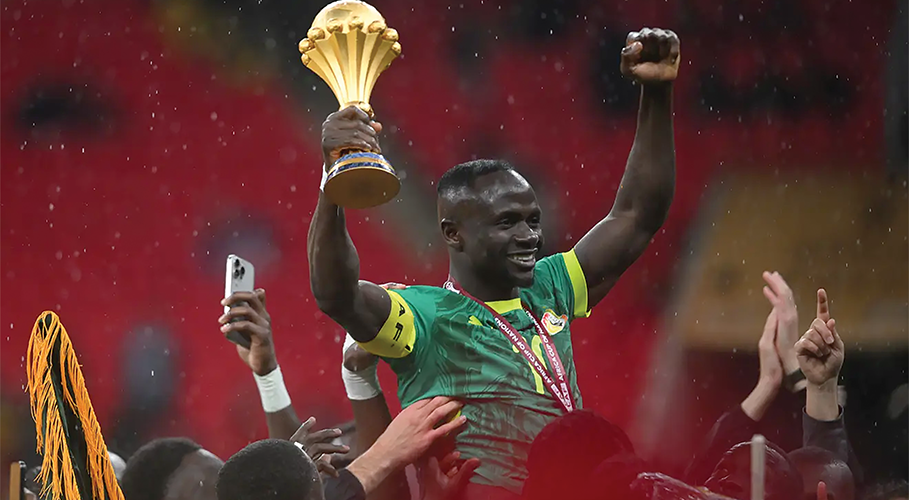
At the same time, African players have become central to the global football market. Transfer fees have risen dramatically over the past decade. Senegalese star Sadio Mané became the most expensive African footballer at the time when he joined Liverpool in 2016 for £35 million.
The Export of African Talent
Perhaps the most visible connection between Africa and the global football economy is the steady export of players to European leagues.
Across the continent, football academies have multiplied as European clubs seek to identify and develop promising talent at an early age. Juventus has run academy programmes in Nairobi, while Barcelona has launched academies in Rwanda and Uganda.
These initiatives are often welcomed locally. Structural adjustment policies during the 1980s significantly reduced government investment in sport across Africa. As a result, foreign academies helped fill a major development gap.
However, the rapid growth of the academy industry has also created problems. Some private academies operate without adequate oversight, exposing young players to unlicensed agents and exploitative contracts.
Critics have compared this system to a form of neo-colonial extraction. Instead of exporting raw materials such as minerals, Africa exports football talent which is then commercialised and monetised in European leagues.
Manchester City has reportedly supported development programmes in Ghana linked to its global scouting system. City Football Group CEO Ferran Soriano once described the strategy in venture capital terms: investing in multiple young players in the hope that one becomes a superstar worth tens of millions.
Africa’s Peripheral Position
Despite its importance as a talent pool and consumer market, Africa remains financially peripheral in the global football economy.
The continent generates relatively modest revenues from broadcasting rights, sponsorship deals and ticket sales compared to Europe’s major leagues. Scholar Paul Darby has described the relationship between African and European football as one of dependency.
African players frequently migrate to Europe, while millions of African supporters follow European clubs more closely than their own domestic leagues. This dynamic reinforces Africa’s marginal position within global football.
Yet domestic football still plays an important social role. Local clubs remain symbols of community identity and pride. Stadiums continue to function as spaces where political expression, social belonging and cultural traditions converge.
Understanding how commercialisation affects these local dynamics is therefore crucial.
Corporate Football in East Africa
East Africa provides some of the clearest examples of how commercial models are transforming domestic football.
In Tanzania, football has historically been dominated by the rivalry between Simba SC and Young Africans SC (Yanga). These clubs developed strong supporter-based ownership models after independence.
Football was closely tied to nation-building in the early years of independence, and both clubs enjoyed links to the ruling Chama Cha Mapinduzi (CCM) party. Their financial survival depended heavily on supporter contributions.
This traditional structure was challenged in 2007 with the creation of Azam FC by the Tanzanian conglomerate Bakhresa Group.
The company operates across numerous sectors including shipping, beverages, food production and television services. Azam FC became part of its broader brand strategy.
The club’s slogan — “Better team, better products” — openly reflects its commercial approach.
With far greater financial resources than its competitors, Azam FC built its own stadium, developed a modern training academy and recruited international players. Within a few years it became a strong contender for the national league title.
Many observers view Azam FC as evidence that corporate investment can modernise African football.
Betting Companies and Football Sponsorship
Commercialisation is also visible in the rise of corporate sponsorships, particularly from betting companies.
SportPesa, the sports betting platform launched in Kenya, quickly became one of the most prominent sponsors in African football. The company secured naming rights for the Kenyan Premier League and became the main sponsor of two of the country’s biggest clubs, Gor Mahia and AFC Leopards.
SportPesa also expanded into European football, sponsoring clubs such as Everton.
These partnerships significantly changed how football clubs operate financially. Many Kenyan clubs previously functioned as supporter-based cooperatives funded by fans. Corporate sponsorship introduced new revenue streams but also new commercial pressures.
The rapid expansion of betting sponsorship has also raised concerns about the social consequences of growing gambling markets in African societies.
Media Rights and Chinese Investment
Television broadcasting rights represent another powerful driver of football commercialisation.
In Uganda, the Chinese digital television company StarTimes secured a ten-year agreement for the naming and broadcasting rights of the Uganda Premier League, reportedly worth $7 million.
The deal represents one of the largest commercial partnerships in Ugandan football history and reflects the expanding influence of Chinese investment in African media and infrastructure.
Television coverage can increase league visibility, attract sponsors and expand audiences, but it also shifts the governance and financial priorities of domestic football.
A Mirror of African Society
Studying football provides an important window into broader social and economic changes across Africa.
The sport’s immense popularity means that developments within football often reflect wider transformations in society. Commercial football intersects with issues ranging from media and advertising to identity, politics and consumer culture.
Corporate clubs may disrupt long-standing supporter traditions, but they can also improve facilities, professionalism and performance standards.
Understanding these dynamics requires careful research and empirical analysis.
A Game Worth Studying
Despite its significance, the commercialisation of African football remains understudied.
Key questions remain unresolved. Has commercialisation improved domestic leagues? Has it strengthened African football internationally? Or has it reinforced the continent’s dependency on European football?
Researchers must also examine how these economic models reshape supporter culture, political relationships and social values.
Ultimately, football’s mass popularity offers unique insight into what people value and engage with in their everyday lives.
As commercial forces continue to reshape the sport, the game provides a powerful lens through which to understand the evolving nature of capitalism in Africa. – Africa is a Country