
 WeeklySA_Admin
DIVIDE: As artificial intelligence accelerates, a stark warning emerges: without urgent action to close the digital divide, billions—especially in rural areas and among women—risk being left further behind in a rapidly digitising global economy…
By Steven Seaman
A quarter of the world’s population, 2.200 billion people, still lack internet access, according to data from the International Telecommunication Union (ITU). This digital divide risks widening with the rise of Artificial Intelligence.
In 2025, 85% of urban residents used the network, but almost half of the rural population (58%) still did not.
The digital divide also exhibits a marked gender bias: it affects 52% of women compared to 42% of men. These inequalities are exacerbated by geographical, socioeconomic and educational factors, generating new forms of social exclusion in an increasingly digitised economy.
Just as roads and electricity powered the industrial
age, AI will define the smart world—but without access and
skills, it could deepen inequality rather than bridge it…
In a report “The next great divergence”, The United Nations Development Programme (UNDP) warns that inadequate management of AI threatens to widen economic, skills, and governance gaps between countries, reversing decades of progress in reducing inequalities.
AI could increase inequality between countries by widening these gaps, since the starting point is already hugely unequal.
The Chinese telecommunications company Huawei has made digital inclusion one of its top priorities. In recent years, it has provided digital connectivity to nearly 170 million people in more than 80 countries, explains Joyce Liu, the company’s Director of Market Operations and an expert in digital inclusion.
Since 2019, the Chinese technology company has launched programmes to combat the digital divide under the slogan “Tech4All” (Technology for all) that mainly cover four major areas: education, environment, health and development.
“In education, we have a program with UNESCO through which we build equipment and provide connectivity to rural schools, in addition to training and providing digital skills to teachers,” explains Liu.
This program, launched in 2020 and called “Open Schools with Technology for All”, has been implemented in countries such as Egypt, Ethiopia, Ghana, Brazil or Thailand, where 44 “smart schools” have been built that have benefited “more than 20 000 teachers and students in remote areas”.
Digital trucks
In addition, they have launched the “Skills on Wheels” project in 27 countries – many of them African, but also European countries like France or Norway or Latin American countries like Peru.
The program consists of the use of “digital trucks”, which can be easily moved, in which technical experts provide digital training in rural areas with little connection and knowledge, especially to children and the elderly.
This project complements the “Schools on Wheels” programme, launched in 2019, which transforms used transport containers and buses into “mobile classrooms equipped with smart screens and computers that can reach remote areas.”
These are initiatives aimed at a period of two or three years in which Huawei also collaborates with other local and global partners, such as the Vodafone Foundation, some contributing funds or their staff in different countries.
“We cannot say how much money Huawei invests in these programs since there are several collaborators; in the UNESCO program we are the sole donor, but in other projects we have several partners who may not contribute money, but their employees do,” Liu points out.
Digital solutions for biodiversity
The digital inclusion expert states that in education they have reached 1.790 schools with “more than 700.000 people benefiting”, while in the environment their digital solutions have improved the conservation of biodiversity and the sustainable use and management of natural resources in 95 protected areas around the world.
“In 2020, Huawei and the International Union for Conservation of Nature (IUCN) launched the global alliance Tech4Nature (Technology for Nature) to expand the impact of nature conservation through technological innovation,” he explains, adding that projects have been implemented in countries such as China, Brazil, Mexico, Spain, Kenya, and Turkey.
Specifically, in the Soure Extractive Marine Reserve in the Brazilian Amazon, low-cost environmental sensors have been installed to collect real-time data on water temperature, salinity, and other parameters, in order to monitor the impact of climate change on the local mangrove ecosystem.
In the Dzilam de Bravo State Reserve in Mexico, infrared cameras have been set up to monitor 7.000 hectares of protected land, which by the end of 2025 had identified 16 wild jaguars.
In the health sector, the projects include digital skills training for people with disabilities and accessibility improvement technologies, such as devices for people with visual or hearing problems “which are already used by 8 million users.”
Liu warns that the digital divide “creates many differences and it is crucial to fight against it,” especially after the introduction of Artificial Intelligence, which could “widen the divide even further.”
“Just as roads, railways, and communication networks were the infrastructure of the industrial age, AI will become the infrastructure of the smart world,” he emphasizes.
In this sense, he believes that to achieve inclusion in AI, it is necessary to “focus on the accessibility and ease of use of its technology.”
“All parties must collaborate to bridge the infrastructure and skills gap, making AI an infrastructure as easily accessible as water and electricity.”
Huawei’s goal, it says, is “to build a sustainable and fully connected smart world where all people, including the most vulnerable and disabled, can enjoy digital technology.”
The author of the article, Steven Seaman, is an Irish journalist, specialising in technology and economic news
Comment
NOBODY IS ABOVE THE LAW
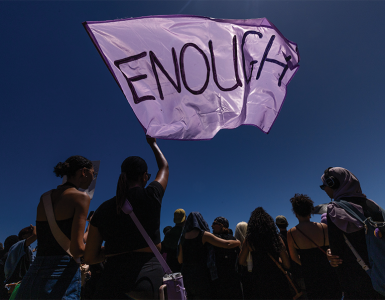
The conviction of Selby Mbenenge by the Judicial Service Commission (JSC) for gross misconduct marks a defining moment for accountability within South Africa’s judiciary. It is a decision that reaches far beyond the fate of a single individual – it speaks directly to the credibility of the legal system and its willingness to uphold the standards it demands of others.The case, brought forward by court secretary, Andiswa Mengo, has drawn national attention not only because of the seniority of the judge involved, but because it highlights the persistent and often underreported issue of sexual harassment within professional environments—particularly within institutions that are expected to embody justice and ethical conduct.
What makes the JSC’s ruling especially significant is its decision to overturn the earlier finding of the Judicial Conduct Tribunal, which had concluded that Mbenenge was guilty of a lesser form of misconduct. By elevating the offence to gross misconduct, the JSC sent a clear message: the abuse of power, especially in cases involving sexual harassment, will not be minimised or excused—regardless of the stature of the individual concerned. Equally important was the JSC’s observation that Mbenenge showed no remorse. This finding underscores a troubling aspect of the case. Accountability is not only about the act itself but also about the willingness to acknowledge wrongdoing and accept responsibility. A lack of remorse, particularly from someone in such a high office, raises serious questions about judgment, integrity, and suitability to continue serving on the bench.
The consequences of the ruling are profound. The JSC’s decision has now triggered the formal impeachment process, a rare and serious step that reflects the gravity of the misconduct. It reinforces the principle that no one—no matter how senior—is above scrutiny or consequence.
More broadly, the decision sends a powerful and necessary message to South African society. At a time when sexual harassment remains a pervasive scourge across workplaces, institutions and communities, the JSC has demonstrated that such behaviour will be treated with the seriousness it deserves. Too often, victims of harassment face disbelief, retaliation, or institutional indifference. In this case, the ruling affirms that their voices matter and that justice can prevail.
For the judiciary, the implications are even more critical. Judges are custodians of the law and symbols of fairness and moral authority. When one of their own is found guilty of gross misconduct, it risks eroding public trust. However, decisive action—such as that taken by the JSC—can help restore confidence by showing that the system is capable of self-correction.
Ultimately, this case is not just about one judge’s fall from grace. It is about setting a precedent. It is about reinforcing the standards of conduct expected in positions of power. And it is about confronting, head-on, the deeply entrenched problem of sexual harassment in South Africa. The JSC has, in this instance, drawn a firm line. The challenge now is to ensure that this standard is consistently applied—and that it inspires broader cultural change across all sectors of society.