 WeeklySA_Admin
ACCESS: A global investigation reveals how a breakthrough cancer drug became one of the world’s most profitable — while remaining out of reach for most patients, including in South Africa…
By ICIJ
A major global investigation has exposed how one of the world’s most effective cancer drugs has become financially out of reach for millions — including patients in South Africa — as pharmaceutical giant Merck uses patents, pricing strategies and lobbying to protect its blockbuster medicine, Keytruda.
The findings, published by the International Consortium of Investigative Journalists (ICIJ), show how the company has built a multibillion-dollar revenue stream around the drug while limiting access to cheaper alternatives.
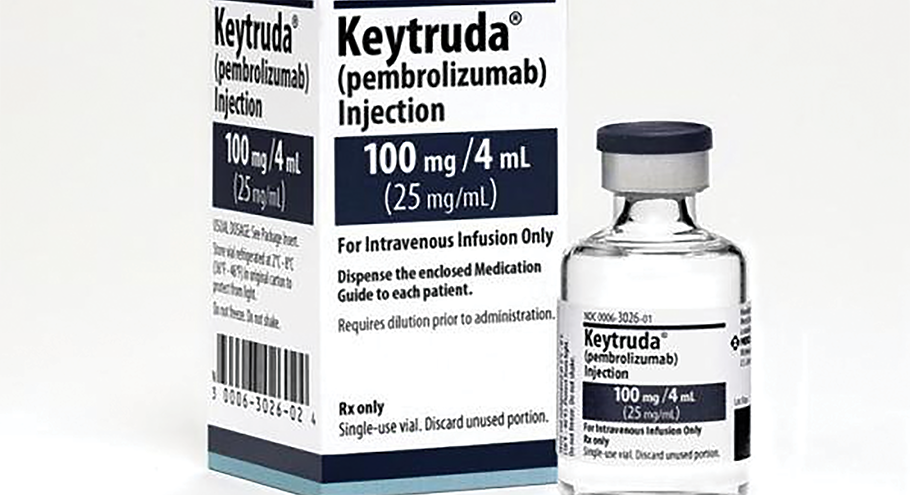
Keytruda, an immunotherapy drug used to treat a wide range of cancers, has transformed cancer care globally.
But its high cost has created what health experts describe as a growing divide between those who can access advanced treatment and those who cannot.
In South Africa, where most people rely on the public health system, the drug remains largely unavailable due to its cost.
Global profits, limited access
Since its launch in 2014, Keytruda has generated more than $160 billion (R2,6 trillion) in global sales, making it one of the most commercially successful drugs ever developed.
At the same time, governments and patients worldwide are struggling to afford it.
Annual treatment costs range widely — from about $65 000 (more than R1 million) in South Africa to more than $200 000 (R3,2 million) in the United States.
But affordability varies sharply depending on income levels, making the drug effectively inaccessible in many lower- and middle-income countries.
In South Africa, a single dose can cost several times the average monthly household income, placing it beyond the reach of most patients.
The investigation found that in countries with limited public healthcare funding, access is often restricted to a small number of patients — or not available at all.
Patent “fortress”
Central to Merck’s strategy is an extensive network of patents designed to delay competition from cheaper generic or biosimilar versions.
The investigation identified more than 1 200 patent applications related to Keytruda across 53 countries.
These patents could extend the company’s market dominance well beyond the expiry of its original patent in 2028, potentially delaying lower-cost alternatives for more than a decade.
Industry experts say such strategies are increasingly common and are used to protect high-revenue drugs from competition.
Merck has defended its approach, saying patent protection is necessary to support innovation and fund future research.
Pricing and secrecy
The investigation also highlights a lack of transparency in how drug prices are set globally. Prices for Keytruda vary significantly between countries, often due to confidential negotiations between pharmaceutical companies and governments. In many cases, authorities declined to disclose pricing details, citing commercial confidentiality.
This secrecy makes it difficult for countries to benchmark prices or negotiate better deals, particularly in lower-income settings.
Health economists say this contributes to a system in which poorer countries often pay disproportionately high prices relative to their ability to afford them.
Pressure on health systems
The rising cost of cancer treatment is placing increasing pressure on healthcare systems worldwide. Cancer is already responsible for nearly one in six deaths globally, with cases expected to rise significantly in coming decades.
At the same time, the cost of new therapies continues to increase, with some treatments exceeding $1 million (R16m) per patient.
In South Africa, the impact is particularly severe. Keytruda is not included on the country’s essential medicines list, meaning it is not available in the public healthcare system, which serves the majority of the population.
Access is largely limited to private healthcare — and even there, coverage is not guaranteed.
Patients, doctors under strain
The investigation found that patients around the world are resorting to extreme measures to access treatment.
Some have turned to crowdfunding or taken legal action against governments or insurers. Others have sought cheaper versions of the drug through informal or unregulated channels.
Doctors, meanwhile, face difficult ethical decisions. In under-resourced health systems, clinicians may be forced to prioritise which patients receive treatment.
“What’s left for me to do? To play God,” one oncologist told investigators, describing how limited supply forces him to choose between patients.
Industry practices under scrutiny
The report also details how pharmaceutical companies use a range of strategies to expand the use of high-cost drugs.
These include regulatory pathways that allow early market entry, financial relationships with healthcare professionals, and funding of patient advocacy groups.
While these practices are legal, critics argue they contribute to rising healthcare costs without necessarily improving outcomes.
Studies cited in the investigation suggest that increased prescribing of certain cancer drugs does not always lead to better patient survival.
Affordability debate
Merck has defended its pricing, stating that the cost of Keytruda reflects its value to patients and the significant investment required to develop the drug.
The company says it has invested billions of dollars in research and clinical trials and continues to fund new studies to expand its use.
However, some analysts dispute these figures, arguing that development costs represent only a small fraction of the drug’s total revenue.
They say current pricing levels are driven more by profit considerations than by the need to recover research costs.
A widening gap
The Keytruda case highlights a broader challenge facing global healthcare systems: how to balance medical innovation with affordability.
While new treatments are extending lives and improving outcomes, they are also widening the gap between those who can access care and those who cannot.
In countries like South Africa, where income inequality is high and public healthcare resources are limited, that gap is particularly stark.
For many patients, the issue is not whether treatment exists — but whether it is accessible.
The bigger question
As governments, insurers and healthcare providers grapple with rising costs, the debate over drug pricing is likely to intensify.
At its core is a fundamental question about the future of medicine:
Should life-saving treatments be treated as commercial products — or as public goods?
For millions of patients worldwide, including in South Africa, the answer could determine not just the cost of care — but the chance of survival.
10 THINGS TO KNOW
Keytruda and the Global Cancer Divide
1. It’s a breakthrough drug
Keytruda is an immunotherapy that helps the body’s immune system fight cancer.
2. It treats multiple cancers
Approved for at least 19 types, including lung, breast and melanoma.
3. It’s one of the world’s top-selling drugs
Generated over $160 billion since 2014.
4. It comes at a steep price
Annual treatment can cost up to $200,000 in some countries.
5. In South Africa, it’s largely out of reach
A single dose can cost several times the average monthly income.
6. Public patients cannot access it
The drug is not on South Africa’s essential medicines list.
7. Patents keep prices high
More than 1,200 patent applications protect the drug from cheaper competition.
8. Cheaper alternatives are delayed
Generic or biosimilar versions may only emerge years after 2028.
9. Doctors face impossible choices
In some countries, limited supply forces clinicians to decide who gets treatment.
10. The real debate is bigger than one drug
It raises a global question: