 WeeklySA_Admin
CATALYST: Mpumalanga MEC Jesta Sidell has positioned the Nkomazi Special Economic Zone as a catalyst for manufacturing growth, investment and job creation, saying the project will help transform the province into a regional industrial and trade hub…
By Nhlanhla Mbatha
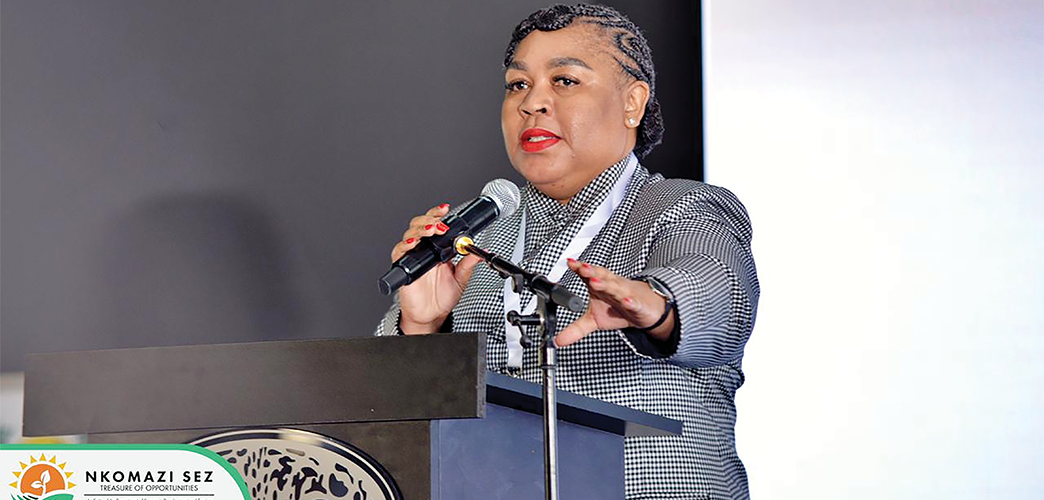
Mpumalanga MEC for Economic Development and Tourism Jesta Sidell has hailed the Nkomazi Special Economic Zone (NSEZ) as a game-changing catalyst for industrialisation, manufacturing expansion and cross-border trade, positioning it at the centre of the province’s economic growth strategy.
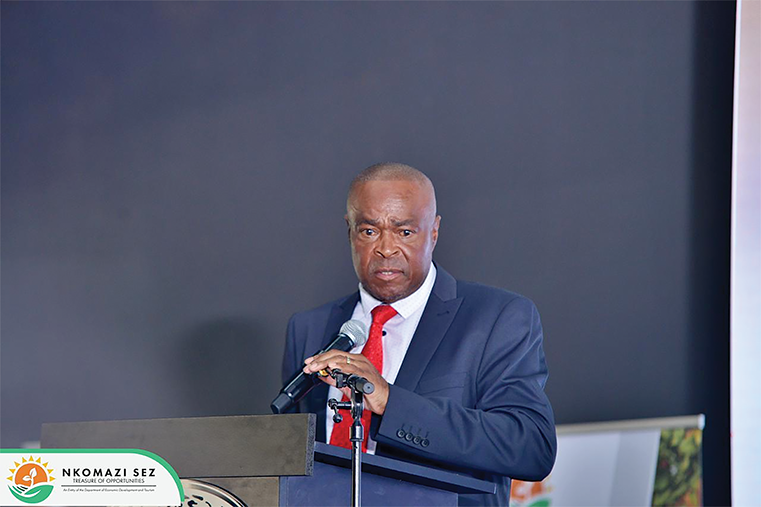
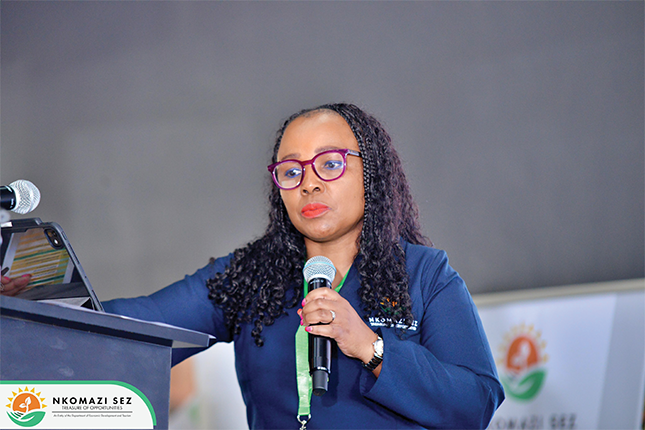
Addressing government leaders, industry representatives, financiers and manufacturing entrepreneurs, Sidell described the summit as more than a networking platform, saying it represents a practical step towards reshaping the economic future of the Ehlanzeni District and Mpumalanga.
With the African Continental Free Trade Area now in place, businesses in Nkomazi are no longer producing for local markets alone —
they are producing for a continent of 1.3 billion people.” — Jesta Sidell
She said the initiative is aimed at accelerating industrial transformation, strengthening manufacturing MSMEs and opening new market opportunities for local businesses.
She was speaking at the inaugural MSME Manufacturing and Industrialist Summit 2026, held in Malelane on May 19.
“This summit is not just another item on our provincial calendar,” Sidell said. “It is a practical intervention designed to accelerate industrial transformation, support manufacturing MSMEs and unlock market access opportunities for local enterprises.”
The summit, hosted by the NSEZ in partnership with the Mpumalanga Department of Economic Development and Tourism (DEDT), brought together operational manufacturing SMMEs, emerging industrialists, logistics stakeholders and market-access partners to explore opportunities linked to manufacturing growth, funding access, procurement integration and export readiness.
Sidell revealed that the NSEZ is moving decisively from planning to implementation following the allocation of R45 million from the provincial budget for the 2026/27 financial year, alongside a strategic collaboration with Infrastructure South Africa aimed at unlocking R1.2 billion for Phase 1 construction.
“The township establishment is complete, the 300 hectares are secured and bulk engineering designs for water, electricity and sewerage are being finalised,” Sidell said.
She also highlighted growing investor confidence in the project, noting that more than 28 serious investors across agro-processing, manufacturing, logistics and green energy have already expressed interest, representing a projected investment pipeline exceeding R5 billion and the potential creation of more than 45 000 jobs.
Global logistics company DP World has already finalised lease agreements to anchor the logistics hub component of the special economic zone.
However, Sidell emphasised that the success of the NSEZ would ultimately be measured by the extent to which local businesses and communities participate in the industrial ecosystem.
“The true measure of the SEZ’s success will not simply be the multinational companies that establish operations here,” she said. “It will be measured by how many local MSMEs from KaMhlushwa, Tonga, Komatipoort and Malelane are integrated into those global supply chains.”
A major focus of the Summit was the role of manufacturing in driving sustainable economic growth and job creation.
Sidell stressed that manufacturing enterprises must move beyond “survivalist modes” and embrace competitiveness, innovation and operational excellence to participate effectively in local and international markets.
“To survive in the modern economy, our MSMEs must produce goods that meet stringent local and international standards,” she said. “We need our small industrialists to embrace technology, operational excellence and quality management so that products manufactured in Nkomazi can compete anywhere in the world.”
The MEC also underscored the strategic importance of the NSEZ’s location along the Maputo Development Corridor, linking South Africa directly to Mozambique, Eswatini and broader Southern African Development Community (SADC) markets.
“With the implementation of the African Continental Free Trade Area, businesses are no longer manufacturing only for Malelane or Ehlanzeni,” she said.
“They are manufacturing for a market of 1.3 billion people across the African continent.”
Sidell further highlighted the government’s efforts to dismantle barriers that continue to limit the participation of black-owned enterprises, youth and women industrialists in manufacturing and industrial development.
Through partnerships with organisations such as the National Youth Development Agency (NYDA), development finance institutions and the Mpumalanga Economic Growth Agency (MEGA), the government is expanding funding access, enterprise development and industrial incubation support.
The Summit also featured engagements on procurement opportunities, export pathways, logistics integration and supplier development, including the highly anticipated “Dragons’ Den” segment where selected manufacturing enterprises pitched directly to funders and industry stakeholders.
In closing, Sidell described the summit as a turning point in Mpumalanga’s industrialisation journey.
“The inaugural MSME Manufacturing and Industrialist Summit marks a point of no return for the economic industrialisation of Mpumalanga,” she said.
“Let us work together to transform Nkomazi from a transit corridor into a thriving, world-class industrial hub where local MSMEs build the products that drive Africa’s future.”