 WeeklySA_Admin
STRUGGLE: An open letter to US Secretary of State Marco Rubio argues that Cuba’s revolutionary legacy cannot be reduced to Cold War rhetoric. Instead, it should be judged by its contribution to anti-colonial struggles, international solidarity and the liberation of oppressed peoples…
By Phatse Justice Piitso
History has a remarkable way of outlasting political rhetoric. Governments change, ideologies rise and fall, but the historical record remains stubbornly resistant to revision. It is in that spirit that I address United States Secretary of State Marco Rubio—not merely as a senior American official, but as someone whose own family heritage is intertwined with one of the most consequential revolutions of the twentieth century.
My reflections arise not from hostility, but from a belief that humanity advances when nations confront history honestly rather than reshape it to suit contemporary political agendas.
I write as a descendant of the Bakone ba Matlala and Batau ba Masemola kingdoms, whose traditions were forged through resilience, courage and resistance against oppression. Like countless African communities, our history teaches that freedom is never freely given; it is won through sacrifice, perseverance and collective struggle.
History remembers Cuba not for the ideology its critics denounce, but
for the solidarity it extended to nations fighting for freedom
and dignity…
That lesson also defines Cuba’s revolutionary journey.
On 5 June 2026, Secretary Rubio posted on X that the United States would “no longer tolerate radical Marxist regimes” in the Americas, describing Cuba as “the world capital for radical left-wing terrorism” that had exported a “poisonous and evil revolution.”
Such statements may resonate with some audiences, but they ignore the broader historical context that shaped modern Cuba.
Long before Fidel Castro and the July 26 Movement, Cuba endured centuries of colonial domination, slavery, foreign intervention and dictatorship. The revolution did not emerge in a political vacuum. It was born from a society marked by profound inequality, corruption and repression under the Batista regime, which itself enjoyed considerable American support.
To understand Cuba without acknowledging those realities is to tell only half the story.
Latin America’s great liberator, Simón Bolívar, recognised that freedom in the Americas was inseparable from the destiny of humanity itself. Writing in his 1815 Letter from Jamaica, Bolívar argued that “the freedom of the New World is the hope of the universe.” He appealed to the civilised nations to support liberation struggles, lamenting that many remained indifferent to a cause that was both just and necessary.
Those words still carry weight today.
Decades later, Oliver Reginald Tambo, accepting the Simón Bolívar Award on behalf of the imprisoned Nelson Mandela in Caracas in 1983, reminded the world that Bolívar stood firmly against oppression wherever it appeared. Tambo observed that Bolívar would never have remained silent while nations suffered under occupation or while injustice flourished.
His message transcended its time: freedom demands solidarity.
That same principle animated José Martí, the intellectual architect of Cuban independence. Writing in Patria in 1892, Martí argued that unity was the greatest defence against domination. He warned that the enemies of liberation would always seek to divide those struggling for freedom. The answer, he insisted, was organisation, unity and unwavering commitment to national dignity.
These ideals became the moral foundation upon which the Cuban Revolution was later built.
Today, millions across Africa, Latin America and Asia continue to view Cuba not merely through the prism of ideology, but through its commitment to sovereignty, social justice and international solidarity. Whether one agrees with every aspect of the revolution is beside the point. Its historical significance cannot simply be erased because it challenges prevailing geopolitical narratives.
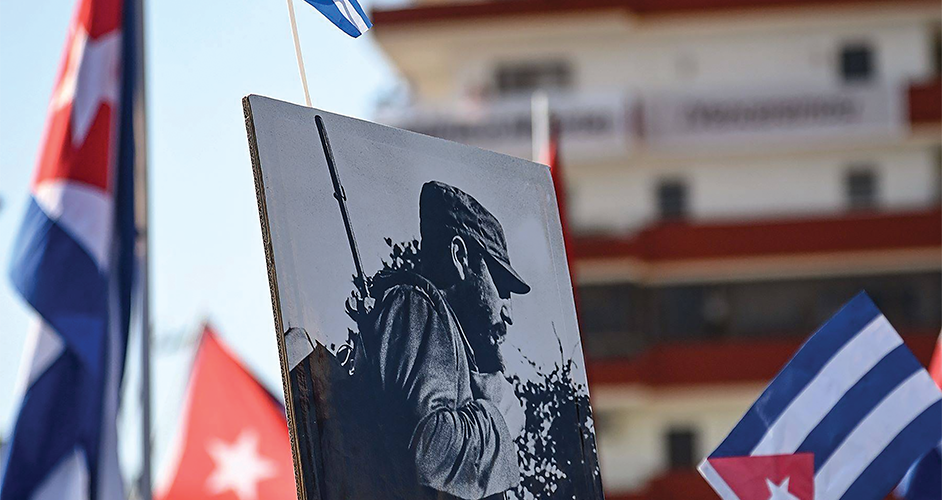
History records that Fidel Castro and the revolutionaries of the Granma expedition did not take up arms for ideological theatre. They confronted a dictatorship widely condemned for political repression, censorship, torture and economic inequality. Their struggle emerged from conditions that had denied ordinary Cubans political participation and national dignity.
The Batista government had transformed Havana into a playground for organised crime, foreign business interests and entrenched corruption. American journalist David Detzer vividly described a capital where prostitution, gambling and criminal syndicates flourished while poverty remained widespread beyond the city’s glittering façade.
Even senior American officials later acknowledged Washington’s overwhelming influence over Cuban affairs before 1959.
Former United States Ambassador Earl T. Smith testified before the US Senate that the American ambassador often wielded more influence in Cuba than the country’s own president. President John F. Kennedy himself later conceded that American support for Batista represented one of the most serious failures of US policy in Latin America.
Kennedy admitted that Cuba had endured economic exploitation and political humiliation under a dictatorship that Washington had helped sustain. He acknowledged that Fidel Castro’s early demands for justice reflected legitimate grievances shared by many Cubans.
These admissions matter because they come not from Cuban revolutionaries, but from leading American officials themselves.
History therefore demands balance.
It is entirely legitimate to debate Cuba’s political system, its governance or its economic model. It is equally legitimate to criticise aspects of its domestic record. Yet those debates should never obscure the historical circumstances that produced the revolution or the extraordinary international role Cuba would later play far beyond its shores.
Ambassador Phatse Justice Piitso is member of the ANC and SA Communist Party writes this article in his personal capacity. Part 2 of this article to be continued next week