 WeeklySA_Admin
ELECTION ROUND-UP: Water, housing and electricity dominate South Africa’s municipal election battle as big parties fight for the cities, smaller rivals eye kingmaker roles and the SACP charts an independent course…
By Monk Nkomo and Len Maseko
South Africa heads into Wednesday’s municipal elections with a crowded political field, a new fault line within the liberation alliance and a question hanging over its biggest cities: will voters deliver clear governing mandates or another round of coalition bargaining?
The battle for the metros will command national attention. Behind the campaign slogans, however, lies a contest over water, housing, electricity and councils capable of spending public money honestly.
For residents, the stakes are measured in everyday survival. For parties, the election offers an opportunity to consolidate support, recover lost ground or secure the handful of seats that could determine who governs.
Polling takes place on November 4, following special voting on November 2 and 3. Voters must cast their ballots at the stations where they are registered.
THE SERVICE-DELIVERY TEST
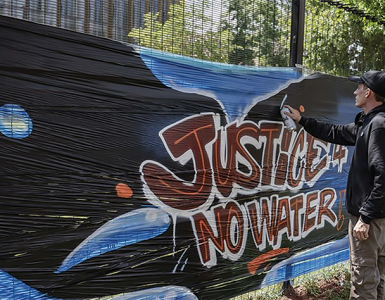
Water, housing and electricity are set to dominate voters’ assessment of municipal performance.
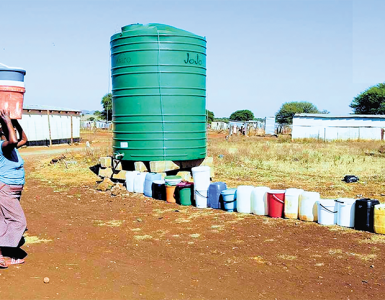
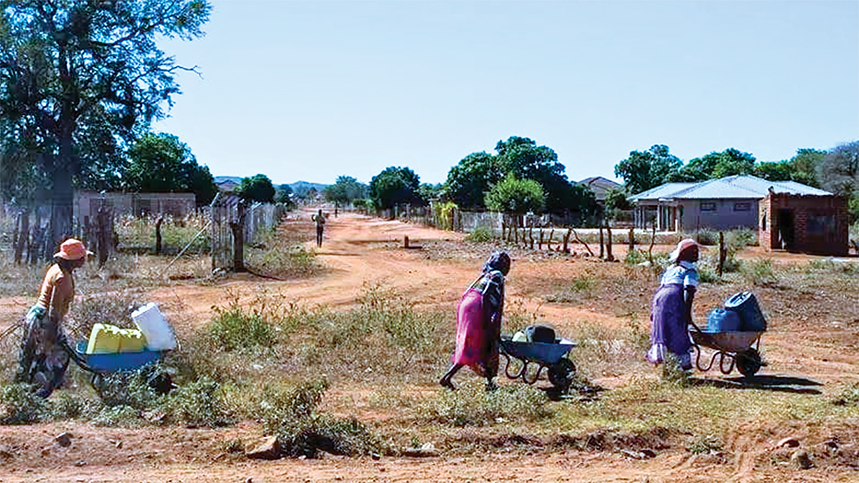
Dry taps disrupt households, schools, clinics and businesses, forcing families to spend scarce money securing an essential service. Unreliable electricity and unaffordable bills deepen hardship and threaten small enterprises.
Whoever receives the keys to city hall will inherit a clear public demand:
make the taps run, keep the lights on, advance dignified housing—and account for every rand…
Housing frustrations range from overcrowding and inadequate services in informal settlements to long waits for serviced land and decent accommodation. Delivery requires cooperation across government, with municipalities central to planning, land use and basic infrastructure.
These pressures turn election promises into practical questions: who can repair infrastructure, maintain it, spend budgets effectively and provide credible deadlines?
The financial backdrop makes those questions urgent.
Presenting the 2024–25 municipal audit outcomes in June, Auditor-General Tsakani Maluleke reported limited progress in strengthening local government, with metropolitan municipalities showing regression.
Her office recorded material findings on compliance with key legislation at 215 municipalities—84% of those audited. Municipalities and their entities incurred R40.14 billion in irregular expenditure during the financial year.
Irregular expenditure does not automatically establish corruption or mean that the entire amount was stolen. It identifies spending that breached legal requirements; fraud, losses and individual responsibility require investigation.
Nevertheless, the findings expose weaknesses that leave public resources vulnerable. The Auditor-General identified inadequate consequences for transgressions as a persistent obstacle, alongside failures in procurement, financial management and oversight. Parties must therefore explain how they will investigate wrongdoing, recover losses, discipline those responsible and appoint competent administrators. Coalition partners will share responsibility for the administrations they sustain.
A CROWDED BATTLEFIELD
The scale of competition is striking. The Electoral Commission’s communication on nominations recorded 732 registered parties at various levels, of which 546 had nominated candidates.
Registration does not automatically secure a place on the ballot: parties must satisfy additional participation requirements.
The IEC subsequently announced 136 790 certified candidates competing for 10 526 council seats across eight metropolitan, 44 district and 205 local municipalities. Among them are 621 independent ward candidates.
Competition is particularly intense in the metros. The commission’s published proportional-representation figures show 75 parties competing in Johannesburg, 70 in Tshwane, 69 in eThekwini, 67 in Ekurhuleni and 55 in Cape Town. Nelson Mandela Bay has 37.
These figures describe separate municipal contests, rather than one national ballot. Local organisation, candidate credibility and residents’ experience of government will matter alongside party reputations. Crowded fields increase the possibility of fragmented councils, but do not establish that any particular metro will be hung. Where no party secures a majority, smaller formations could become indispensable to electing mayors, passing budgets and sustaining administrations.
THE BIG-PARTY CONTEST
The national backdrop is the political transformation delivered by the 2024 general election.
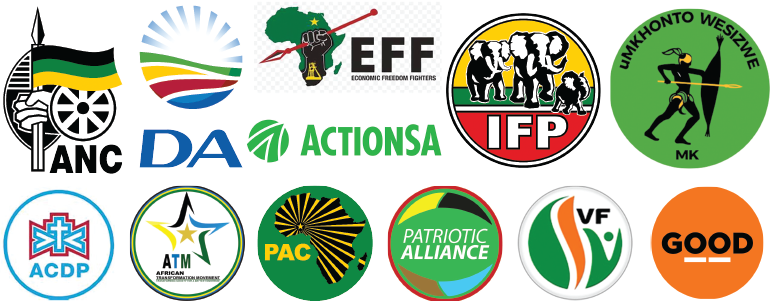
Eighteen parties won National Assembly representation: the ANC secured 159 seats, the DA 87, uMkhonto weSizwe 58, the EFF 39 and the IFP 17. The Patriotic Alliance won nine, while the Freedom Front Plus and ActionSA secured six each.
Those results measure parliamentary strength, rather than predict municipal outcomes. This election tests whether national visibility translates into credible candidates, functioning branches and neighbourhood mobilisation.
For the ANC, the challenge is rebuilding confidence while defending its municipal footprint. It must persuade dissatisfied residents that renewed promises will produce competent administration.
The DA must defend its governing record while broadening its appeal. Its opportunity lies in converting frustration with municipal failure into support across communities with different needs and circumstances.
MK faces the task of translating its parliamentary breakthrough into durable local organisation. The EFF must demonstrate that campaigning strength can produce council representation and influence.
The IFP’s performance will be closely watched, particularly in KwaZulu-Natal, while concentrated support could give the Freedom Front Plus influence beyond its national size.
SMALL PARTIES, BIG LEVERAGE
The potential kingmakers include the PA, ATM, BOSA, Rise Mzansi, PAC, UDM and African Christian Democratic Party, all of which won National Assembly seats in 2024.
ActionSA, Al Jama-ah, GOOD, the National Coloured Congress and United Africans Transformation also form part of that parliamentary picture.
The African People’s Convention and National Freedom Party did not win National Assembly representation in that election. Their potential influence must therefore be assessed through local support and council strength.
Kingmaker status depends on results. A small party’s bargaining power rests on the seats it wins, the majority required and the alternative partnerships available.
A few strategically placed councillors could carry considerable weight where larger parties fall short.
THE ALLIANCE FAULT LINE
An additional contest runs through the ANC’s own political family. The SACP is standing independently under its own name, departing from its established practice of supporting the ANC’s electoral ticket. At its manifesto launch, the party argued that workers needed a distinct political voice and municipalities rebuilt around their needs.
It also said its independent campaign did not mean abandoning the broader liberation struggle or its demand for alliance reconfiguration. Electoral separation should therefore not automatically be presented as the formal dissolution of the ANC–Cosatu–SACP alliance. Nevertheless, the campaign places organisations with overlapping histories, activists and constituencies in electoral competition.
Whether the SACP mobilises disillusioned non-voters, draws support from the ANC or attracts voters considering other opposition parties remains an important unanswered question.
AFTER THE BALLOT
For residents, the decisive test extends beyond which party wins the largest share.
Where coalitions become necessary, will agreements establish service priorities, protect professional administration and enforce accountability? Or will negotiations centre on mayoralties and executive positions?
The biggest party may win the most votes, but smaller parties could decide who wears the mayoral chain.
Wednesday’s result will determine the balance of power. The conduct of those elected will determine whether communities experience meaningful improvements or another cycle of promises.
Whoever receives the keys to city hall will inherit a clear public demand: make the taps run, keep the lights on, advance dignified housing—and account for every rand.