
 WeeklySA_Admin
STING: A foul smell reported by residents led police to the latest suspected crystal-meth laboratory at Klipvoorstad, about 200km north of Johannesburg. The raid follows the R600-million Musina bust and a May operation involving four Mexicans, sharpening questions about who finances South Africa’s rural drug factories…
By WSAM Reporter, Bernard Chiguvare and AFP
A STRONG, unpleasant smell drifting from a remote North West farm has led police to South Africa’s third suspected crystal-methamphetamine laboratory in less than four months — widening a trail of industrial drug operations hidden on secluded properties.
Police raided the Klipvoorstad farm, about 200km north of Johannesburg, overnight after residents reported suspicious activity and the odour. Officers found equipment and materials believed to have been used to manufacture crystal meth and arrested a 62-year-old man who was renting the property.
The value of the latest operation has not yet been disclosed and police have not reported the arrest of any Mexican national at Klipvoorstad. But the discovery follows the August raid on a Musina farm, where two Mexicans were among five foreign nationals arrested, and the May bust near Swartruggens, where four Mexicans were among 11 suspects.
Together, the three raids have intensified concern that South Africa’s remote farms are being repurposed as factories in a transnational synthetic-drug economy — with financiers, chemical suppliers, property facilitators and specialist cooks operating behind those found at the scene.
Arresting a tenant and confiscating machinery may close one factory,
but it will not by itself expose the ‘deep pockets’ behind South Africa’s meth-farm trail…
North West police commissioner Lieutenant-General Arthur Peter Adams said some of the machinery at Klipvoorstad appeared newly acquired. ‘We found very expensive equipment like washing machines … that have been bought recently,’ he said. ‘That is an indication that whoever is funding this is a person with very deep pockets.’
The comment moves the investigation beyond the arrested tenant. Police must now establish who paid for the equipment, who leased or controlled the property, where the precursor chemicals came from, who was meant to receive the finished product and whether the laboratory has any links to the other operations.
The Klipvoorstad breakthrough also shows the importance of local intelligence. Unlike the two-month investigation that preceded the Musina raid, the newest discovery followed reports from residents who noticed activity and a smell they considered abnormal. Clandestine laboratories can create dangers extending beyond drugs, including toxic fumes, chemical fires and contaminated waste.
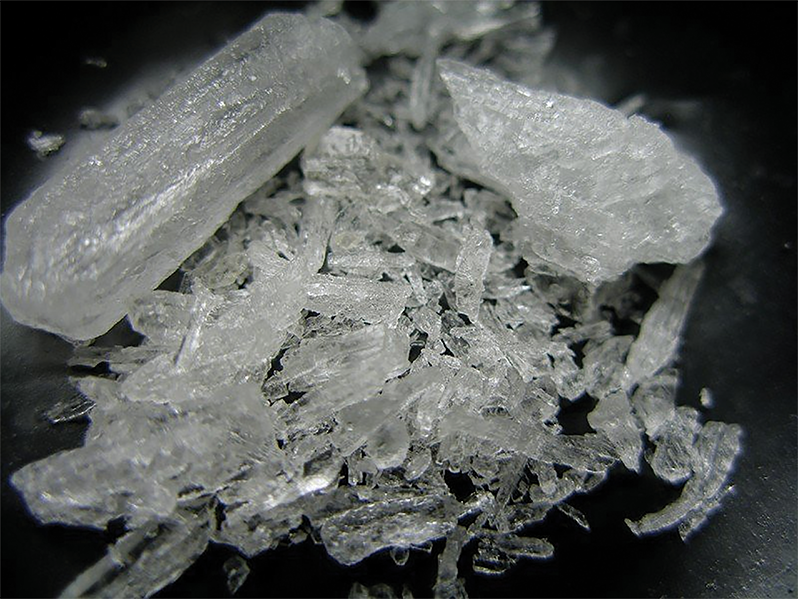
The latest operation changes the scale of the picture first highlighted by Weekly SA Mirror’s Mexican Meth Trail story a fortnight ago. In May, police uncovered a multimillion-rand meth laboratory on a remote farm near Swartruggens in North West.
Eleven people, including four Mexican nationals, were initially arrested. Police put the value of drugs produced there at about R250 million.
On August 20, a multidisciplinary force struck a farm outside Musina near the Zimbabwe border after a two-month intelligence operation. Two Mexican nationals, two Zimbabweans and a Malawian, aged between 20 and 47, were arrested. Drugs, industrial equipment and other material were valued at about R600 million, and an undisclosed amount of cash was seized.
The five Musina accused face charges relating to the manufacture and possession of illicit drugs. Their matter was postponed to September 10 for a bail application, with investigators saying further charges could be added. They are presumed innocent until proved guilty.
Police have not established publicly that Klipvoorstad, Musina and Swartruggens form a single network. Nationality alone also does not prove cartel membership. Yet the repeated discovery of sophisticated laboratories on isolated farms — and the involvement of Mexican suspects in two of the three recent cases — demands an investigation of the wider infrastructure, not only the people arrested at individual sites.
The pattern stretches further back. In September 2025, police raided a laboratory near Volksrust in Mpumalanga, seizing methamphetamine valued at more than R350 million and arresting five Mexican nationals and a South African caretaker.
A July 2024 raid on a Groblersdal farm in Limpopo yielded drugs and chemicals valued at about R2 billion; two Mexicans were among four people arrested. A Mexican national was also arrested at a suspected R80-million laboratory in Rietfontein, Gauteng, in November 2024.
A July 2025 report by the Global Initiative Against Transnational Organised Crime said laboratories in South Africa and Mozambique illustrated the expansion of Latin American cartels into Africa and cooperation with local criminal groups.
It said production in the region serves international markets, including Australia and New Zealand, where methamphetamine commands high retail prices. Established legitimate trade flows between South Africa and Australia could also assist the growth of that trafficking route, the organisation noted.
Musina drug trail
The Musina case nevertheless revealed another side of the crisis: families who fear that large seizures and international syndicate headlines can obscure the daily damage caused by addiction.
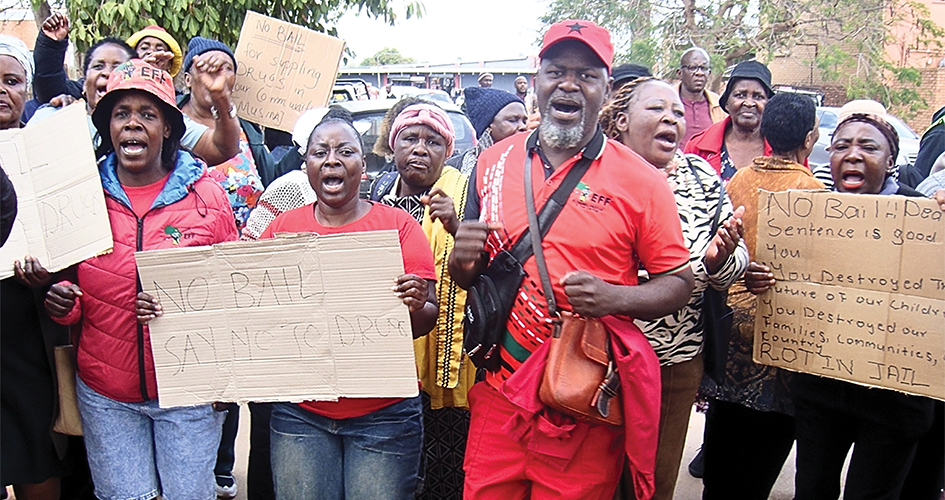
Outside the Musina Magistrate’s Court during the accused’s second appearance, parents and activists called for bail to be denied. Their stories were not about distant cartels but aggression, theft, neglected children, financial strain and repeated efforts to find rehabilitation.
Melita Musekwa, 70, said her 30-year-old grandson’s drug use made her afraid in her own home. Light bulbs disappeared and she found candles burning in his room during daylight. When confronted, he became aggressive and wanted to fight her, she said. At night, she heard him talking loudly to himself and struggled to sleep.
Musekwa eventually called the police. Help Me To Quit, a Musina non-profit organisation, later assisted in placing him at a rehabilitation centre in Polokwane. After a year he returned, but Musekwa believed he was not ready to live with her and asked that he be readmitted.
Another mother, identified as Lesedi* to protect her family, said her daughter began using crystal meth as a matric pupil in 2015. The daughter abandoned a TVET college course and, now 30 with six children, remains unstable despite an earlier period in rehabilitation, her mother said. Lesedi sometimes has to provide food and care for the grandchildren.
Help Me To Quit founder Eunice Madinginye said the organisation, established in 2019, has helped more than 100 people access rehabilitation. ‘Parents living with children dealing with drugs usually are not safe at home,’ she said. ‘Some of the children on drugs abuse their parents. Most of the parents have sleepless nights.’
‘Follow the money’
Police have not said that meth allegedly produced on the Musina farm entered the local market, and the final destinations of the latest laboratories remain under investigation. Limpopo police commissioner Lieutenant-General Jan Scheepers said after the Musina raid that investigators believed drugs manufactured there were sent across South Africa and to neighbouring countries.
The United States Drug Enforcement Administration and Homeland Security participated in the Musina operation, underscoring the international dimensions being examined.
Hawks Limpopo head Major-General Advocate Gopz Govender promised to ‘follow the money, the networks and every person connected to this operation’. He warned: ‘There will be nowhere to hide.
That promise now faces a fresh test at Klipvoorstad. Arresting a tenant and confiscating machinery may close one factory, but it will not by itself expose the ‘deep pockets’ Adams described. Investigators will have to trace bank transactions, property arrangements, equipment purchases, chemicals, transport routes and the people who convert remote farms into production sites.
For communities, the response must also extend beyond raids. Families require accessible, sustained addiction treatment, while rural residents need safe ways to report chemical smells and suspicious activity without placing themselves at risk.
The meth-farm trail links two emergencies: a sophisticated organised-crime threat and a public-health crisis unfolding inside ordinary homes.
* Name changed to protect the family’s privacy