 WeeklySA_Admin
PURPOSE: Ahead of the Standard Bank Joy of Jazz, aspiring artists gathered at Joburg Theatre to hear how musicians can build careers, find their voice and earn a living from their craft…
By Jacob Mawela
A week before the Standard Bank Joy of Jazz, the festival’s director invited a group of aspiring young South African musicians to Joburg Theatre for a masterclass on the business of music.
Students from South West Gauteng TVET College joined other emerging artists, including Tshwane University of Technology master’s student and singer-songwriter Rorisang Sechele, for discussions with musicians and professionals working across the industry.
Facilitated by storyteller Pilani Bubu, the sessions explored risk capital for culture, the journey from classroom to stage, and the tension between an artist’s purpose and the demands of the industry.

Standard Bank South Africa sponsorships manager Dianne Graney welcomed the participants before SAMRO CEO Anabell Labethe and project managers Aysha Waja and Violet Maila shared lessons from their work. They urged the young artists to understand compliance, practise discipline and identify what makes their work distinctive. Participants, in turn, asked where they could seek funding and why further study matters to a music career.
Violinist Ziza Muftic drew particular interest with her account of building a musical identity after leaving war-torn Yugoslavia for Johannesburg as a teenager in the early 1990s.
Unable at first to speak English, she weighed a future in music against an interest in fashion, worked as a packer at Pick n Pay and later enrolled at Wits University. Finding her footing took time.
“Every single story is super interesting,” Muftic told the aspiring musicians, encouraging them to recognise the value of their own experiences rather than follow someone else’s path.Composer, educator and activist Chantal Willie-Petersen also spoke about perseverance. Raised on the Cape Flats, she lost her mother to crime while she was a teenager but went on to build a career that included a collaboration with Stevie Wonder.
“Celebrate the doors that others walk through — because one day it’s gonna be your door,” she told the participants as they took notes.
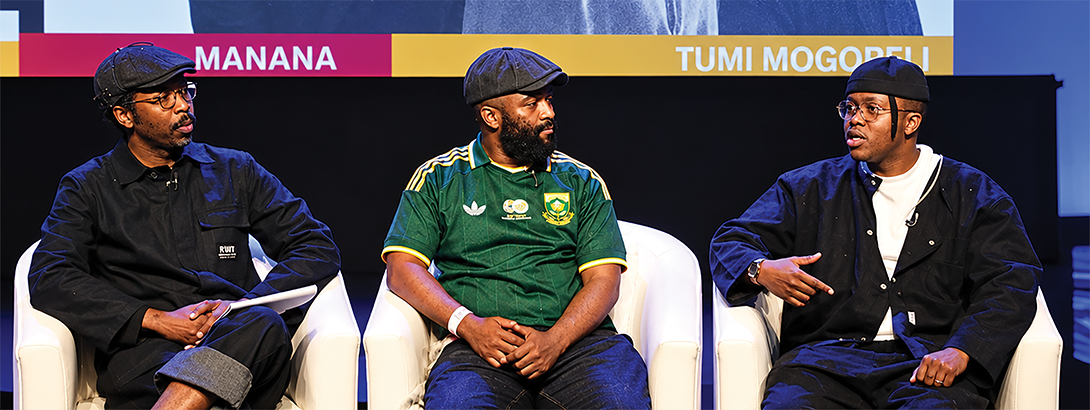
The final panel turned to Purpose Value versus Industry Value. Musicians Tumi Mogorosi, Internet Athi and Manana, all scheduled to perform at this year’s festival in Sandton, fielded questions about creative honesty, relevance and earning an income.
“The most important value is to be honest with yourself,” Athi said. Manana suggested that an artist must also consider how an audience receives the work, saying complete honesty might sometimes be judged “boring”.
Asked how musicians stay relevant, Mogorosi pointed to improvisation and the ability to respond to new opportunities. Athi raised sustainability and content creation, while Manana spoke about developing revenue streams over the course of a career. “An artist’s value will be measured against their music’s impact,” he said.
For Sechele, the discussion offered practical insight into a career she hopes to pursue. Shortly before an interview on David Mashabela’s The Royal Playground, broadcasting from the theatre foyer on Radio 2000, she described the workshop as “insightful and informative”.
The masterclass aimed to give young practitioners a clearer route from musical talent to a sustainable career. Its message was that making music is only one part of the work: artists must also learn how to build a business around their gift.