
 WeeklySA_Admin
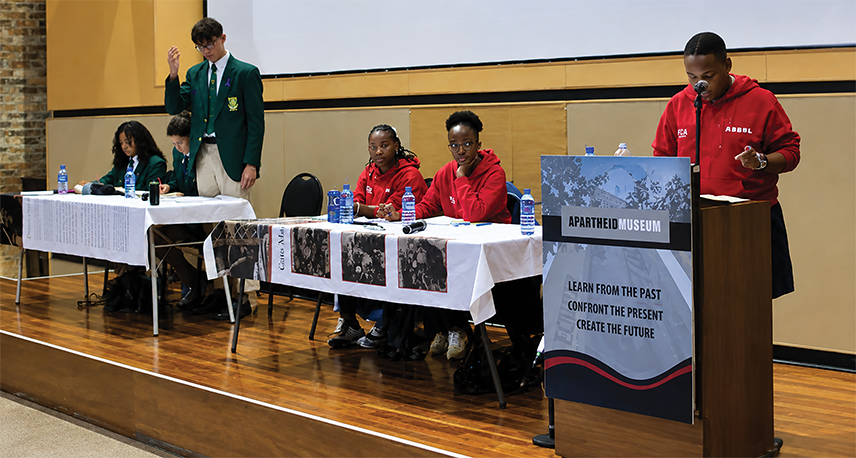
ANNIVERSARY: High school debaters at the Apartheid Museum weighed economic independence against political representation, asking what it will take to turn the legacy of the 1956 Women’s March into meaningful freedom today…
By Jacob Mawela
Young debaters brought fresh perspectives to the struggle for women’s liberation at the Apartheid Museum, tackling whether economic empowerment or political representation holds the greater promise of lasting change.
The debate, moderated by Talk Radio 702 broadcaster Bongani Bingwa, formed part of the museum’s programme marking the 70th anniversary of the historic August 9 1956 Women’s March.
It brought together the South African Debating Team and the Soweto Debating Academy to contest the motion: “Do we prioritise economic empowerment over political representation as the key to women’s liberation?”
Behind the arguments lay a pressing question: how can the political gains secured by generations of women translate into greater safety, independence and influence in everyday life?
The South African Debating Team comprised Adrian Etzinger, Kimiya Ghaheri and Lucy Blades, while Ntando Thebe, Zamazizi Mthanti and Karabo Mofokeng represented the Soweto Debating Academy.
The audience, made up largely of schoolgirls, also included Gauteng Economic Development MEC Vuyiswa Ramokgopa, Deputy Public Protector Advocate Dinkie Dube, City of Johannesburg Junior Mayor Ndivhuho Nthangeni and members of the Johannesburg Student Council.
Proceedings opened with a retrospective documentary featuring the Women’s March and its leaders, Lilian Ngoyi, Sophia Williams-De Bruyn, Helen Joseph and Rahima Moosa. Museum manager Vinolia Hlagwana and Nthangeni welcomed attendees before the teams took the stage.
Bargaining power
The Soweto Debating Academy argued that political representation creates the conditions in which women’s economic empowerment can develop and be protected.
Its speakers maintained that women without jobs, income or businesses need representatives who will champion their interests and shape policies that address their circumstances.
Political representation, they argued, gives women collective influence beyond the resources or bargaining power available.