 WeeklySA_Admin
COORDINATION: Four arrested at suspected Soweto drug lab as South Africa and four regional partners strengthen offensive against trafficking networks and kidnappers across Southern Africa…
By Monk Nkomo
A suspected drug laboratory discovered in a Soweto family home has brought the threat of illicit drug manufacturing into sharp local focus as South Africa and its regional partners strengthen a cross-border offensive against trafficking networks.
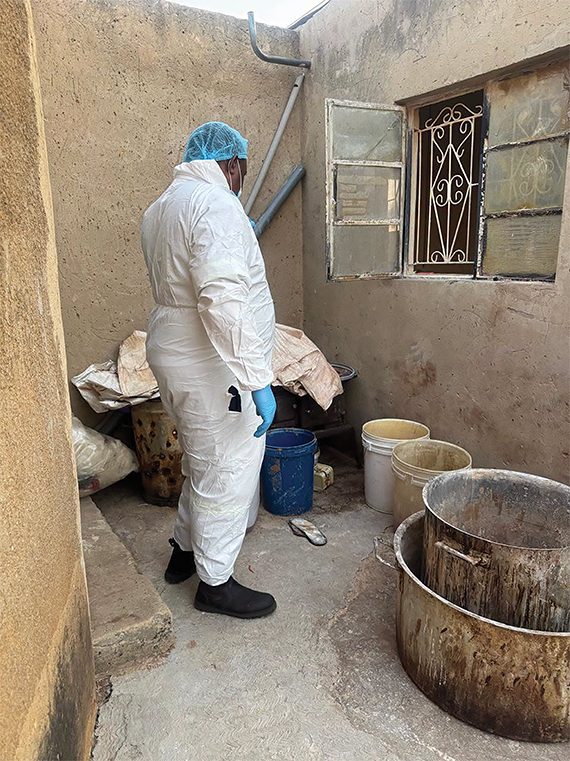
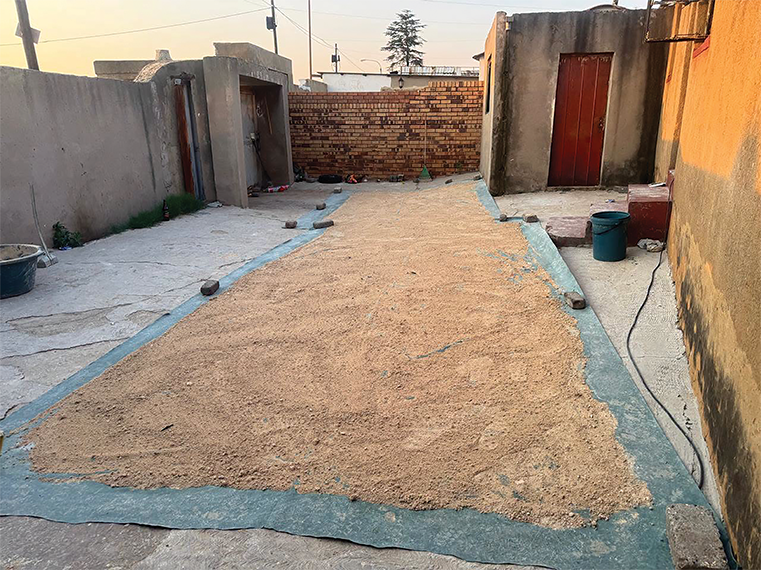
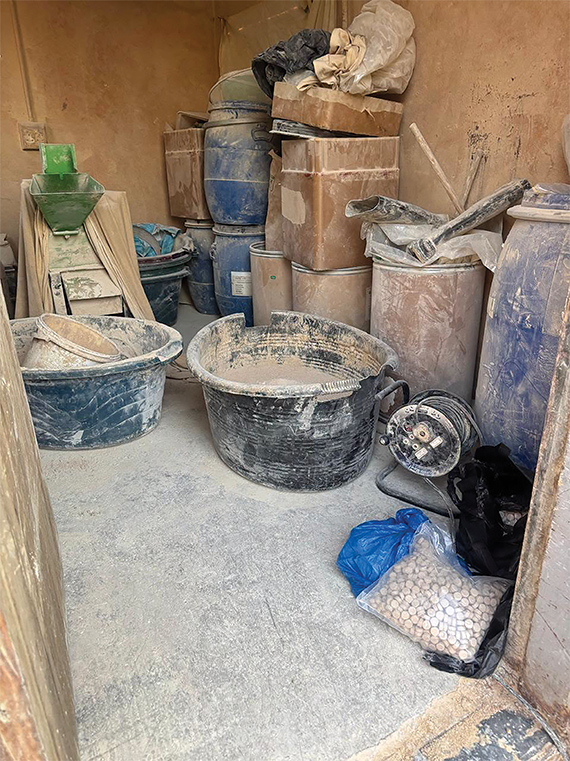
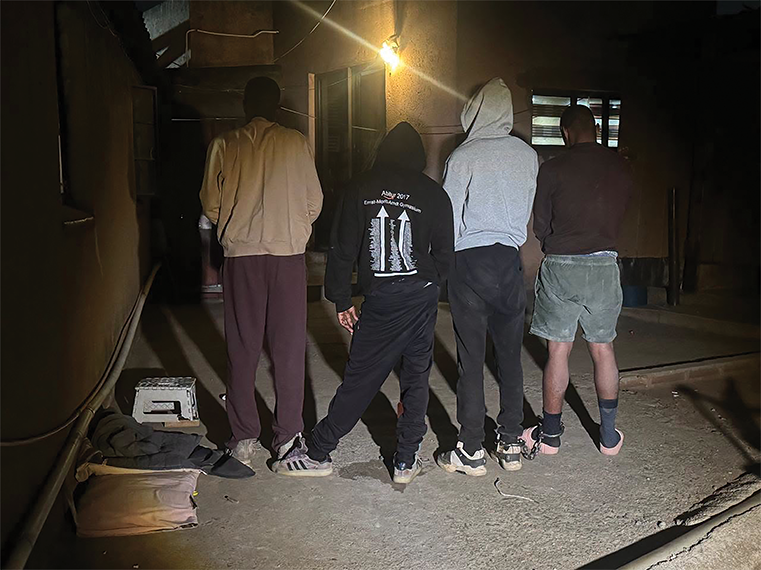
Four suspects aged between 21 and 25 were arrested at a house in Meadowlands on Friday, October 16, after police uncovered an alleged manufacturing operation in a room behind the residence.
The bust coincided with a regional drive that could expand into a five-country front against drug trafficking and organised crime, with Angola and Uganda applying to join South Africa, Mozambique and Tanzania in the Trilateral Planning Cell (TPC).
While police have not linked the Meadowlands case to the regional initiative, the discovery illustrates the domestic enforcement challenge alongside efforts to disrupt international supply routes.
According to police, Gauteng organised crime tracing and narcotics teams worked with Police Emergency Services Flexi and the Hawks’ Serious Organised Crime Investigations unit after receiving information about suspected illicit drug activities.
Officers conducted surveillance on the evening of October 15. Further information suggested that the suspects might be preparing to move suspected drugs, prompting the team to enter the premises.
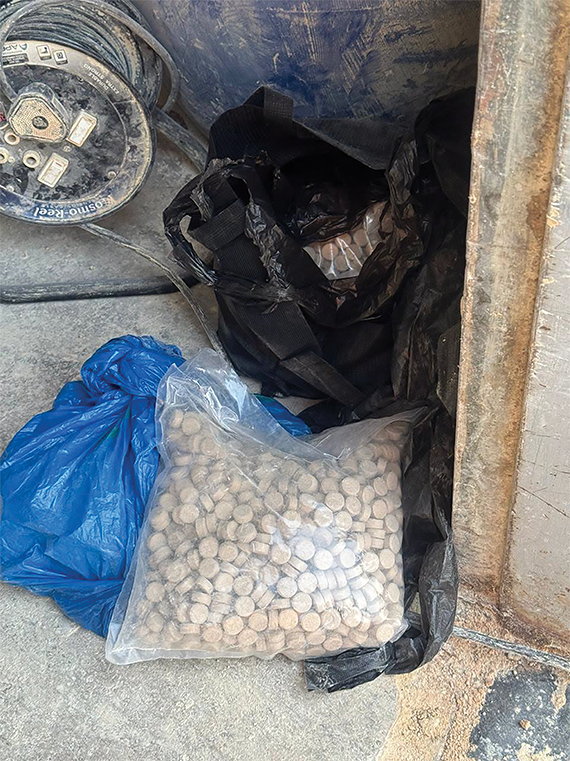
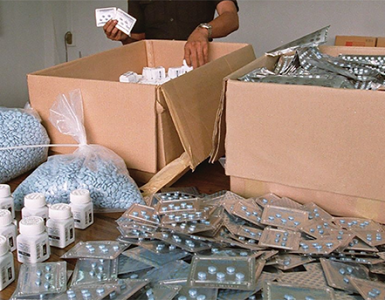
Police said the alleged operation occupied a back room at a family residence. A substantial quantity of pills, suspected to have been manufactured elsewhere, was also discovered.
Crime scene specialists were mobilised to process the premises, while equipment and chemicals were earmarked for seizure, investigation and analysis. The case has been handed to the Hawks. The suspects are expected to appear in court on drug-related charges.
Police have not identified the substances or disclosed the quantity or estimated value of the suspected drugs. Laboratory analysis remains necessary to establish what was found.
Regional offensive
In Pretoria, Mozambique’s Interior Minister Paulo Chachine called for stronger intelligence-sharing, coordinated border patrols and faster operational cooperation against drug trafficking, vehicle theft and kidnapping.
Addressing the opening of the ministerial meeting on Thursday, he urged countries to protect legitimate commerce while denying criminal networks freedom to operate.
“Our land and maritime borders must be bridges for development and legitimate trade, and at the same time, they must be insurmountable barriers to crime,” he said.
“Our intelligence must stay one step ahead of criminal activities. We require real-time operational coordination to neutralise the logistical and financial networks that fuel instability.”
Established in Maputo by South Africa, Mozambique and Tanzania with United Nations Office on Drugs and Crime support, the TPC targets illicit drug flows along the Southern Route through intelligence-sharing and coordinated enforcement.
Angola and Uganda’s applications could broaden its reach, although their participation in the talks should not be confused with confirmation of formal admission.
South Africa’s acting Police Minister Firoz Cachalia attended alongside representatives of Mozambique, Tanzania, Angola and Uganda.
The agenda included a proposed Regional Joint Counter-Narcotics and Organised Crime Fusion Centre to strengthen intelligence coordination and joint responses. Its establishment remains a proposal in the official material available.
Tons of drugs intercepted
Recent seizures demonstrate the scale of the trafficking networks confronting regional authorities. A UNODC report records more than 1,992kg of cocaine seized in Mozambique during 2024, compared with 78kg the previous year. It also describes a seizure exceeding 2.1 tonnes of heroin in Tanzania in December 2024.
The report identifies Uganda as a transit corridor, with heroin-filled pellets destined for Europe intercepted by UNODC-supported units during 2024.
These interceptions reveal connections between maritime routes, airports and inland transport networks. Seizure figures, however, measure what authorities intercept rather than the full volume trafficked.
In South Africa, officials intercepted approximately 713kg of methaqualone, used in mandrax manufacture, at Beitbridge on May 27.
The Department of Home Affairs valued the consignment at an estimated R998.2 million. Three suspects were arrested after officials discovered a hidden compartment in a truck entering through Zimbabwe.
Authorities said intelligence flagged the vehicle before arrival, with scanning and an extensive physical search exposing the consignment.
Kidnapping concerns
Kidnapping adds urgency to the wider organised-crime response.
South Africa recorded 4,638 kidnapping cases between April and June 2026, according to SAPS figures reported by the government news service. Gauteng accounted for 2,367, more than half the national total.
The provincial legislature’s community safety committee warned that cases included both hijacking-related kidnappings and ransom abductions. The national total therefore cannot be presented as a count of ransom cases or cross-border syndicate crimes.
In Mozambique, business organisations have also raised concerns. Figures released in 2024 by the Confederation of Economic Associations indicated that around 150 businesspeople had been kidnapped over the preceding 12 years.
Those figures cover different periods and categories from South Africa’s statistics and cannot support a combined regional total.
International backing
Separate Interpol operations demonstrate the reach of coordinated enforcement.
Operation Lionfish Hurricane, conducted across 31 countries in April and May 2024, resulted in 206 arrests and seizures exceeding 615 tonnes of drugs and precursor chemicals, valued at US$1.6 billion.
The total included 505 tonnes of precursor chemicals, rather than finished drugs alone.
More recently, Operation Jackal IV, running from November 2025 to June 2026, targeted organised-crime groups and money laundering across 23 countries.
Interpol reported 58 arrests, including 39 in South Africa, where investigations concerned romance and investment scams.
These operations illustrate complementary international enforcement efforts, rather than confirmed components of the Pretoria mechanism.
For communities, the stakes extend beyond seizures and arrests. Investigators must establish who supplies chemicals and equipment, where suspected products are distributed and who finances operations, while pursuing evidence that can sustain prosecutions against those responsible for crimes.
From suspected manufacturing inside a Soweto home to consignments crossing regional borders, authorities face a challenge requiring both local investigations and international cooperation. The test will be translating political commitments into sustained disruption of criminal networks.