 WeeklySA_Admin
PROSPECTS: President calls for employers to look beyond work experience and qualifications, expand entry-level opportunities and help break the cycle keeping millions of young South Africans unemployed…
By Monk Nkomo
Youth unemployment is more than an economic challenge: it is a social and human crisis that government and business must confront together, President Cyril Ramaphosa said this week.
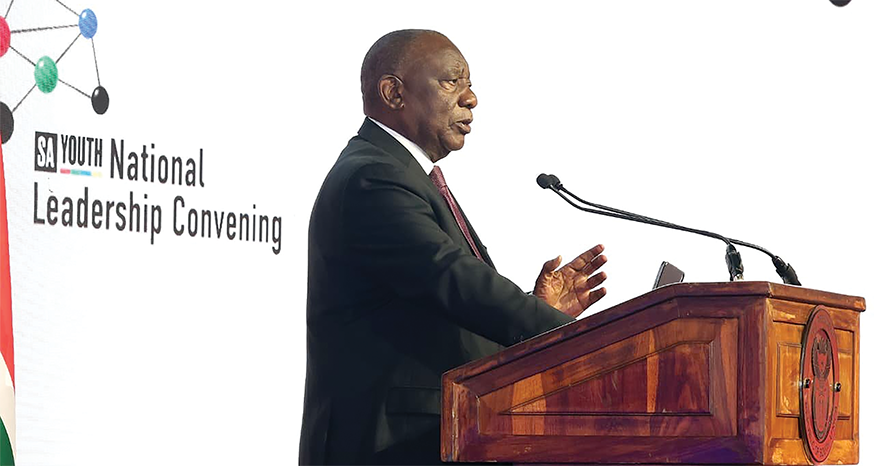
Addressing the South African National Leadership Convening, Ramaphosa said the country’s future depended largely on its ability to create opportunities for young people.
About five million were unemployed in the second quarter of this year.
“We cannot be content with a society in which so many young people stand outside the gates of economic opportunity, looking in,” he said.
“Since the beginning of our democracy, we have understood that the development of our young people is fundamental to building a prosperous and inclusive society.”
Despite expanded access to education, training and workplace experience programmes, far too many young South Africans remained unemployed.
Ramaphosa called for unnecessary barriers to be removed and for government and business to rethink how young people were prepared for work.
One of the greatest obstacles, he said, was securing that first opportunity.
“Many young people find themselves caught in a familiar predicament. They cannot get a job because they do not have experience. And they cannot get experience because nobody will give them a job.”
He appealed directly to employers: “Stop treating a lack of experience as a lack of ability. Let us recognise potential, aptitude, determination and the willingness to learn.” Businesses needed to open their workplaces so young people could develop skills and demonstrate their capabilities.
Behind every unemployed young person was a story, Ramaphosa said: an applicant who had sent countless applications without a response, or an entrepreneur whose promising idea lacked the capital, networks and support to become a viable business.
Partnerships between government and business had demonstrated the value of cooperation in tackling constraints on economic growth, improving the investment environment and supporting reforms.
“We must now bring that same spirit of cooperation, urgency and determination to the challenge of youth unemployment,” he said.
Employment could neither be government’s responsibility alone nor be left entirely to business. It was a shared national responsibility.
Government had to create conditions for investment, enterprise development and employment, while business needed to invest, expand production and recruit young people.
Educational institutions had to provide relevant knowledge and skills. Labour, civil society and communities also had a role in ensuring opportunities were accessible, fair and inclusive.
Ramaphosa urged employers to look beyond formal qualifications and previous employment, adopt recruitment practices that recognised talent, and provide training and mentorship. This was an investment in the economy’s future.
Young people brought energy, creativity, adaptability and fresh perspectives to workplaces. They were often quick to embrace technology, different ways of working and emerging business opportunities.
These qualities were increasingly valuable as digital innovation, artificial intelligence and cleaner energy reshaped the economy. Young people should participate in those changes, he said.
Ramaphosa called on business leaders to identify practical employment opportunities within their companies and industries.
Industry associations should help employers, including smaller businesses, expand workplace learning and entry-level recruitment. Education and training institutions needed stronger relationships with employers to ensure their programmes led to real opportunities.
“These unemployed young people were not asking for special treatment,” he said, emphasising their desire for a fair chance to work, learn, earn a living and contribute to their country.
South Africa’s youth had demonstrated courage, resilience and determination throughout the struggle for freedom, justice and democracy. They now needed to be at the forefront of economic inclusion and shared prosperity.
“Our responsibility is to ensure that their energy and talent are not wasted. The future of our young people cannot wait. And the future of our country cannot wait.”
He urged leaders to give every young South African reason to believe in a better future.
“Let us give them the opportunity not only to dream of a better South Africa, but to help build it.”