
 WeeklySA_Admin
CAPACITY: he revised White Paper on Local Government proposes professional administrations, stronger financial management and consequences for misconduct, but leaders warn that implementation will determine whether residents see change….
By Monk Nkomo
South Africa’s municipalities need competent managers, ethical leadership and firm consequences for misconduct if they are to overcome service delivery failures that undermine public confidence in democracy, President Cyril Ramaphosa said this week.
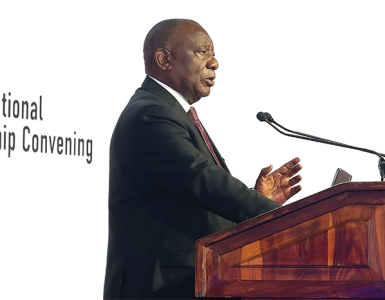
Speaking at the launch of the revised White Paper on Local Government, Ramaphosa called for municipal leaders who put residents ahead of factional and personal interests, backed by administrations appointed for their expertise and commitment to public service. The policy proposes changes to how municipalities are structured, financed, managed and held accountable, with professional appointments and stronger administrative capacity among its priorities. Ramaphosa acknowledged that government had underestimated how politicised appointments had opened the door to corruption, malfeasance and weak accountability.
Municipal officials, he said, must face consequences when public resources were stolen, procurement processes manipulated or public duties neglected. “The exercise of accountability must be fair, lawful and consistent, regardless of status, political affiliation or personal connections,” he said.
Cooperative Governance and Traditional Affairs Minister Velenkosini Hlabisa warned that the policy’s ambitions would mean little without practical implementation. “The White Paper can become a good document but it can collect dust on the table or on the shelves if there is no implementation,” Hlabisa said.
He stressed that merit-based appointments were essential to strengthening municipal administration. Municipalities needed qualified professionals with the skills and expertise to carry out their responsibilities. Nearly three decades after the original White Paper, Ramaphosa described the revision as a bold reset of the sphere of government closest to communities. “It is a reform that goes to the heart of the relationship between government and the people,” he said.
“It concerns the water that flows from our taps, the electricity that lights our homes, the roads on which we travel, the refuse that is collected from our streets and the communities in which we raise our children. It concerns the dignity of our people.”
Failed expectations
For millions, he said, government was experienced through municipal services: whether taps supplied water, streetlights worked, roads were safe and sewage was kept out of residential streets. Service failures affected health, livelihoods, safety and dignity, while weakening trust in democratic institutions.
“We must therefore acknowledge, without qualification, that too many of our municipalities are failing to meet the needs and expectations of the people they are meant to serve,” Ramaphosa said.
Too many communities had become accustomed to unreliable services, deteriorating infrastructure and unresponsive administrations. This could not continue. Ramaphosa said democratic South Africa had inherited a fragmented local government system shaped by apartheid, with prosperous municipalities enjoying strong revenue bases and developed infrastructure alongside impoverished communities lacking basic services.
“Apartheid’s spatial engineering left us a local government system divided along racial lines and with deeply unequal resources.”
The democratic government had sought to build accountable, developmental municipalities and extend essential services to all communities.
The revised policy now sought to address persistent structural weaknesses, including overlapping mandates, unsustainable finances, corruption and limited administrative capability.
Financial reform was another priority, against a reported municipal debt to Eskom of R120 billion. The White Paper proposed measures to improve municipal financial sustainability and strengthen support, while enabling intervention where necessary to protect service delivery.
Other proposals included compulsory licensing for water and electricity providers and treating local government as an integrated system.
Infrastructure maintenance, Ramaphosa emphasised, needed to become a planned, funded and monitored responsibility, rather than an afterthought when systems broke down.
Restoring trust
Government also needed to move beyond repeatedly rescuing struggling municipalities and build their capacity to function sustainably. Residents who could afford to pay for services had to contribute. Community participation, meanwhile, should produce meaningful accountability. Residents needed to know what municipalities had promised, what resources were available and whether commitments were being fulfilled.
Ramaphosa urged communities to become partners in governance, with participation extending beyond meetings that produced no change.
Political disagreements, he added, must never justify unapproved budgets, abandoned projects or the collapse of essential services.
Residents should never be held hostage by political instability. Restoring trust would depend on visible improvements: faults repaired promptly, functioning infrastructure and municipal administrations that listened and responded.
The test of the revised White Paper would therefore be whether its proposals translated into dependable services and tangible improvements in residents’ daily lives.