 WeeklySA_Admin
REMEMBRANCE: Forty years after Samora Machel’s death, former foreign media correspondent Rapitse Montsho recalls the frantic journey to the crash site, the hostility of apartheid police and the sorrow of witnessing a revolutionary leader’s final journey home…
By Rapitse Montsho
The telex bells rang incessantly, warning us that a major story was breaking. Through the night, the machine had been churning out an alarming message: “Samora Machel plane crash. Tambo may be dead.”
The reports offered no precise location, but common sense told us to head towards the border with Mozambique.
Ian Herman and I rushed for our equipment: enough tapes, batteries and, most importantly, a means of communication. We would also need guts and oomph for what lay ahead.
We drove towards Lanseria Airport as though competing in a motor race. An urgent call went to our boss, Miranda Harris, asking her to arrange a helicopter. We guessed that wherever the aircraft had come down, there would be no landing strip.
Miranda confirmed which company we should use. That was all we needed. We were among the first television crews to reach the site, where we received an immediate baptism of fire.
For me, however, the memory of Machel is inseparable from that morning at Mbuzini: the broken aircraft, the bodies, the black umbrella…
We had told the pilot to head east. Fortunately, he knew more than we did about the developing story and had established contact with police on the ground. As the helicopter descended, I filmed an establishing shot of the wreckage. But almost as soon as I stepped out, a policeman demanded the footage I had just recorded. It was not worth arguing. I had filmed barely a minute.
Our helicopter had landed about 150 metres from the lifeless body of Samora Machel.
A president beneath an umbrella
The urgency of recording what lay before us was overwhelming. Mozambique’s president lay beneath a black umbrella, shielding his body from the sun. A security official stopped us from approaching. I mounted my camera on the tripod and used its two-times extender to film the wreckage from a distance. Bodies were visible through the aircraft’s shattered windows.
We saw a survivor in hospital clothing approach the body beneath the umbrella. I remember him as the president’s trusted bodyguard, Fernando Manuel João. He had survived the crash. Now he faced the terrible responsibility of identifying the man he had been entrusted to protect. For a bodyguard, it was surely the worst imaginable task.
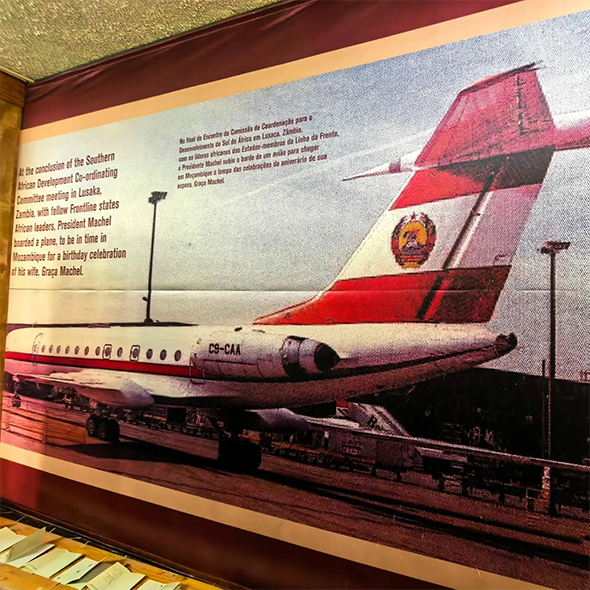
Machel had survived years of armed struggle against Portuguese colonial rule. Yet his life had ended here, in the wreckage of a Soviet-built Tupolev Tu-134, on South African soil.
He had been returning from a meeting of regional leaders in Zambia when the aircraft crashed at Mbuzini on the night of October 19, 1986. As we waited for permission to move closer, the thudding of another helicopter announced the arrival of a Mozambican delegation.
I recall then security minister Sérgio Vieira and senior FRELIMO leader Marcelino dos Santos confronting South African foreign minister Pik Botha.
The exchange was heated and conducted in Portuguese, which I could not understand. We were subsequently told that the delegation was demanding to know why South African officials had interfered with the president’s body and searched his pockets.
Botha appeared visibly uncomfortable.
To me, the confrontation captured the anger and mistrust surrounding everything that was happening on that hillside.
The price of solidarity
To understand the weight of that morning, one must remember the southern Africa of 1986. For me, however, the memory of Machel is inseparable from that morning at Mbuzini: the broken aircraft, the bodies, the black umbrella…
Mozambique’s independence was barely 11 years old. Its government was fighting a devastating war against RENAMO, a movement initially supported by Rhodesia and subsequently backed by apartheid South Africa.
Machel had offered solidarity and refuge to those fighting white minority rule. That commitment exposed Mozambique to attacks and destabilisation, placing an enormous burden on a country already struggling to overcome its colonial inheritance.
In 1984, Machel and PW Botha signed the Nkomati Accord. Mozambique undertook to prevent its territory from being used for armed operations against South Africa; Pretoria undertook to stop supporting RENAMO. The agreement failed to bring the security Mozambique desperately needed, and the war continued.
This was the political landscape against which we stood at Mbuzini: a region divided by liberation struggles, military intervention and profound suspicion.
The rumour that ANC president Oliver Tambo might also have been aboard the aircraft added another layer of dread. Other journalists repeatedly asked whether he was among the dead.
I did not know. I desperately hoped the report was wrong. It was: Tambo had not been aboard.
A nation’s grief takes flight
Eventually, we were allowed to film as Machel’s body was placed in a coffin. There was a salute. Then the coffin was carried to a helicopter for the journey home.
The tears and lamentation around us marked the beginning of a nation’s mourning. Later, journalists were taken to a police station. Outside, clothing belonging to those who had died lay on the ground.
I remember an armed policeman picking up a peaked cap, throwing it down and shouting profanities in Afrikaans. That act pierced me like a sharpened knife.
In the presence of so much death, his contempt was unbearable. It deepened my suspicion that some within the apartheid security establishment regarded this tragedy with satisfaction.
That was my reaction to what I witnessed. It could not, by itself, establish what had caused the aircraft to crash.
The subsequent Margo inquiry attributed the crash to pilot error. That finding was disputed, and allegations that a decoy navigational beacon had diverted the aircraft became central to the controversy. The Truth and Reconciliation Commission later found no conclusive evidence establishing either explanation and recommended further investigation.
For those of us who stood among the wreckage, the questions would endure long after we put down our cameras.
The revolutionary behind the president
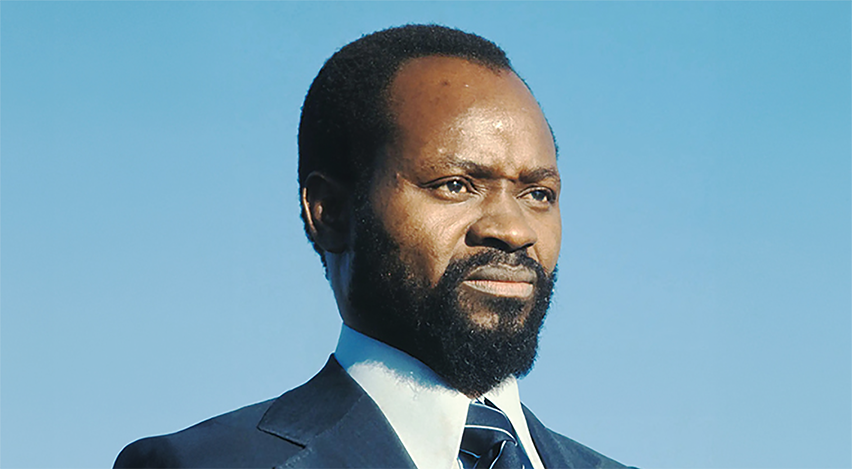
Samora Moisés Machel was born on September 29, 1933, in Chilembene, Mozambique. His early life was shaped by the poverty, dispossession and racial discrimination of Portuguese colonial rule. He trained in nursing before joining the liberation struggle.
He joined FRELIMO in 1963, received military training in Algeria and rose through its military leadership. In 1970, following Eduardo Mondlane’s assassination the previous year, he became the movement’s president.
When Mozambique gained independence on June 25 1975, Machel became its first president. His socialist government expanded education and healthcare, although its one-party system restricted political opposition and some of its policies generated resentment.
Beyond Mozambique, he became an eminent voice of African liberation, insisting that his country’s freedom remained bound to that of its neighbours.
“A luta continua” — the struggle continues — became the enduring expression of that commitment. For me, however, the memory of Machel is inseparable from that morning at Mbuzini: the broken aircraft, the bodies, the black umbrella and the coffin lifted into a helicopter.
Journalists are taught to keep their emotions separate from the stories they cover, however tragic. That day, mine overwhelmed me.
October 19 1986, became a defining moment in southern Africa’s political history. For those who witnessed its aftermath, it also left something deeply personal: images that time has never erased.