 WeeklySA_Admin
REVIEW: SA Human Rights Commission wants sales of 49 municipal properties halted, arguing the city failed to properly consider affordable housing needs. Cape Town says it will oppose the application…
By Matthew Hirsch
The South African Human Rights Commission (SAHRC) has accused the City of Cape Town of failing to consider the pressing need for affordable and social housing when it auctioned off 49 municipal-owned properties earlier this year.
It has applied to the Western Cape High Court for an interdict to stop any further steps in the sale and transfer of the properties until the court has reviewed the city’s decisions.
It wants the court to declare the decisions to sell the properties “unconstitutional, unlawful, irrational, and/or invalid”, set them aside, and send the matter back to the city for reconsideration.
Mayor Geordin Hill-Lewis said the city will oppose the application.
In an affidavit filed on 5 October, SAHRC Commissioner Philile Ntuli says the commission became aware of the planned auction in January.
It was concerned that the city had not imposed enforceable conditions requiring affordable or social housing, and that the public participation it had relied upon for most of the properties was outdated.
For one property, public participation took place in 2010, 16 years ago.
On January 29, the commission asked the city for information about the properties, the legal basis for selling them, and any assessment of the impact on housing and spatial planning.
The city replied on 12 February that it had complied with the Municipal Finance Management Act and the Municipal Asset Transfer Regulations.
It said its line departments, including human settlements, had been consulted and none had asked to keep any of the properties for municipal use.
The commission says the reply “did not adequately address” its concerns, and one of the two web links the city supplied was dead.
On 20 February, representatives of the commission met the mayor online.
According to the affidavit, he said the city “envisaged that the land would ultimately be utilised for housing development” and that the city does not have the money to deliver affordable housing, but the private sector does.
But the mayor also told the commission that “no formal conditions of sale would be attached to the auction requiring the land to be used for affordable housing or any specific housing development”, the affidavit says.
On 22 February, the commission asked him to postpone the auction.
In a letter two days later, Hill-Lewis declined, citing “reputational and fiscal damage” to the city.
He denied promising that the land would be used for affordable housing, and said buyers would logically only erect and then offer accommodation which is affordable to persons who are resident (or aspire to be resident) in those areas”.
Attaching conditions of sale would be detrimental to market enthusiasm, he wrote, according to the affidavit.
Other attempts to stop the auction had already failed. On 24 February, the Western Cape High Court dismissed attempts to block the release of the properties, TimesLIVE reported. The auction went ahead on 26 February, but the sales are not final.
In April, Speaker Felicity Purchase told the commission that due diligence on the properties had not been completed and no timeline could be given.
The city’s Immovable Property Adjudication Committee will give the final approval for each sale. Only three high-value sales need a final vote by council: Good Hope Centre, the “truck stop” property in Epping, and a property in Century City.
The speaker refused to put the commission’s concerns before the council, because the commission had not commented during the public participation period. Ntuli says the commission wants all the transfers halted because once transferred a “review may be rendered ineffective”.
She says: “Municipally owned land is not merely a financial asset to be lightly disposed of.”
If the city’s record shows it complied with its obligations, the commission will consider withdrawing the case.
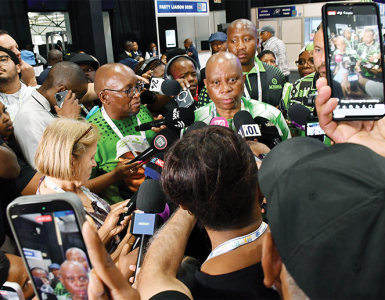
In a statement on 29 October, Hill-Lewis said the application “appears more like electioneering coming a week before elections”.
“The SAHRC is behaving like a political party, not a credible Chapter 9 organisation,” he said.
The local government elections took place on 4 November. Hill-Lewis said the 49 sites “include 28 residential-zoned properties to serve the local demand for housing” in areas including Mitchells Plain, Maitland, Goodwood, Kraaifontein, Somerset West and Durbanville.
Commercial and industrial sites would create jobs in areas such as Atlantis, Delft and Parow. Land sales have raised R628 million this term, which goes back into services and infrastructure, he said.
“Rather than have state land lie idle, the City is leveraging land for economic development, social good and affordable residential opportunities,” he said.
The city has until early December to file its answering papers. A court date is yet to be determined. – GroundUp
MIRROR Briefs
SAMBUDLA’S DISCHARGE BID REJECTED
The Durban High Court has dismissed an application by Duduzile Zuma-Sambudla to withdraw charges that are linked to the 2021 unrest case against her.. Zuma-Sambudla appeared in court on Friday. She has pleaded not guilty to one count of incitement to commit terrorism and two of incitement to commit public violence. The charges stem from the violent unrest that swept through KwaZulu- Natal and Gauteng following the incarceration of her father, former president, Jacob Zuma on a charge f contempt of court.
In her application, Zuma-Sambudla argued that the State’s case was weak after it concluded presenting its evidence following testimony from several witnesses. The defence subsequently sought a discharge under Section 174 of the Criminal Procedure Act (CPA), which provides an accused person with an opportunity to apply for a withdrawal of their charges. Judge Mbuzeni Mathenjwa dismissed her application. The matter was then postponed to May 17, 2027 for legal argument. National Prosecuting Authority (NPA) KwaZulu-Natal regional spokesperson, Natasha Ramkisson-Kara, confirmed that the matter had been postponed to next year.
Ramkisson-Kara explained what the dismissal of the application means for the proceedings. ” The ruling in the State’s favour obviously means that the State’s charges against the accused are valid.” – Lehlohonolo Lehana.
DISBARRED LAWYER IN HOT WATER
Department of Correctional Services (DCS) launched an urgent investigation at the Kgosi Mampuru Correctional Facility following a viral video showing disbarred advocate Malesela Teffo and another inmate dancing inside a cell.
Teffo was arrested in mid-September 2026 after arriving at the Legal Practice Council (LPC) offices in Tshwane. In the video, Teffo appears to be dancing with another inmate, and the clip has sparked conversations about prison conditions, security and the circumstances surrounding his detention. He became widely known during the high-profile Senzo Meyiwa murder trial, where he represented four of the accused before withdrawing from the proceedings in July 2022.
In September 2022, the High Court in Pretoria ordered that he be struck off the roll of legal practitioners following findings of serious professional misconduct. The court cited issues including dishonourable conduct, misleading the court and misconduct involving clients.
Circumstances surrounding the recording, including when and where the video was filmed, have not been independently established. The DCS is probing how the electronic devices and contraband were smuggled into the facility, as well as any potential staff negligence or complicity. According to DCS spokesperson, Singabakho Nxumalo, the search uncovered a large cache of unauthorized items which included five cellphones, three routers, a laptop, 194 Mandrax tablets and various sharp objects. – Lehlohonolo Lehana.
NEW WELLNESS CENTRE CREATES JOBS
In line with government’s commitment to driving economic transformation and expanding inclusion within key sectors, the Department of Tourism and the National Empowerment Fund have supported the establishment of a new wellness facility at Addo Elephant National Park.
The Epitome Spa & Wellness Centre has created sustainable employment opportunities for local communities while promoting tourism to the national park in the Eastern Cape.
The establishment was founded by Lucia Ratshivhadelo, an industry specialist who turned her university qualifications into a commercial enterprise situated within one of the country’s flagship conservation zones. The spa is entirely owned and run by young black female leadership in Ratshivhadelo and accounts for 36 employment opportunities overall, comprising 20 short-term construction positions alongside 16 permanent operational roles.
A joint initiative between the National Empowerment Fund (NEF) and the department’s Tourism Transformation Fund (TTF) gave financial support to the project, allowing construction to finish ahead of the summer season.
Deputy Minister of Tourism, Maggie Sotyu, emphasised that continuing tourism growth must translate to opportunities for South Africans. The sector has been registering continued growth throughout the year, with some 7.5 million international tourists visiting the country between January and August this year.
“Behind every tourism business are people whose lives can change through access to work. The Epitome Spa & Wellness Centre demonstrates how supporting black women and young entrepreneurs can open doors to employment while creating new experiences for visitors. – SAnews
NKOSI’S BID FOR FREEDOM FAILS
The National Director of Public Prosecutions (NDPP) has declined representations made by former SAPS Organised Crime Unit member, Fannie Nkosi, to have the charges against him reconsidered. Nkosi appeared before the Pretoria North Regional Court this week where the outcome of his representations was disclosed.
He faces a wide range of charges, including unlawful possession of explosives, multiple counts related to the failure to safeguard firearms and ammunition, defeating the administration of justice, theft, and money laundering. During the proceedings, State prosecutor, Trot Mphahlela, informed the court that Nkosi’s representations had been “unsuccessful”. The trial is expected to get underway months later, with proceedings scheduled to run from April 12 to 15, 2027. A further four days have been set aside for 3 to 6 May 2027.
“We have got four days for the first date and the second date we have got for days, so we will be having eight days of trial in this matter,” he told the court. The State is expected to call at least 15 witnesses to testify during the trial.
Nkosi’s lawyer, Katlego Maleho, has since withdrawn from the case with advocate Hartley Sandy Ngoato taking over the matter.
The latest court developments come after Nkosi resigned from the South African Police Service last month. – Lehlohonolo Lehana.