 WeeklySA_Admin
VERIFICATION: South Africa’s financial ombud warns that a face scan requested in the name of a shopping reward could give fraudsters access to your digital banking profile…
By WSAM Reporter
“A shopping voucher or a promise of free airtime could be enough to persuade a Black Friday shopper to pose for a selfie. The National Financial Ombud Scheme (NFO) warns that what looks like a routine sign-up could be an attempt to gain access to the shopper’s bank account.
Ahead of Black Friday on November 27, the NFO says complaints reaching its office point to a form of fraud in which people are tricked into completing facial verification without realising what they are authorising.
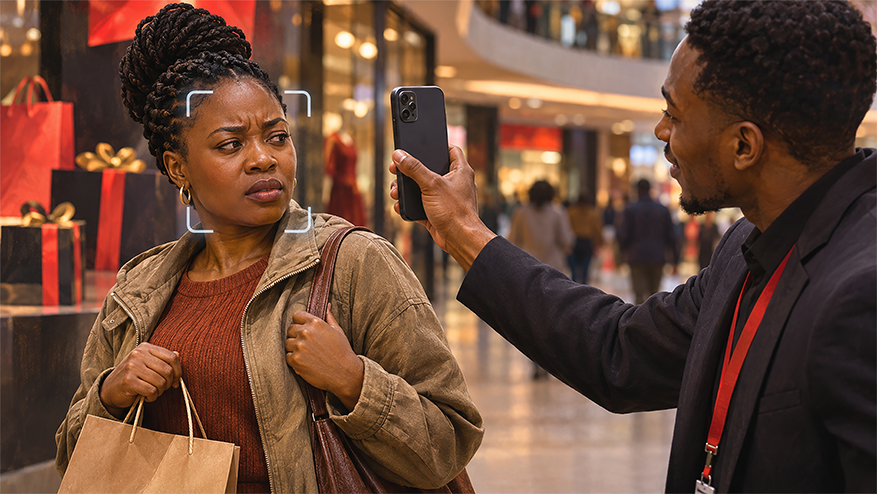
Scammers may approach shoppers in malls or other public places, posing as representatives of legitimate businesses. They offer a voucher, free airtime or membership of a rewards programme, then ask for personal details and a selfie or face scan to complete the supposed registration.
The scan may actually be part of a bank’s verification process to link another device to the shopper’s digital banking profile. If the process succeeds, the fraudster could gain access from a device they control.
The warning comes as the number of formal fraud matters closed by the NFO rose by 27.5%, from 2 389 between January and September 2025 to 3 045 in the same period this year.
Nerosha Maseti, lead ombud for the NFO’s Banking and Credit Division, urged shoppers to find out exactly what a face scan will authorise, especially if they are asked to use someone else’s device.
The ombud also advises shoppers to keep their phones locked around strangers and decline any banking prompt they did not initiate.
The pressure to act fast
Black Friday countdowns and limited-time offers can make a fraudulent deal seem more convincing, Maseti said.
“Black Friday shoppers should remember that fraudsters rely on excitement, urgency, fear and trust to get people to act without thinking. Your most effective defence is often simply to stop and ask what you are being asked to do.
“Fraudsters want consumers to act quickly and emotionally. Black Friday naturally creates that sense of urgency, which can make a fraudulent offer seem more believable. Before clicking a link, making a payment, sharing information or approving something on your phone, pause and verify it independently.
If it has to be now, then it has to be no,” said Maseti.
Alongside fake rewards, shoppers should watch for bogus online stores, messages about supposed payment or delivery problems, and callers posing as bank staff.
Social media promotions for discounted goods, flights, accommodation and other products can also be used to lure victims. Consumers should independently verify both the business and the offer before providing information or making payment.
A caller may claim that a suspicious transaction has to be reversed immediately, then ask for a PIN, password or one-time password, or tell the customer to move money to a supposedly safe account.
The NFO advises consumers to end the call and contact their bank using its official details. Shoppers can verify a deal by going directly to the retailer’s official website. “If it has to be now, then it has to be no,” Maseti said.
Anyone who suspects their banking information has been compromised should contact their bank’s official fraud-reporting channel immediately and keep any relevant messages, screenshots and transaction details.
Consumers who remain dissatisfied after complaining to their bank can approach the NFO for assistance.