 WeeklySA_Admin
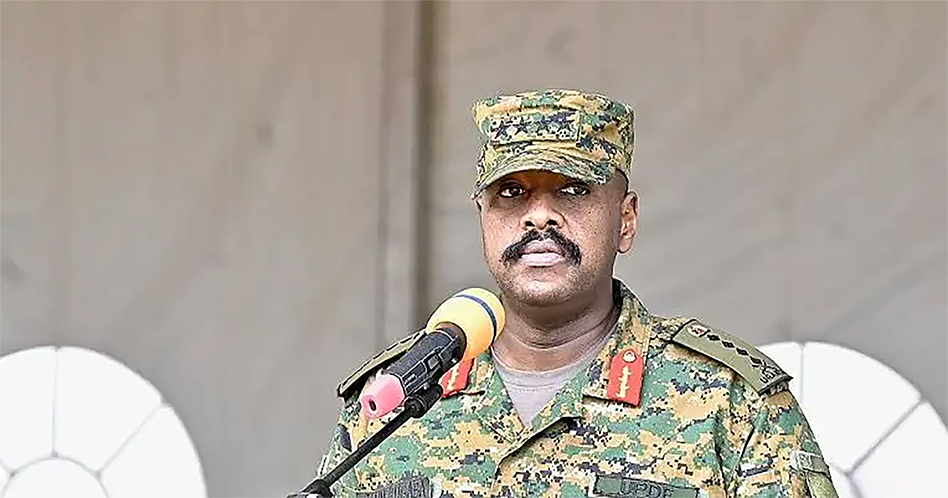
TRANSITION: In his last piece for political journal ROAPE, political analyst Yusuf Serunkuma told Ugandans to accept Museveni’s son Muhoozi as a necessary evil in the country’s transition. Kemitooma Nyina’Nkyenzibo from The Finishers Revolutionary Movement says that is despair dressed up as realism, the alternative is to stand up to dictators and reorganise as the East African country’s future cannot be inherited…
By Kemitooma Nyina’Nkyenzibo
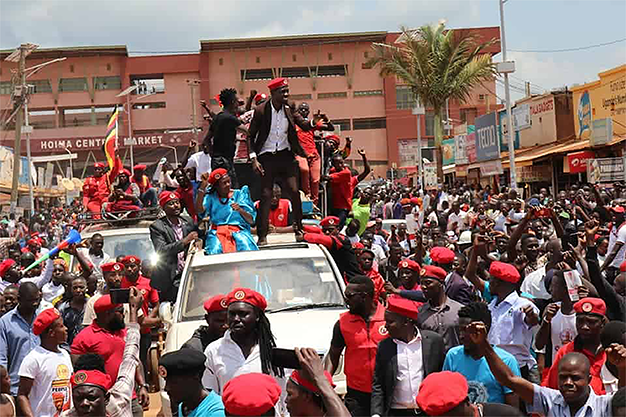
Yusuf Serunkuma’s recent article, Life after Museveni, is an honest expression of a particular political mood in Uganda today: exhaustion. It is the mood of a country that has watched opposition leaders imprisoned, activists disappeared, lawyers forced into exile, protests crushed, elections manipulated and every apparent avenue for change closed one after another.
Serunkuma is right to describe the fear. He is right that Museveni has systematically destroyed competing centres of power. He is right that Uganda is facing a political transition. Where we part ways is what he makes of these conditions.
He looks at a defeated and frightened people and concludes that we should prepare ourselves for Muhoozi. He calls this realism, prudence and a search for a peaceful transition.
But there is another name for this political position: reformism born from despair. It is the argument that because the forces of liberation have been defeated repeatedly, we should negotiate with the successor of the very system that defeated them.
It is understandable. It is also precisely the kind of conclusion that every long dictatorship eventually produces in those who have become exhausted by the struggle.
The most troubling part of Serunkuma’s argument is that he presents Muhoozi not as someone Uganda should choose, but as someone Uganda must learn to accommodate because the alternatives have supposedly been defeated.
This turns political defeat into political destiny. The fact that Museveni has imprisoned, exiled, killed or neutralised his opponents does not mean that his son has therefore acquired a legitimate claim to succeed him.
It means that the old methods of resistance have encountered a powerful system and must be reorganised. The defeat of individuals is not the defeat of a people. A movement is not finished because its leaders are in prison. A revolution does not die because its first generation is defeated.
Unfinished promise of SA’s transition
History is full of moments when the people appeared to have lost everything. South Africa provides perhaps the clearest example. Apartheid was not defeated because the apartheid state suddenly became reasonable, nor because Black South Africans discovered that the safest option was to accommodate the successor of white minority rule.
Decades of repression, imprisonment, exile and killing had exhausted the liberation movement. Yet the people continued to organise. They built underground structures, trade unions, community organisations, student movements and mass campaigns. They persisted when victory looked impossible.
The eventual political settlement gave South Africans something enormous: political power and the formal end of apartheid. But the settlement also left the deeper economic structure largely intact. Land ownership, wealth and productive power remained overwhelmingly concentrated in white hands. The political liberation was real, but the material liberation remained unfinished.
That unfinished business is now returning in different forms, including the xenophobia that has repeatedly erupted against African migrants living in South Africa. Xenophobia is not caused simply by the presence of foreigners. It grows in conditions of economic deprivation, unemployment and competition over resources in a society where the majority were promised liberation but did not receive anything close to an equal share of the economic power.
A settlement that secured political peace while leaving the material foundations of inequality substantially intact produced a contradiction that later generations inherited.
What would change under Muhoozi?
This is why Serunkuma’s proposal should concern us. He is effectively asking Ugandans to make a similar bargain. Accept Muhoozi as the vehicle for a peaceful transition. Accept continuity because a rupture may frighten the West.
Accept the son because the father has defeated everyone else. Accept the architecture of the old regime because dismantling it might produce instability. But what exactly are Ugandans being asked to preserve in exchange for this peace?
The military structure? The patronage networks? The neoliberal economic order? The land question? The corruption? The constitutional violations? The concentration of political power? The relationship between the military and the state? If these things remain substantially intact, then what exactly has transitioned?
There is an even deeper contradiction in Serunkuma’s argument. He acknowledges that Muhoozi is already part of the machinery of repression. He acknowledges the threats against opposition figures. He acknowledges the disappearances, prisons and safe houses.
He describes Muhoozi as the president-in-waiting and then asks us to hope that this same person will become sober, tactful and reconciliatory once power is transferred to him.
This is not a political programme. It is a wager on the character of the successor. A country that has spent forty years suffering from personalised power should not be asked to place its future faith in the personality of the next man at the centre of that power.
The case for rebuilding Uganda’s opposition
Uganda does not need to choose between Museveni-style dictatorship and Sudan-style collapse. That is a false choice. The alternative is organisation. The alternative is a people who refuse to surrender their political imagination simply because the current balance of power is unfavourable.
We have to distinguish between the objective conditions of struggle and the subjective conclusion that because victory has not yet arrived, victory is impossible. The first is realism. The second is despair disguised as realism.
Yes, we are fatigued. Yes, many of those who stood at the front are imprisoned, exiled, disappeared, threatened or politically defeated. But Uganda has never lacked people willing to resist. The history of this country is a history of refusal: from anti-colonial resistance to the Nyangire rebellion, from the Bataka struggles to the many forms of resistance that followed independence.
Again and again, power has told Ugandans that resistance is futile. Again and again, people have refused to accept that conclusion.
The Finishers therefore reject the idea that the defeat of today’s opposition figures means Ugandans should prepare themselves to live under the son of the dictator. We refuse the politics of succession as a substitute for liberation. The question is not whether Muhoozi can be made a softer Museveni. The question is whether Uganda can finally build the political power necessary to ensure that no individual, family or military institution can determine the country’s future.
The struggle is not over because the people at the front have been defeated. It is precisely when the front collapses that the work of rebuilding becomes most important. We must reorganise, educate, recruit, build consciousness and develop forms of resistance capable of surviving repression. We must learn from every defeat without turning defeat into our political philosophy.
Serunkuma asks us to make peace with the successor because he believes we have run out of alternatives. We choose instead to believe that the alternative is the Ugandan people themselves. We may not know how long the struggle will take. We may not know which generation will finish it. But we know this: we will not bow to the oppressor, and we will not bow to his son.
Museveni’s greatest political achievement has been convincing generations of Ugandans that there is no Uganda beyond him. The next great task is to prove him wrong. – ROAPE