 WeeklySA_Admin
FOOTPRINT: Seizure of more than 400kg of cocaine on Southern Cape coast has put the country’s role in global drug trafficking under scrutiny. A new report exposes targeting of Durban harbour by Balkan-linked traffickers…
By Monk Nkomo
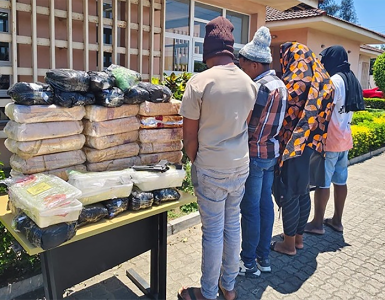
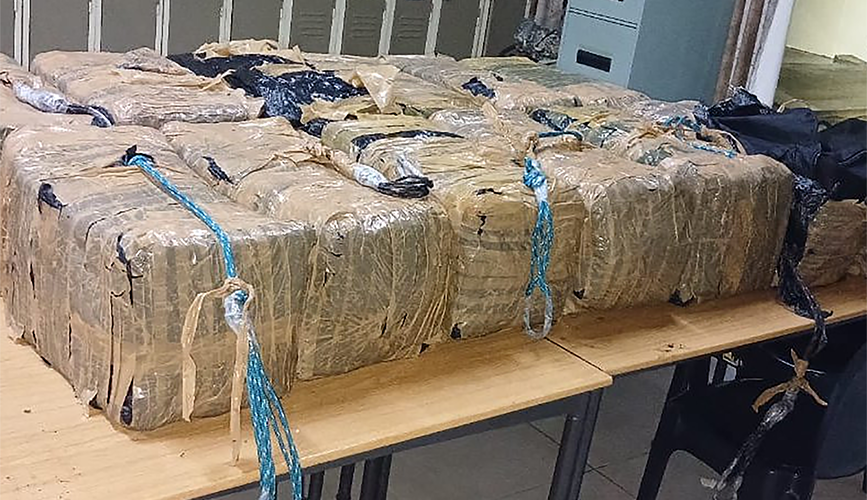
The seizure of more than 400kg of cocaine – worth R225 million – in Still Bay in July 2024 is at the centre of a Western Cape High Court case that could shed light on how Balkan-linked drug trafficking networks operate in South Africa.
Three foreign nationals from the Balkans were among eight suspects arrested in connection with the seizure on the Southern Cape coast. The case includes charges of murder and drug dealing. The three men, Nemanja Vuckovic, Marko Ninic and Josip Ivanovic, also face charges relating to their alleged unlawful presence in South Africa.
The case is examined in a report by Sasa Djordjevic and Aron Hyman, senior analysts at the Global Initiative Against Transnational Organized Crime, an independent civil-society organisation based in Geneva. The authors say evidence from the case could help explain South Africa’s growing importance as a transhipment point for cocaine moving through global supply chains.
Balkan states are countries in south-eastern Europe located in and around the Balkan Peninsula. They generally include Albania, Bosnia and Herzegovina, Bulgaria, Croatia, Greece, Kosovo, Montenegro, North Macedonia, and Serbia.
A seizure and a murder charge
According to the prosecution, the cocaine was retrieved at sea by a small boat and was to be transferred to vehicles onshore for onward distribution. One of the men allegedly involved was reportedly killed during the operation, giving rise to the murder charge.
The report says one of the original eight defendants, Alan Bushby, pleaded guilty to drug dealing and received an effective 10-year prison sentence. He is expected to testify against the detained defendants. His testimony could shed light on how the maritime operation was organised, who carried it out and who directed it.
As well as determining individual criminal
liability, the trial could expose how Balkan cocaine trafficking networks have set operations in South Africa and connected the country to the global trade…
Police sources cited in the report say Vuckovic is an alias used by Ivan Cicmil, a Montenegrin national whom police in Montenegro have described as a senior member of an organised crime group. Cicmil was previously the subject of an Interpol Red Notice issued at Montenegro’s request in connection with proceedings over allegations that he procured and concealed weapons linked to a double murder in 2016.
The authors say Cicmil is sought by the Montenegrin authorities and could still face proceedings there even if acquitted in South Africa.
Durban targeted as a hub
European law enforcement agencies intercepted messages on the encrypted Sky ECC platform in 2020 and 2021 in which members of a Balkan criminal network discussed how South Africa might fit into the global cocaine trade, the report says.
The exchanges identified Durban as a possible hub for handling shipments from South America. In one conversation, participants discussed a route from Santos, Brazil, to Durban and asked whether someone at the port could remove a container. Other exchanges explored whether South Africa could serve as a transit point for shipments to Europe.
The messages also included discussions about the availability and price of cocaine in South Africa and how much could be sold locally, suggesting the country was being considered as a destination market as well. The authors say the outcome of those discussions remains unknown.
Senior South African police sources told the researchers that some Balkan-linked operators, particularly from Serbia and Montenegro, were becoming more influential. They cited one network with British and Irish associates whose transhipment operations through South African ports had made it a major player in the trade.
Local connections
Albanian- and Slavic-speaking criminal groups have long played a role in cocaine supply chains linking South America with Europe, Asia and Australia, the report says. Some of these networks are built on family, clan and diaspora ties. West Africa has become an important base for logistics, storage and redistribution.
In South Africa, the authors say, some networks have drawn on contacts within established diaspora communities to find local associates and arrange logistical support. The report also says Balkan-linked criminal networks are believed to have been behind a series of killings in Johannesburg in 2018 and 2019 that targeted people with ties to the Serbian underworld. In 2015, according to the report, a group from Montenegro recruited a South African to carry out an assassination there.
The Still Bay case file, as described by the researchers, points to a three-tier structure. Local operatives handled the physical movement of consignments, including retrieving cocaine at sea and transporting it ashore. Brokers with local knowledge and contacts arranged boats, vehicles, warehouses and equipment. Some had lived in South Africa for years, while others were sent to the country for several months to support an operation.
Senior figures, the report says, could direct operations remotely while keeping their distance from the physical movement of the cocaine. The trial could help establish who performed those roles in the Still Bay operation and who gave the orders.
Why South Africa matters
The authors say South Africa’s appeal lies in the combination of major ports, an extensive coastline and transport links that can support both local distribution and onward shipments. Foreign networks can also draw on people who provide transport, storage, protection and other services.
The report draws parallels with parts of West Africa, where access to ports, warehousing, container transport and local intermediaries has helped turn some countries into transit points for cocaine. South Africa offers many of the same advantages, the authors say, with potential links to markets in Asia and Australia as well as Europe.
That flexibility gives South Africa several possible roles in the same trade. A consignment can be stored or redirected, while traffickers can also look for buyers locally. The intercepted messages show that both possibilities were being discussed years before the Still Bay seizure.
The court will determine individual criminal liability in the Still Bay case. The evidence could also show how a consignment of that size reached the Southern Cape coast, what role local associates allegedly played and how far the operation’s links extended beyond South Africa.