 WeeklySA_Admin
HYPOCRISY: Before demanding reparations and calling for sanctions, perhaps Africa’s political elite should first explain why millions keep fleeing their own homelands…
By Themba Khumalo
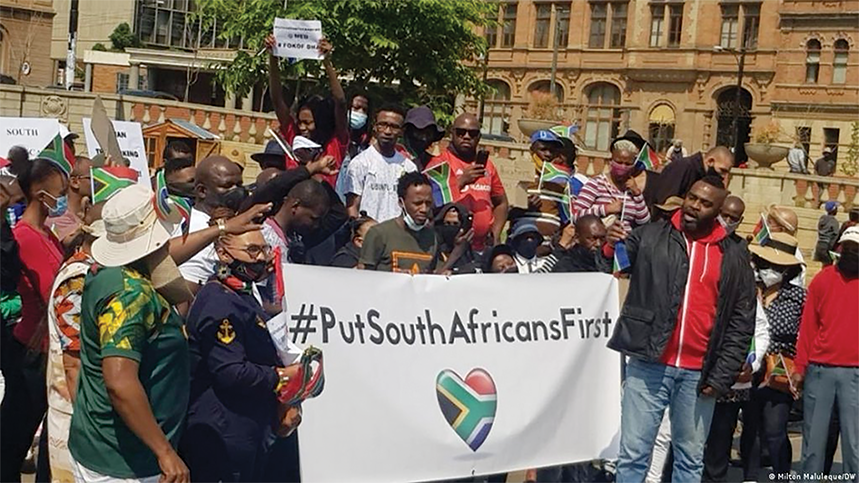
When Nigeria and Ghana formally petitioned the African Union to consider sanctions against South Africa, a collective, incredulous gasp ought to have echoed through the halls of diplomatic power.
Here, finally, was the ultimate collision of posturing and reality—a desperate diplomatic offensive demanding accountability for recurring waves of xenophobic violence, launched within a continental body that is constitutionally incapable of delivering it.
That West African nations are aggrieved by anti-immigrant sentiment is understandable, yet weaponising the AU exposes a staggering level of diplomatic hypocrisy and legal blindness. Under the AU Constitutive Act, the machinery for sanctions is strictly reserved for military coups and unconstitutional changes of government.
The continental body has no legal mechanism to penalise member states over human rights violations, civic violence, or administrative failure.
Africa’s greatest export is no longer gold,
oil or cocoa—it is the desperation of millions forced to flee failed governance…
To sanction South Africa, legal experts agree the AU’s founding statutes would require a major, radical overhaul. Yet, Abuja and Accra stand at the podium demanding a hammer that does not exist, staging an elaborate piece of political theatre for their domestic audiences while knowing full well the tribunal is legally powerless to act.
This posturing becomes even more absurd when paired with the brazen demand for financial compensation.
To hear West African diplomats tell it, one would think Pretoria had unleashed state machinery to orchestrate mass slaughter and systematic plunder.
While acts of xenophobic vigilantism in South Africa are vile, unlawful, and morally indefensible—and while every instance of mob extortion and property damage must be condemned—there have been no state-sponsored massacres, no government-led pogroms, and no state-sanctioned destruction of foreign assets.
To demand that South African taxpayers foot the bill for civil unrest, while completely ignoring the catastrophic failure of foreign governments to protect their own domestic economies, is an exercise in shameless blame-shifting.
It is precisely here that the diplomacy descends from mere legal posturing into pure moral farce.
While member states demand unprecedented constitutional gymnastics and reparations to punish Pretoria over border friction, the African Union stammers and twiddles its thumbs over the bloody nightmare in Sudan.
Entire cities have been reduced to rubble, millions are displaced, and widespread starvation unfolds in plain sight. Yet, the AU offers little more than endless, toothless communiqués while Sudan burns.
The moment South Africa struggles under the weight of an illegal migration crisis engineered by continental misrule, these same nations suddenly discover a ravenous appetite for outrage.
That sudden outrage deliberately masks the uncomfortable question of why the migration wave moves southward in the first place.
It is not because South Africa is a land of boundless luxury; it is because across the continent, the lights have been turned off by the very governments now demanding compensation.
When state coffers are looted, opposition figures silenced, and economies hollowed out, governance ceases to exist. The primary export of these regimes is no longer cocoa, gold, or oil—it is human desperation.
Young Africans risk life and limb traversing the scorching expanse of the Sahara Desert, only to board frail dinghies that are swallowed whole by the Mediterranean, preferring a watery grave to the hopeless existence engineered by their own leaders.
South Africa cannot act as a permanent, bottomless shock absorber for a continent whose leadership refuses to govern, nor can it be transformed into a cash dispenser for states seeking to outsource the costs of their own negligence.
If the African Union Constitutive Act is ever rewritten to allow sanctions for human rights abuses and xenophobia, then let the ink be applied with microscopic impartiality. Let it penalise not only the host nation that fails to quell vigilante violence, but also the autocratic regimes whose economic looting and repression force their own citizens into exile. Until that day arrives, watching the diplomatic elite squabble while the continent unravels remains a tragedy of horrific proportions.
It is a spectacle akin to firefighters standing outside a blazing high-rise, arguing over protocol and hose attachments while the structure burns to the ground and desperate souls jump from upper windows to their deaths.
What Africa desperately needs is a brutally simple idiot’s guide to turning the continent around: build functioning domestic markets, enforce the rule of law, protect state treasuries from institutionalised looting, and invest in basic infrastructure so young people are not forced to flee.
Stop treating citizens as economic refugees-in-waiting.
Until the AU finds the moral courage to confront the true arsonists sitting around its own summit table, the clamour for sanctions against Pretoria will remain what it has always been—a high-priced theatre of the absurd, staged by hypocrites, and paid for in the blood and suffering of ordinary Africans.