 WeeklySA_Admin
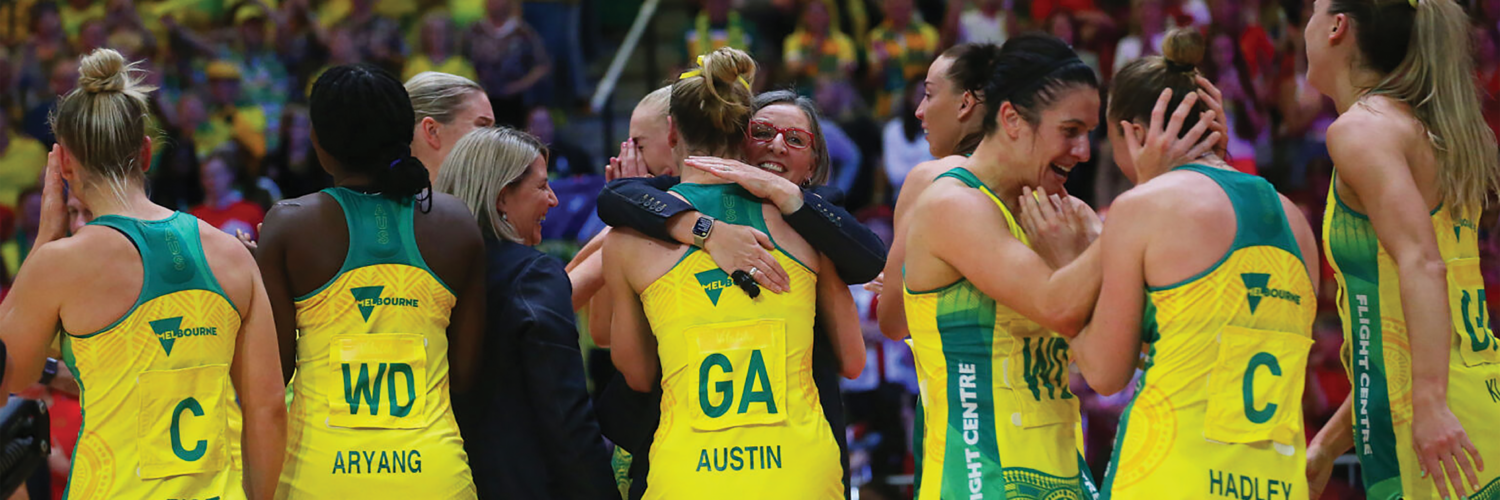
NWC 2023: The Diamonds crowned champions for the 12th time as Jamaica clinch bronze
By Ali Mphaki
Netball in South Africa and across the African continent is being tipped for growth following the successful hosting of the 16th edition of the World Cup that ended in Cape Town on Sunday.
The 10-day quadrennial tournament, held in the city’s International Convention Centre, has been hailed by Dame Liz Nicol, president of governing body World Netball. “Every World Cup is different,” said Nicol. “Each has its own spirit and for this one, the energy, the joy, the colour and support from Africa has been absolutely amazing. It’s made it a very special event indeed.”
The event dates back to 1963 when England held what was then called the World Netball Championships. This year saw Africa host for the first time and, from a commercial point of view, it was certainly a success. “Every World Cup has its own business model,” added Nicol.
“Some focus on ticket sales, others on commercial sponsorship. This World Cup has had the best combination ever of sponsorship and international broadcast sales, so it’s been a real step up for World Netball and the World Cup.” As part of the tournament’s legacy, all nine South African provinces will receive an international-standard sprung wooden floor.
But the benefits are not limited solely to South Africa. “Botswana, Malawi and Ghana will also receive a wooden floor that will enable us to take international netball across the continent for the first time,” said World Netball chief executive Clare Briegal, describing the move as “significant”.
“The legacy programme run by Netball South Africa also helped to teach more people to be umpires, coaches and educators.”
South African president Cyril Ramaphosa, who presented the trophy to 12-time winners Australia after they beat England in the final, has described himself as “a new fan” after watching games earlier in the competition on television.
He has promised to build a specialised netball-exclusive arena as part of continuing efforts to grow the game. Bongi Msomi, who captained South Africa’s Proteas to sixth place, is confident the World Cup – which was broadcast on free-to-air television across the country – will increase participation.
“This World Cup will do so much,” said the 35-year-old, who is her nation’s all-time record appearance holder. “Seeing young kids come through and actually looking forward to taking up the sport, that’s just fantastic.
“What we do here, it’s not only about us but what it is going to do long-term for those who are looking up to us. This Netball World Cup is also for kids to strive to take our sport really seriously and take it as a career one day.”
On the court, the four African countries who formed part of the 16-team competition – South Africa, Malawi, Uganda and Zimbabwe – showed encouraging growth as they continue to slowly close the gap between themselves and the traditional powerhouses of Australia, New Zealand and England.
Indeed, Uganda recorded a best-ever finish after beating the hosts 49-47 in the play-off for fifth place. Nicol says African teams have grown into a formidable force in the global game. She added: “When you look at the world rankings, there is a group of African nations that are in positions four to eight (South Africa, Malawi and Uganda) and they are all performing incredibly well. They are all improving and I anticipate it won’t be long before you actually see some of those nations creeping up into the top-four places.”
Briegal has revealed some of the funds generated by the World Cup will be used to fuel the World Netball Development Programme. She said: “In Africa we have a regional development manager who was deployed 15 years ago. She works with all of our regions to identify their needs.
“Income from the World Cup is deployed back to our members and the commercial success means we can do more than we’ve done before.”
HARD LESSONS FOR AFRICA
KNOCKOUT STAGE: For the first time three nations reached the last 16 stage as Morocco, Nigeria and SA qualified
By Sport Reporter
After an inauspicious start – with none of Africa’s four sides winning their opening game – the continent delivered at the Women’s World Cup, held in Australia and New Zealand, like never before. For the first time at a World Cup, whether male or female, three nations reached the knockout stage as Morocco, Nigeria and continental champions South Africa all qualified.
That left Zambia as the only team not to reach the Round of 16 – but even they had cause to celebrate as the debutants beat Costa Rica 3-1 in their final group game to register their first World Cup goals and points.
The victory meant that, for the first time, every African side at the Women’s World Cup won a match – emulating their male counterparts who achieved the same feat in Qatar last year.
Prior to this tournament, Africa had never won more than two matches at a Women’s World Cup (a feat achieved in 1999, 2015 and 2019), but that tally was smashed as the 2023 edition produced a total of five wins.
Perhaps, surprisingly, it was not serial qualifiers Nigeria who won the most games but a side that began with a 6-0 defeat (against Germany) as debutants Morocco bounced back to register consecutive 1-0 wins against South Korea and Colombia.
The Super Falcons, meanwhile, became the first African side to go through a Women’s World Cup unbeaten, with the nine-time continental champions – who conceded just twice in four games (what a contrast to the 37 goals shipped in 10 games up to the turn of the century) – only exiting after losing on penalties to England.
South Africa overcame Italy in an instant fivegoal classic to register their first ever victory but, like the Moroccans and Nigerians, they were unable to win a match in the knockout phase – a barrier the continent is yet to hurdle.
Underpinning this quantum leap for Africa at the Women’s World Cup was an increased focus on structure and discipline, a far cry from the past when many issues have adversely affected the continent’s representatives. Physically and tactically, Africa’s most experienced side certainly proved they were, at the very least, the equal of their vaunted opponents. There were a number of outstanding individual performances by African players, but none seemingly raised the level of their team like South Africa’s Thembi Kgatlana.
Despite missing much of the past year due to injury and then suffering bereavement during the tournament itself, the United States-based striker was in superb form, scoring against both Argentina and Italy, and terrorising the Netherlands’ defence in the second round.
Her goal and assist in the winner-takes-all match against Italy not only turned a potential early exit into record progress, it will go down in history as one of the most influential individual World Cup performances – so cementing the 27-year-old’s standing as a player for the big occasion.
The Super Falcons boast several players born outside Nigeria, with Plumptre joined by Michelle Alozie, Ifeoma Onumonu and Toni Payne – all of whom played significant roles in the team’s success. Diaspora-born players usually play for the countries of their birth, meaning African nations only get the players who do not make the grade elsewhere – creating an in-built quality deficit.
Without a concerted effort to bridge that gap by nurturing its own talent, Africa will likely struggle to build on this year’s achievements. “It’s very important for South Africa to get more professional leagues for women,” midfielder Wendy Shongwe told German media. “The standard in the World Cup is so high we need those leagues to be implemented so that we can compete more.”
It would not be a World Cup without monetary disputes of some description affecting at least one African team. Shortly after the defeat to England, a statement from global players’ union Fifpro revealed they were assisting Nigeria’s players “in a disagreement with the Nigeria Football Federation concerning bonus payments, camp allowances and expenses, some of which date back to 2021.
Sports:
Briefs
HARRY KANES BAYERN
England captain Harry Kane has joined German champions Bayern Munich on a four-year deal, ending his record-breaking career at Tottenham. The striker signs for an initial 100m euros (£86.4m) plus add-ons and could make his debut in Saturday’s German Super Cup game against RB Leipzig.
Kane, 30, leaves Premier League Spurs as their all-time top scorer with 280 goals in 435 appearances. In a social media post he said he “felt this was the time to leave” Spurs.
MESSI EIGHTH WONDER
Lionel Messi scored his eighth goal in five games for new club Inter Miami as the side beat Charlotte 4-0 in the Leagues Cup quarter-finals.
The World Cup winner with Argentina was having a quiet game in Florida before scoring Miami’s fourth goal on 86 minutes. Miami were winless in 11 games but have now won five in a row since the 36-year-old arrived in July.
They will face Philadelphia Union in the semi-finals on Tuesday.
BOXING HAS A PROBLEM
Anthony Joshua says boxing “clearly has a problem” with doping after Dillian Whyte failed a voluntary drugs test and was pulled out of Saturday’s all-British heavyweight contest.
Joshua, 33, will instead fight Robert Helenius at London’s O2 Arena, with the 39-year-old Finn taking the fight at just a week’s notice.
Asked by BBC Sport if boxing has an issue with doping, Joshua said: “I don’t know how they’re going to sort it out or what their solution is to this problem. But it clearly has a problem.”
For the third time in 12 months, boxing is facing serious questions about the sport’s credibility and its anti-doping protocols.
KURT IS THE MAN
The Blue Bulls held its annual combined awards evening on Tuesday, with Springbok Kurt-Lee Arendse earning several accolades. The Blue Bulls held its annual combined awards evening on Tuesday, with Springbok Kurt-Lee Arendse earning several accolades.
Fellow Springboks Gerhard Steenekamp, Embrose Papier and Rights Mkhari, all walked away winners on a glitz and glamorous evening, with a touch of funky flair which was left open to the interpretation of the attendees.
Arendse walked away the biggest winner on the night, claiming a whopping five awards as the creative, dynamic and unrelenting speedster was rewarded for an impressive season which is still continuing on the international stage. . .
MALE COACHES A CHALLENGE
Malawi legend Mary Waya believes the behaviour of some male coaches in African netball remains the “biggest challenge” for female players.
Former World Cup star Waya said women are pressured into relationships in the hope of securing selection. The 55-year-old claimed female players are made to feel “insecure” by coaches.
“Most African teams have male coaches, so that’s the biggest challenge,” Waya told the Africa Daily podcast, saying the issue has endured since she was a teenage player.
SAUDI PRO LEAGUE BEGINS
The Saudi Pro League kicked off on Friday following a year of high-profile transfers and amid criticism that Saudi Arabia’s lavish spending amounts to an attempt to shift the focus from its dire human rights record.
Clubs in the oil-rich Gulf state have lured global stars, with Karim Benzema, Jordan Henderson and Sadio Mane among those following in Cristiano Ronaldo’s footsteps. Last month Al Hilal made a 300 million euro ($330m) bid for Kylian Mbappe, although the Paris Saint-Germain striker reportedly refused to meet with officials from the club.
The number of clubs has increased from 16 to 18 this season, with each allowed eight foreign players. “Saudi Arabia aspires to be like the English Premier League,” said Simon Chadwick, professor of Sport and Geopolitical Economy at Skema Business School in Paris. “The media is paying attention,” he told the AFP news agency.
“I’m aware of people now asking the question: Where can I watch the Saudi Pro League?”