 WeeklySA_Admin
BEWARE: As anti-illegal immigration activism increasingly takes on ethnic and patriarchal overtones, South Africa faces a dangerous moment. Themba Khumalo argues that the country must confront lawlessness without abandoning the constitutional values that bind its diverse communities together…
By Themba Khumalo
The air in our streets is growing thick with an old, familiar terror, a heavy dampness that settles in the chest long before the match is actually struck.
For months, we have watched the spectacle of the so-called civic movements under the comfortable guise of addressing illegal immigration.
But look closer. The dots are beginning to connect. The true colours are slowly emerging from the dust of our crowded thoroughfares, and the sight is enough to turn the stomach cold.
To those who lend their uncritical support to these movements, you will soon have to reap the bitter harvest of the ethnonationalism that is being sown as we speak.
We are a people stitched together by shared trauma, walking on ground heavily soaked by the blood of those who came before us.
Not so long ago, many fought and paid the ultimate price in their quest to banish the spirit of ethnotribalism from this country of ours. They did not lay down their lives so that a new breed of demagogues could carve up our collective grief into private tribal fiefdoms.
To watch these hard-won victories bartered away for the cheap thrill of stadium applause does not just cause worry; it makes the blood boil with a righteous fury. It is an insult to every unmarked grave in this soil.
It is now as clear as daylight that some are opportunistically using this national crisis to position themselves as the sole Messiahs who can rescue South Africa, even though there is a plausible case that they are pursuing narrow self-interests.
Look at the chilling, unvarnished arrogance of Nkosikhona Phakelumthakathi Ndabandaba.
With an absolute disdain for the fragile scaffolding of our multi-ethnic democracy, his voice rings out across the digital sphere like a declaration of war: “Kuzomele kuvuke thina maZulu silungise leli lizwe, ngoba akekho omunye ozolilungisa. Thina maZulu yithina esinegazi lokukhulula leli lizwe.” (It is going to take us as Zulus to wake up and fix this country, because there is no one else who will fix it. We as Zulus are the ones with the blood to liberate this country.)
He goes further, reducing the multi-hued struggle of South Africa’s millions to a singular, exclusive tribal mandate, warning that if his specific collective does not rise, the country “lizobola sikhona”—it will rot right in front of our eyes because “yithina insika yaleli lizwe” (we are the pillar of this country).
This is not the language of reformation; it is the ancient, destructive dialect of supremacy. It sends a visceral shiver through the heart because South Africans know exactly where this road ends—it ends in ash, in smouldering homes and buildings, and in the weeping of mothers.
When a man stands before a camera and demands that “by the word ‘democracy’, it should be that the majority of people in parliament are Zulus because there are more of us than anyone else,” he is not pleading for accountability. He is constructing an ethnic hegemony on the ruins of our constitution.
The issue of undocumented immigrants does not affect only amaZulu and never has. The pain of a broken economy, the collapse of municipal infrastructure, and the anxiety of lawlessness crush every single community identically, from the dry banks of the Limpopo to the rocky capes of the south.
Hunger carries no tribal accent.
If one were to take the flawed logic being punted by Phakelumthakathi to its natural conclusion, then one would have to conclude that only the students of Soweto who led the June 16 uprising must be elevated above all other citizens who played their part in ensuring that this initiative translated into a widespread, countrywide revolt and a wave of anti-apartheid protests.
History is a vast tapestry woven by millions of forgotten hands; it is not a private trophy to be claimed by one linguistic group.
Worse still is how this regressive, hardline mindset bleeds into other spheres of human dignity, exposing a terrifying authoritarianism that views half our population as secondary citizens.
When independent women dare to raise their voices in the digital sphere to question this volatile trajectory, Ndabandaba routinely resorts to patriarchal erasure, directly asserting: “Abafazi abangakhulumi ngezindaba zezwe, abahlale emakhishini.
Thina madoda silwela izwe lethu.” (Women must not speak on matters of the country; they must stay in the kitchens. We as men are the ones fighting for our country.)
He doubles down on this chauvinistic silencing elsewhere, reinforcing a rigid hierarchy that locks women completely out of public discourse: “Abafazi abakwazi ukuhola impi. Lezi zinto ngezamadoda.” (Women cannot lead an army or a struggle. These matters belong exclusively to men.)
The depths of this misogyny are laid completely bare in another piece of footage where he can be seen openly admonishing a woman during a gathering, weaponising her status and her constitutional protections against her.
Confronting her public stance, he barks with unbridled contempt: “Siyacela laba abesifazane abazi ukuthi banamalungelo, basuke behambe, ngoba sengikhulumile ngiwumdidiyeli wamabutho ngithi: Siyacela umuntu wesifazane ozazi ukuthi unamalungelo asuke la ahambe, ngoba uma kukhuluma inkosi, umuntu wesifazane akami ngezinyawo, akayibheki ngisho ukuyibheka emehlweni inkosi…”
(We ask those women who know they have rights to get up and leave, because I have already spoken as the organiser of the regiments, saying: We ask a woman who knows she has rights to get up from here and leave, because when a king speaks, a woman does not stand on her feet, she does not even look the king in the eye…)
He further barks, “…Sukuma. Sisi, sisi, sorry. Sorry, ngicela usukume uhambe la. Sukuma. Sukuma sisi, hhayi sukuma. Sukuma, sukuma usuke la. Awunayo nendoda. Uyobonakala. Suka nje. Suka. Usebenzela uhulumeni unepayslip, imali awunayo. Unepayslip kuphela.”
(…Stand up. Sister, sister, sorry. Sorry, please stand up and leave here. Stand up. Stand up, sister, no, stand up. Stand up, stand up and get out of here. You do not even have a husband, and it shows. Just get out. Get out. You work for the government and have a payslip, but you have no money. You only have a payslip.)
This toxic intersection of chauvinism and tribalism reveals the dark truth of his project: an ambition built entirely on exclusion and the violent silencing of half our population.
Yet, in this darkening landscape, one has to recognise the tireless efforts of those who have been swimming against the popular tide on this issue.
There are community leaders and ordinary citizens who have braved physical threats to stand firm, insisting that we can demand state accountability without surrendering our basic humanity to tribal warlordism. They are the lonely voices holding the thin line of our national sanity.
We are standing at a terrifying precipice, and while the president has spoken out against this vigilante trajectory, the state machinery is moving with a dangerous slowness.
It is this bureaucratic inertia, this sluggishness in enforcement, that is enabling figures like Phakelumthakathi to run rampant without consequence.
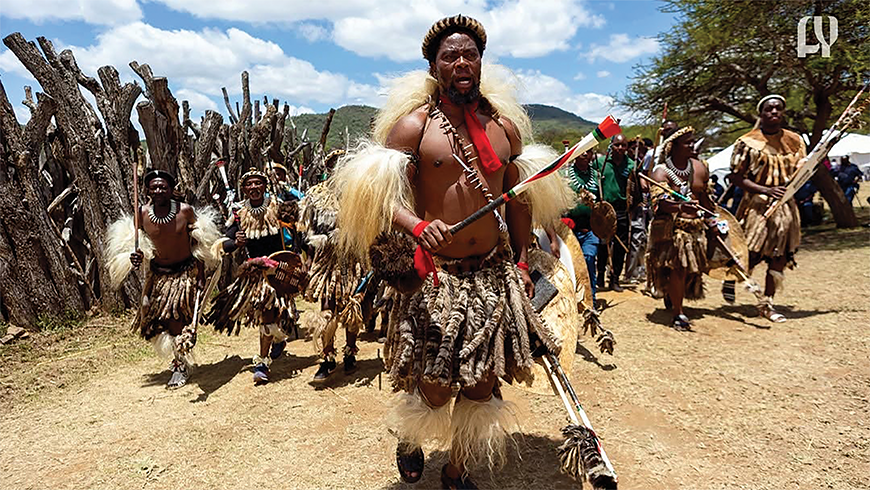
When a leader can openly threaten the democratic order by saying, “I am a coordinator of the regiments… we will call upon our traditional army,” the mask has not just slipped; it has been completely cast into the fire.
We must wake up to the horror of what is being conjured by people like Phakelumthakathi.
If we allow the legitimate pain of our people to be weaponised by ethnic exceptionalism, we will watch the very foundations of the peace we bartered our youth to secure turn to dust before our eyes.