 WeeklySA_Admin
REFORM: Government vows to cut red tape and back small businesses — but warns failing municipalities remain the biggest threat to jobs, investment and local growth…
By Monk Nkomo
South Africa’s economic revival may well hinge on a simple but uncomfortable truth: fix municipalities — or forget growth.
That was the stark message emerging from the 2026 National Local Economic Development (LED) Summit, where government and business leaders struck a dual tone of urgency and optimism — pairing bold reform commitments with a blunt assessment of systemic failure.
The summit was convened by convened by the Department of Small Business Development, in partnership with the South African Local Government Association (SALGA) and the Department of Cooperative Governance and Traditional Affairs (CoGTA).
At the heart of the summit was a newly adopted declaration aimed at unlocking the potential of micro, small and medium enterprises (MSMEs), widely seen as the engine of job creation and inclusive growth.
But alongside the promise of reform came a sobering reality check. President Cyril Ramaphosa did not mince his words, pointing to deep-rooted dysfunction in municipalities — from poor financial management and weak revenue collection to crumbling infrastructure and bureaucratic paralysis.
These failures, he warned, are not abstract governance issues — they directly affect daily life and economic opportunity.
Unreliable electricity, water shortages, deteriorating roads and unsafe trading environments are choking local economies and discouraging investment.
“Without fixing governance, we cannot fix service delivery,” Ramaphosa said, drawing a direct line between municipal collapse and stalled economic growth.
From talk to action
Against this backdrop, the summit’s declaration signals a shift in approach — from fragmented initiatives to a coordinated, results-driven strategy.
Government has committed to sweeping reforms designed to make it easier to do business, including overhauling licensing systems, cutting red tape and rolling out one-stop service centres across municipalities.
There are also plans to expand access to finance for small businesses, introduce new funding models for infrastructure, and build a real-time data system to better track and coordinate economic activity at local level.
Importantly, municipalities are being repositioned not as passive administrators, but as active drivers of economic growth.
The municipal question
Yet, the success of these ambitions hinges on one critical factor: capability. Ramaphosa called for the professionalisation of local government, insisting that appointments must be based on merit, skills and accountability — not patronage.
He also highlighted a chronic failure to invest in infrastructure maintenance, with many municipalities spending far below recommended levels.
At the same time, bureaucratic delays — particularly in issuing business licences and approvals — continue to stifle entrepreneurship and delay investment.
“Investment will always gravitate towards municipalities that make it easy to do business,” Ramaphosa noted.
A fragile opportunity
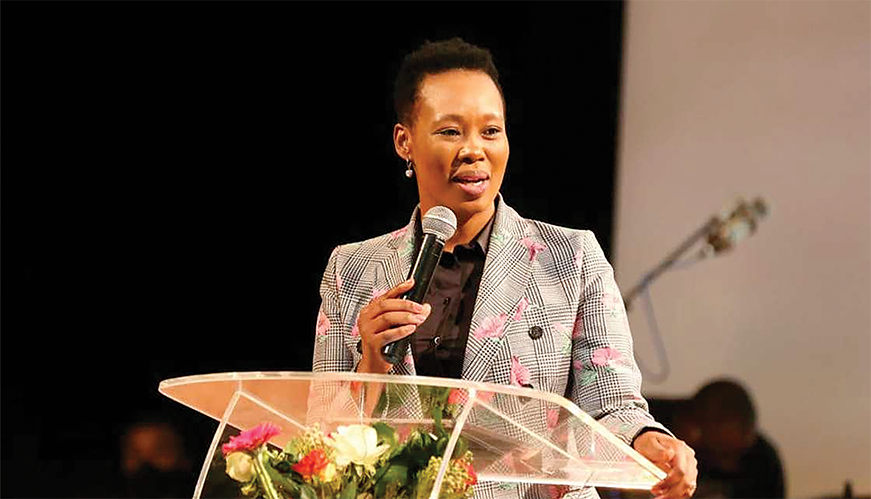
Despite the challenges, there is cautious optimism. Small Business Development Minister Stella Ndabeni emphasised that the declaration signals a shift from fragmented interventions to a more integrated, results-driven approach to local economic development.
“This declaration represents a collective commitment to act boldly and collaboratively to unlock local economic potential. By simplifying regulatory processes, strengthening municipal capability, supporting micro, small, and medium enterprises (MSMEs), and improving coordination across government and key partners, we are laying the foundation for vibrant local economies that create jobs and opportunities for all,” Ndabeni said.
The summit, held at Birchwood Hotel and Conference Centre in Kempton Park on Wednesday and Thursday, comes on the back of renewed investor interest in South Africa, with billions in pledges secured at the recent investment conference. It was attended by more than 500 stakeholders from the small business environment.
But translating that momentum into jobs and inclusive growth will depend on whether reforms move beyond policy statements to real-world implementation.
The LED Summit declaration lays out a roadmap. The real test now is delivery.
Because as both government and business leaders acknowledged this week, South Africa does not lack plans. It lacks execution.