 WeeklySA_Admin
AGENT PROVOCATEUR: South Africa’s story is not one of fragments, but of forging unity from pain. The real challenge is fixing what is broken, not reaching for the sledgehammer when the roof leaks…
By Themba Khumalo
Grant Arthur Gochin, Emeritus Special Envoy for Diaspora Affairs at the African Union and Honorary Consul for the Republic of Togo, is a man who never met a border he did not want to redraw.
In the cosseted corridors of diaspora diplomacy, his name pops up often enough—always ready to lend “pro bono” advice to the next would-be breakaway. So when Gochin’s acerbic polemic, Africa Must Fragment, South Africa First, appeared in The Times of Israel’s The Blogs, it landed with all the subtlety of a Molotov cocktail lobbed into a township council meeting.
If you have not read his blog, save yourself the headache. I have waded through it, so you do not have to.
Do not be distracted by the long list of titles or the international bravado. Strip it down, and Gochin is peddling a mirage—one that claims Africa’s only hope lies in splintering itself into a patchwork of mini-states, starting with South Africa.
He wraps the whole thing in legal jargon and cherry-picked history, but beneath the surface, it is the same old poison: division, repackaged and sold as deliverance.
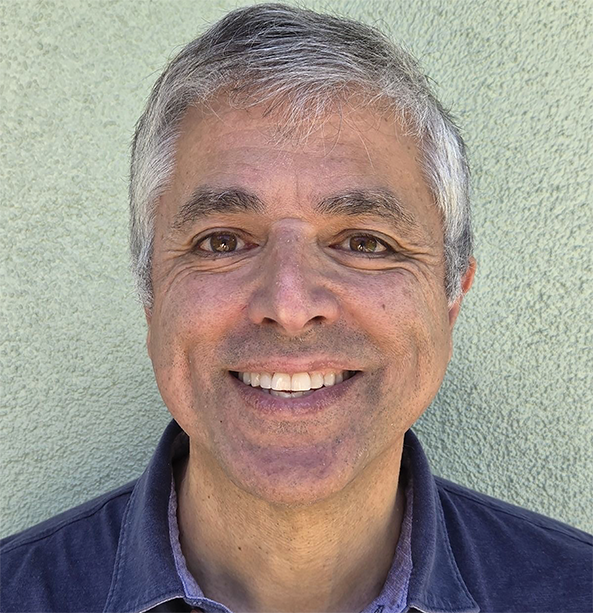
Gochin wants the world to know his door is open to any traditional leader itching to carve out their own kingdom. His message is loud and clear—he will help publicise, legitimise, and ultimately break nations apart. Publishing his call to Balkanise the continent in The Times of Israel—a platform with its own fraught history of borders and statehood—says it all.
This is the voice of someone who lives outside Africa, and his solutions sound exactly like those of an outsider: abstract, disconnected, and blissfully unaware of the messy, lived reality on the ground.
What Gochin is really promoting is a return to the worst kind of ethnic partitioning. When he advocates for Zulu, Xhosa, Tswana, and other so-called “historic homelands” to secede, it is hard not to feel the chill of history.
We have seen this play before. It was called “separate development”—the grand lie of apartheid, where millions were dumped into fragmented Bantustans, stripped of resources and dignity, all under the banner of “self-determination.” Gochin dresses it up with the language of rights and referenda, but the stench is the same.
His vision is not liberation—it is a gated compound mentality. In his fantasy, every group pulls up the drawbridge, counts their cattle, and pretends the rest of South Africa does not exist.
What he ignores—perhaps conveniently—is that this country’s provinces and cities are a tangled, living tapestry. Yes, there is inequality and pain, but there is also a stubborn togetherness, woven by blood, work, and shared history.
It gets worse. Gochin seizes on the so-called “urgency” of Western Cape independence, waving around a poll that shows 51% support for a referendum, 43% for outright independence.
He claims this is not tribalism in disguise, but rather the foundation of “legitimate governance.” Yet nowhere does he mention what becomes of the millions who do not fit into these neat little ethno-states.
What happens to the migrant workers, the mixed families, the people who have made the Western Cape—or Gauteng, or KwaZulu-Natal—their home for generations?
Are they to be told to pack their bags and go, as happened under apartheid’s forced removals? Or will they simply be abandoned, fenced in behind new, arbitrary lines on a map?
Gochin’s critique of South Africa’s current malaise under the ANC is on the nose. Corruption, decay, and elite plunder are the order of the day. But to leap from that reality to his prescription of national dismemberment is to mistake cancer for a cut—amputation is not the cure.
South Africa’s pain is real, but its strength has always been its refusal to fracture along ethnic or regional lines, even when the world expected it. The real miracle of 1994 was not that lines were drawn, but that they were erased.
He draws inspiration from Yugoslavia’s bloody dissolution, offers Botswana as a single shining example, and acts as if self-determination is a magic trick that can make centuries of shared struggle disappear.
He skips over the disasters of Eritrea and South Sudan with barely a mention. Colonial borders were drawn by drunks and thieves, he argues, but his solution is to rush for the scalpel and start slicing again. The world is already littered with failed microstates that started with a referendum and ended with a mass grave.
There is something deeply naïve—and frankly dangerous—about the way Gochin leans on the cases of Palestine and Israel, as though every border dispute is the same and every recognition by the UN is a shortcut to peace and prosperity.
He accuses the African Union of hypocrisy for supporting Palestinian statehood while defending Africa’s borders, as if this is some kind of gotcha moment.
It is not hypocrisy; it is the hard-won wisdom of a continent that has lived through the poison of division too many times to swallow another dose.
The real work of rebuilding South Africa is not done by diplomats with fancy titles and foreign blogs. It is done by ordinary South Africans who refuse to let the dream of a united, just country die. Yes, we must face corruption and demand accountability, but splitting up is not a substitute for standing up.
Gochin’s call to fragmentation is not a solution—it is a retreat. It is the advice of someone standing outside the house, telling those inside to set fire to the walls because the roof leaks.
South Africa’s future does not lie in fragments. It lies in forging anew the unity that has always been our greatest asset. Our story is unfinished, and it will not be written in pieces.