 WeeklySA_Admin
HUMANITARIAN: Born out of community outreach and strengthened by successive crises, Encounter Hope is extending its relief work into sustained support for families facing hunger and hardship…
By WSAM Reporter
For families struggling to put food on the table, the end of an emergency does not necessarily mean the end of a crisis.
That reality has shaped the work of Encounter Hope, a community outreach organisation whose response to the Covid-19 pandemic and the July 2021 unrest has developed into ongoing support for vulnerable households.
During the pandemic, the organisation delivered food parcels and essentials to families whose livelihoods had been disrupted. When unrest swept through KwaZulu-Natal in 2021, it again provided relief to affected communities.
But the needs encountered during those emergencies continued long after the immediate upheaval had passed. Hunger, the cost of schooling and difficulty affording everyday necessities remained part of household life.
“Our work has always been about more than reacting to headlines,” says Nadine Horton, Encounter Hope’s operations manager. “Families still need to eat. Children still need to learn. Girls still need sanitary products to stay in school. The needs don’t vanish when the cameras do.”
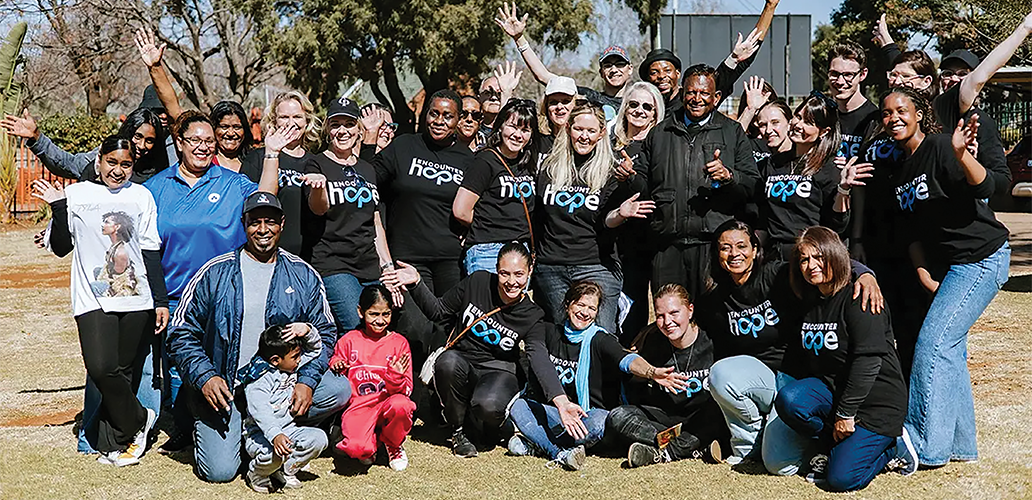
Founded in 2018 as the community outreach arm of Encounter Church in Clubview, the organisation now runs programmes covering food relief, educational support, menstrual care and assistance to elderly people and hospital patients.
Its work unfolds against a backdrop of persistent food insecurity. Statistics South Africa’s 2025 General Household Survey found that 22% of households considered their access to food inadequate or severely inadequate — 4.2 percentage points higher than in 2019, before the pandemic.
Stats SA’s food poverty line for 2025 was R855 per person per month, measured in May 2025 prices. This represents the cost of meeting minimum daily energy requirements. For a household of five, the equivalent is R4,275 a month, before expenses such as transport, electricity and school supplies are considered.
For organisations working directly with families, these pressures translate into recurring requests for help throughout the year.
Encounter Hope has structured several of its activities around those needs. Winter drives provide blankets and maize meal, while January stationery collections assist learners at the start of the school year.
Sanitary-product distributions seek to help schoolgirls manage menstruation without the added burden of being unable to afford basic supplies.
The organisation says its 2026 Mandela Month Winter Drive distributed 1,200 blankets, alongside maize meal and warm meals, in Olievenhoutbosch, Centurion and Laudium.
These distributions form part of a broader programme delivered through partnerships with schools, local nonprofit organisations and community groups. According to Encounter Hope, those relationships help it identify needs and direct assistance where it can be most useful.
Its Hope Education Project supports meals and school supplies, and has included computer donations to community centres. The focus extends beyond getting children into classrooms to addressing some of the material barriers that can make learning difficult.
A child may have a place at school but still lack stationery or arrive hungry. A household may receive emergency food assistance yet continue to struggle with the following month’s expenses. Such overlapping needs underpin the organisation’s emphasis on sustained support.
Other activities include Christmas vouchers for households in need, hospital visits, support for old-age homes and daily feeding schemes. The organisation also reports purchasing vehicles for families in circumstances where access to reliable transport could make a significant difference.
Although these interventions vary in scale and purpose, they reflect a common concern: how to offer practical assistance while recognising the dignity of the person receiving it.
Community relief cannot, on its own, resolve the unemployment and poverty that leave families dependent on assistance. Its immediate value lies in helping households navigate those conditions — and maintaining contact after a particular campaign or emergency has ended.
For Encounter Hope, that means returning to the same everyday questions: whether a family has enough to eat, whether a learner has the supplies needed for school, and whether an elderly or hospitalised person has support.
“Societies are judged by how they treat their most vulnerable people,” Horton says. “This is a mission we care about deeply.”