
 WeeklySA_Admin
EXCELLENCE: One of the defining figures of South African journalism, the veteran journalist passed away after more than half a century in the newsroom — a career marked by discipline, humility and unwavering professional integrity…
By Monk Nkomo
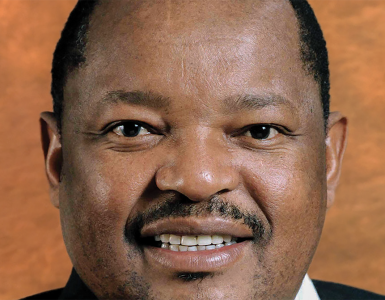
“Please leave me alone — I want to sleep”.These were the final words veteran South African journalist Joseph Matthew Latakgomo spoke to his wife Angie and daughter Bridgette from his hospital bed before passing away peacefully on Sunday in February 2026.
With his passing, South Africa loses one of the most respected and quietly influential figures in its media history — a man who shaped journalism during some of the country’s most turbulent decades.
For nearly half a century, Latakgomo reported, edited and led newsrooms that chronicled the struggles and triumphs of black South Africa. Yet despite his stature, he remained a humble and deeply private man.
News of his death spread rapidly, especially in Atteridgeville, the township where he spent most of his life after his parents settled there in 1956 following their move from a village near Walmansdal.
According to his sister Dorah, his wife and daughter visited him at Kalafong Hospital at around 11am on Sunday. After spending a few minutes with them, he asked to be left alone so that he could rest. When his wife returned for the afternoon visiting session at 3pm, she found him in distress. A doctor was called and confirmed that he had passed away peacefully. To those who knew him well, he was simply “Pony” — a nickname spoken with warmth and respect.
Born on January 13 1948, Latakgomo attended Banareng Primary School and later Central School — now Mboweni — in Atteridgeville, also known as Pheli.
Early days in Pheli
I first met him at Hofmeyr High School in the early 1960s. Even then he stood out as a polite and disciplined young man with quiet authority. School principal Wilfred Nduna recognised these qualities and appointed him the school’s bell-ringer — a responsibility he carried out faithfully for nearly three years until an electronic system replaced the manual bell.
The role suited him perfectly. He was punctual, organised and meticulous, and he approached even this modest duty with seriousness and pride. Raised in Mandebi, a section of Atteridgeville, Latakgomo was a man of few words but deep character.
At school he surprised many when he volunteered to become goalkeeper for the Hofmeyr High “B” soccer team, a position in which he excelled. On weekends he guarded the posts for the local amateur club Black Hunters, demonstrating the same discipline he later brought to journalism.
After completing his schooling, Latakgomo pursued his growing interest in journalism by enrolling at lawyer Mzwenduku Masuku’s private typing and shorthand school.
The skills he acquired there became the foundation of a distinguished career. His touch-typing set him apart from many contemporaries. While others struggled with typewriters using a single finger, Latakgomo produced clean, accurate copy with remarkable speed.
In the early 1980s at Post Transvaal, he shared these skills with young reporters, teaching generations of rookies the discipline of touch-typing.
Latakgomo began his professional journalism career as a sports reporter at The World, where he soon established himself as a versatile newsroom professional capable of writing, headline-writing and page layout — work that was usually done by specialist sub-editors.
He often spoke of the hardships of those early years, including long train journeys to work before he eventually rented accommodation closer to the newsroom. “Those were tough times when clubs were owned by tycoons and there was a belief that certain matches were influenced by sangomas,” he would recall with quiet humour.
Over the years he worked for The World, Weekend World, Post and Sunday Post, building a reputation as a meticulous and reliable journalist.
When the apartheid government shut down Post Transvaal under editor Percy Qoboza in 1980, a new chapter opened.
Sowetan, then a small free-sheet distributed in Soweto, was transformed into a daily newspaper on February 1 1981 — with Latakgomo as its founding editor.
Tough times
He would lead the paper through seven of the most difficult years in South African history. Under his leadership, Sowetan reported on the rise of the United Democratic Front, violent township conflicts involving the Azanian People’s Organisation and the daily realities of apartheid repression.
One of the greatest crises during his tenure was the violent boycott of Sowetan led by the Congress of South African Trade Unions (Cosatu). Newspaper trucks were burned, copies of the paper destroyed and journalists threatened.
During the declaration of the state of emergency in 1985, Latakgomo so niggled and incensed the apartheid regime through a front-page editorial comment climaxed by a defiant kicker – “those whom the gods want to destroy, they first make mad” – that it issued an instant directive to the army to remove and confiscate copies of Sowetan off the streets.
At the same time, the apartheid government imposed harsh press restrictions aimed at silencing reporting from unrest-hit black townships while covert “Third Force” operations intensified political violence. Despite these pressures, Latakgomo guided Sowetan to become one of South Africa’s most influential daily newspapers, extending its reach across the Southern African region.
Career highlights
After leaving Sowetan in 1988, he joined The Star as senior assistant editor, further cementing his reputation as one of the country’s leading editorial figures.
In 1991 he was awarded the prestigious Nieman Fellowship, which took him to Harvard University — one of the highest honours in international journalism.
His contribution to sport journalism was later recognised with a Lifetime Achievement Award from the South African Football Association, which inspired him to write Mzansi Magic, Struggle, Betrayal & Glory: The Story of South African Soccer, which was published in 2010, a book chronicling the history of South African football. He also wrote the text for global icon Peter Magubane’s photographic commemoration, June 16, Never, Never Again in 1996.
Even after reaching the pinnacle of his profession, Latakgomo remained approachable and grounded. In 2011 he served as Public Editor at Times Media Group, overseeing editorial accountability across major titles including Sunday Times, Sowetan, Business Day and Financial Mail.
From 2018 to 2020 he served as Public Advocate for the Press Council, helping mediate disputes between the media and the public after more than fifty years in journalism.
Special provincial burial
Despite his senior positions, Latakgomo remained a township man at heart. Many of us travelled and spent time with him at our familiar gathering places in Atteridgeville.
He disliked gossip and unnecessary noise, preferring calm conversation and thoughtful reflection. Humility was at the core of his character. Honesty was his guiding principle.
His passion for sport extended beyond journalism. Together with his brother-in-law Joe Dau and friend — the late showbiz editor Elliot Makhaya — he helped establish Jets Softball Club.
Joseph Matthew Latakgomo has completed his journey with dignity and distinction. His influence on South African journalism will endure long after his passing. He was, in every sense, a humble man of the pen.
President Cyril Ramaphosa has granted Gauteng Premier Panyaza Lesufi’s request to classify Latakgomo’s funeral as a “Special Official Provincial Funeral Category Two, in recognition of his outstanding contribution to journalism and the struggle for freedom”.
Gauteng Premier Panyaza Lesufi said: “ìNtate Joe Latakgomo was committed to truth-telling and amplifying the voices of the voiceless. His dedication to telling the stories of the marginalised and oppressed is a testament to the power of journalism in transforming society especially during the most critical time in our country”.
Latakgomo will be buried tomorrow. May his soul rest in eternal peace.