 WeeklySA_Admin
GRASSROOTS: On the forefront of the resistance to South Africa’s land mafia preying on the urban poor, 52-year-old Khabazela, an official of the shack-dwellers movement Abahlali baseMjondolo was gunned down early last month…
By Pavan Kulkarni
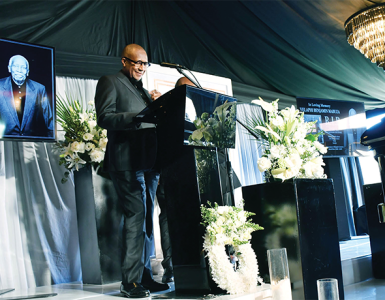
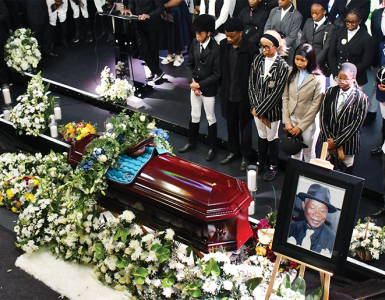
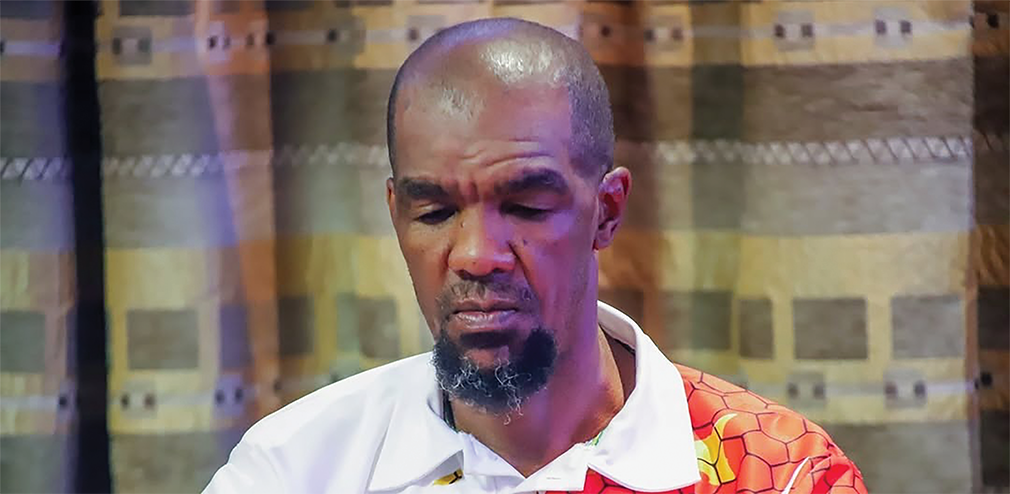
South Africa’s shack-dwellers movement, Abahlali baseMjondolo (AbM), has buried its 26th martyr in less than two decades. Zweli Mkhize, widely known as Khabazela, was laid to rest on February 21 in Estcourt, KwaZulu-Natal, after being gunned down on February 12 at the eNkanini informal settlement near Midrand in Johannesburg.
The 52-year-old AbM branch treasurer, survived by his wife and three children, had become a leading figure in resisting criminal syndicates accused of exploiting residents in informal settlements. His killing has intensified concern over violence linked to land occupations and the vulnerability of grassroots activists working among the urban poor.
Khabazela had moved to eNkanini in 2024 after struggling to find stable work in nearby industrial areas around Johannesburg and Tembisa. Like many others facing unemployment and rising rents, he built a shack on unused land that had been occupied by residents since August 2023.
From the beginning, the settlement attracted groups seeking to profit from the housing crisis. According to AbM leaders, criminal networks erected shacks to rent out to desperate residents or demanded payments in exchange for permission to build.
AbM deputy president George Bonono said land occupations often begin in disorder, creating opportunities for criminal groups to move in.
“Occupations often start in an unplanned manner,” he said. “In its early chaos, criminals also come in.”
AbM alleges that one powerful network operating in eNkanini is linked to businessman Biza Shabalala and elements of the taxi industry. Another group, led by a man known as Sithole, claims authority under the title induna, traditionally used by headmen appointed by Zulu chiefs.
Movement leaders argue that such traditional titles are being used outside their customary context to justify extortion in urban informal settlements where state services are weak or absent.
Residents also faced repeated evictions. In 2024, private security contractors hired by local authorities demolished shacks and burned structures. When residents rebuilt, demolitions followed again.
Authorities later fenced off the land with razor wire, but residents returned in November 2024 and reoccupied the site. Many were arrested for trespassing.
Amid these pressures, criminal groups began collecting money from residents, claiming the funds would be used to hire lawyers to stop demolitions. AbM general secretary Thapelo Mohapi said investigations found that the named lawyers had not been paid.
“This was simply extortion,” Mohapi said.
It was during this period that residents approached Abahlali baseMjondolo for assistance.
AbM leaders explained that the movement was not a legal aid organisation but a grassroots structure aimed at building collective power among shack-dwellers. Workshops held in early 2025 outlined the movement’s democratic structures, its opposition to selling or renting occupied land, and its emphasis on collective action.
After internal discussions, residents voted to form an AbM branch in June 2025 despite strong opposition from criminal groups who demanded control of the settlement leadership.
During the launch meeting on June 7, Mohapi said armed men arrived and attempted to impose a leadership list. When he refused, he was surrounded by gunmen. The situation changed only when hundreds of residents gathered in support of the meeting.
It was Khabazela who mobilised residents to defend the gathering.
Facing community resistance, the armed men withdrew and elections proceeded. Sithole reportedly stood for the position of treasurer, but Khabazela contested and defeated him.
His election marked the emergence of a leader whom AbM described as both practical and principled.
Bonono described him as “a natural leader” who had once hoped to become a musician but spent years searching for work around Tembisa.
As treasurer, Khabazela helped organise residents to pool funds and buy tools to install informal connections for water and electricity.
The settlement, once completely dark at night, gained communal taps and lighting.
“For the first time they had light,” Mohapi recalled. “They had communal taps. People saw him as a leader they could trust.”
However, organising residents brought increasing danger.
Even before the branch was formally established, at least two residents supportive of AbM were killed in eNkanini and a nearby settlement called Mayibuye. Movement leaders suspect another death recorded as a car accident may also have been targeted.
Violence intensified when AbM attempted to establish a branch in Mayibuye in November 2025. A meeting in a local church was disrupted when attackers broke windows and threw stones.
Mohapi said he was physically attacked and narrowly escaped serious injury after Khabazela and other leaders escorted him to safety.
“It later became clear that their main target was Khabazela,” Mohapi said.
In January 2026, Khabazela received a phone call from a man claiming to be a hired killer. According to AbM, the caller said a R30 000 contract had been issued for his murder and demanded R40 000 to spare his life and force him to abandon organising work.
Khabazela reportedly refused. Tensions escalated as armed groups moved through eNkanini demolishing shacks and demanding payments from residents seeking to rebuild.
One widely discussed incident involved a poor woman whose shack was destroyed. Khabazela helped rebuild it and told her she did not need permission from anyone.
The act became a symbol of resistance in the settlement.
On February 22, the first anniversary of the AbM branch, Khabazela planned to convene a meeting aimed at exposing alleged land-mafia activities and strengthening community organisation.
Ten days earlier, on February 12, AbM’s Durban office received a death threat against him.
That evening, at about 6:30 pm, two men approached him outside a friend’s shack and opened fire. He died at the scene. The attackers fled in a white Renault toward Modderfontein Road.
The Socio-Economic Rights Institute of South Africa (SERI) described his killing as the loss of a committed community leader.
His death forced the remaining branch leaders into hiding. Several national AbM leaders have also previously gone underground after surviving assassination attempts.
Rights groups warn that repeated attacks on AbM members have created a climate of fear and impunity. Trade union federation NUMSA noted that nearly 30 AbM members have been assassinated since 2009.
“If he must not have died in vain,” NUMSA said, “we who suffer the same conditions must pick up his spear and continue to fight for land justice.”
The General Industrial Workers Union of South Africa (GIWUSA) blamed broader social conditions for the violence, pointing to poverty, insecurity and weak state protection in informal settlements. The union argued that poor communities remain exposed to criminal networks and called for stronger collective protection measures.
AbM leaders insist the struggle will continue despite the risks.
“We will not be stopped by the mafia,” Mohapi said, adding that the movement plans to return to eNkanini and relaunch organizing efforts in nearby settlements. At Khabazela’s funeral, women from the settlement pledged to continue the struggle he helped build.
For Abahlali baseMjondolo, the death of Zweli “Khabazela” Mkhize represents both a loss and a reminder of the dangers faced by activists working at the frontlines of South Africa’s housing crisis.
Movement leaders say his commitment to land rights, basic services and community organisation will remain part of the ongoing fight for dignity and secure housing among the urban poor. –People’s Despatch