WeeklySA_Admin
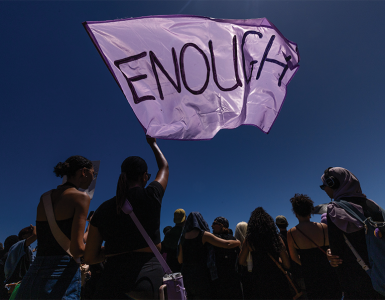
ACCOUNTABILITY: JSC finds Eastern Cape Judge President guilty of gross misconduct, citing abuse of power, sexual harassment and ‘lack of remorse’, setting the stage for removal from office…
By Monk Nkomo
Eastern Cape Judge President Selby Mbenenge is staring down the prospect of impeachment after the Judicial Service Commission (JSC) found him guilty of gross misconduct — and, crucially, showing no remorse.
This week, the JSC overturned a previous ruling by the Judicial Conduct Tribunal-chaired by retired Judge President Bernard Ngoepe – which had found Mbenenge only guilty of a lesser charge of misconduct following allegations that he sexually harassed his subordinate and junior court secretary, Andiswa Mengo between 2021 and 2022.
In its written ruling, the JSC said Mbenenge’s conduct was serious and constituted an affront to the propriety of judicial office and values underpinning the Constitution.
“It undermines core values of the Judiciary including integrity, accountability, equality, respect and dignity”.
The decision followed representations to the JSC by both parties as well as the Tribunal’s report. After consideration of all representations, the JSC said it could not accept the findings of the Tribunal which found the Eastern Cape Judge President guilty of misconduct. The JSC held a meeting on March 5 this year to consider the Tribunal’s report regarding Mengo’s complaint.
The Commission instead, found that Mbenenge’s conduct constituted gross misconduct in terms of section 177 (1) (a) of the Constitution.
In concluding Mbenenge gross misconduct ruling, the JSC took into account the sexual nature of the communications which were initiated by Mbenenge, his pursuit of Mengo and intention to pursue a sexual relationship with her.
“The testimony of Mbenenge before the Tribunal revealed that he does not appreciate the responsibility associated with his position and the power imbalance it creates in the environment. He showed no remorse’’.
The JSC said they were in agreement with the Tribunal on the admitted facts including the Code of Judicial Conduct which provided that a Judge must always , and not only in the discharge of official duties, act honourably and in a manner befitting judicial office.
The JSC, however, departed from the report of the Tribunal in several key respects:
• The Tribunal limited its assessment to whether the conduct of Mbenenge, in initiating and sustaining a “flirtatious’’ relationship with Mengo, took place at a place of work and during working hours. “The JSC considered this to be a misdirection’’. What the Tribunal should have had regard to, was not merely the place and timing of the exchanges, but their nature, content and context and the fact that they were initiated by Mbenenge and sustained over a period of time.
• The JSC found that Mbenenge’s conduct was grossly inappropriate for a person holding the position of Judge – let alone a Judge President.
• The JSC did not endorse the finding by the Tribunal that there was no sexual harassment. The Tribunal did not apply the appropriate standard for assessing whether there was sexual harassment.
Instead, it appeared to have treated the enquiry principally as an objective one directed at whether the admitted communications were unwelcome, instead of a balanced amalgamation of an objective and subjective standard which took into account the complainant’s position and the respondent’s conduct in context
• The Tribunal had failed to consider whether or not Mbenenge ought to have known that his conduct was unacceptable. ‘’This resulted in the Tribunal focusing almost exclusively on the conduct of the complainant without giving due consideration to the conduct of Mbenenge, including whether, in the circumstances, he should have appreciated that the conduct in question was inappropriate and unacceptable’’.
• The Tribunal had concluded that Mbenenge’s advances were cumulatively welcome, rather than considering whether particular incidents or exchanges, viewed individually, and, in their proper context, constituted unwelcome conduct of a sexual nature.
• The Tribunal had also failed to properly consider the impact of the relationship of power between Mbenenge and the complainant. “Instead, it approached the matter on the basis that the parties were consenting adults on an equal footing who had the right to freedom of association, thereby giving insufficient weight to the significance of the disparity in position between them’’.
On the admitted fact, the JSC concluded that Mbenenge’s conduct was not misconduct simpliciter but amounted to gross misconduct.
“It is conduct incompatible with the standard of honourable behaviour and propriety required of judicial office,” the JSC said.
The JSC findings have now triggered the impeachment process under section 177 (1) (a) of the Constitution.
That section provides that a Judge may be removed from office only if the JSC finds a Judge guilty of gross misconduct.
The JSC said it would now submit its findings to the Speaker of the National Assembly. It had also invited the parties to make submissions regarding whether or not it should advise the President to suspend Mbenenge pending a decision on his impeachment by the National Assembly.
Mbenege has been on “special leave” since 2024. After the tribunal ruling in January this year, he indicated that he was returning to work, but the Office of the Chief Justice clarified that he could not return until the JSC had deliberated on the tribunal’s report.
MIRROR Briefs
SASSA: ‘Queue touts’ menace
The South African Social Security Agency (SASSA) has strongly condemned the illegal and exploitative practice of “selling” queue positions at its local offices.
In a statement yesterday, SASSA CEO Themba Matlou said the reports about this mushrooming scourge were unacceptable, unlawful and a serious exploitation of vulnerable members of society who rely on social assistance for survival.
In particular, he said, taking advantage of the elderly and people living with disabilities was disheartening.
Matlou said action would be taken against those involved and any SASSA official who may have created fertile ground for the acts to be perpetrated against people visiting SASSA offices.
“We take serious exception to these acts as the agency as they happen at the doorsteps of our offices and create an impression that we are complicit and encourage this exploitation of our people. We condemn this in the strongly possible terms, and we cannot allow it to happen”, he emphasised.
SASSA has committed to strengthen its security systems, working with the law enforcement agencies to curb the scourge by ensuring the law and order is implemented against those involved.
SASSA acknowledges challenges experienced in some of its offices in ensuring effective and seamless service delivery which is compounded by systematic issues. “We are working tirelessly to enhance our queue management systems to ensure fair and orderly access. This will reinforce priority service channels for the elderly, persons with disabilities, and other vulnerable groups,” Matlou said.
Furthermore, Matlou encouraged SASSA clients to take advantage of the newly introduced self-service online portal, eLife Certification system. – SAnews.gov.za
Proposed illegal evictions law
Human Settlements Minister Thembi Simelane yesterday urged all South Africans to carefully study and review the Prevention of Illegal Eviction from and Unlawful Occupation of Land (PIE) Amendment Bill ahead of the mid-June deadline.
The Bill was gazetted for comment in response to what government says is the rising number of unlawful land and building occupations across the country.
Simelane said this had placed “severe financial and administrative burdens” on government entities and private property owners, hindering orderly housing development. The Amendment Bill aims to review and strengthen the current 1998 PIE Act, which Simelane said had often led to “inconsistent, lengthy and expensive” processes.
The 2026 Bill aims to make the law more “effective, clearer to interpret and simpler to enforce”, by empowering municipalities, State entities, and private landowners to respond more decisively to illegal occupations, while also ensuring that the rights of vulnerable individuals are protected.
Simelane said the Bill took a firm stance against individuals and organised syndicates who orchestrated land invasions, including those who incited people to unlawfully occupy land or sell land or property they do not own. Proposed measures include hefty fines and the forfeiture of assets acquired through illegal land occupations. To reduce court time, Simelane explained that the Bill introduced mandatory mediation processes where the municipality owned the land.
Simelane emphasised that the 60-day comment period was a commitment to “transparency and inclusivity”, urging civil society organisations and ordinary community members to weigh in. Following the public consultation, the revised Bill is expected to return to Cabinet by July.
If approved, it is scheduled to be tabled in Parliament by late July or early August. Simelane pointed out that to ensure comprehensive public engagement, her department would roll out public information sessions across the country.
The first of these engagements will take place on May 5, in Ekurhuleni, to allow communities the opportunity to engage directly with the process. – Thabi Shomolekae/Fullview
Malema–Mabuyane Row Escalates
Battle lines have been drawn between Economic Freedom Fighters (EFF) leader Julius Malema and ANC Eastern Cape chairperson and Premier Lubabalo Oscar Mabuyane, following a fiery exchange triggered by Malema’s recent court appearance. The confrontation erupted outside the East London Magistrates Court on Thursday, where Malema addressed thousands of supporters after his legal team successfully appealed a five-year sentence for discharging a firearm during the EFF’s fifth anniversary celebrations at Sisa Dukashe Stadium in Mdantsane in 2018.
A defiant Malema took aim at Mabuyane, criticising the heavy police presence in court and suggesting law enforcement should instead focus on “arresting the corrupt Oscar Mabuyane who stole a Master’s degree from Fort Hare University.”
The remarks drew a swift and strongly worded response from the Premier’s office.
In a statement, Mabuyane “categorically rejected” the allegations, describing them as false and without merit. He reiterated that he does not hold a Master’s degree from the University of Fort Hare.The statement further stressed that the matter involving Mabuyane and the university is currently before the courts and was therefore sub judice, making public discussion of its merits inappropriate and potentially unlawful.
“It is both unfortunate and telling that Mr Malema continues to display a malicious fixation driven by political mischief on the person of Premier Mabuyane, instead of focusing on his own legal challenges,” the statement read.
Mabuyane’s office also confirmed that legal representatives have been instructed to explore possible action in response to what it described as a pattern of “sustained and defamatory conduct” by Malema.
The escalating war of words signals a deepening political rift between the two leaders, with the dispute now poised to spill into the courts. – Siya Kamnqa